FunnelCockpit: The Command Center for Conversion Optimization
Most funnel problems don’t come from a lack of traffic, tools, or effort. They come from fragmented visibility.
After auditing and optimizing funnels for more than eight years — across SaaS, digital products, e-commerce, and lead-generation businesses — I’ve seen the same pattern repeat itself:
Teams have plenty of data, but no single place where conversion performance is visible, comparable, and actionable.
This is the gap FunnelCockpit fills.
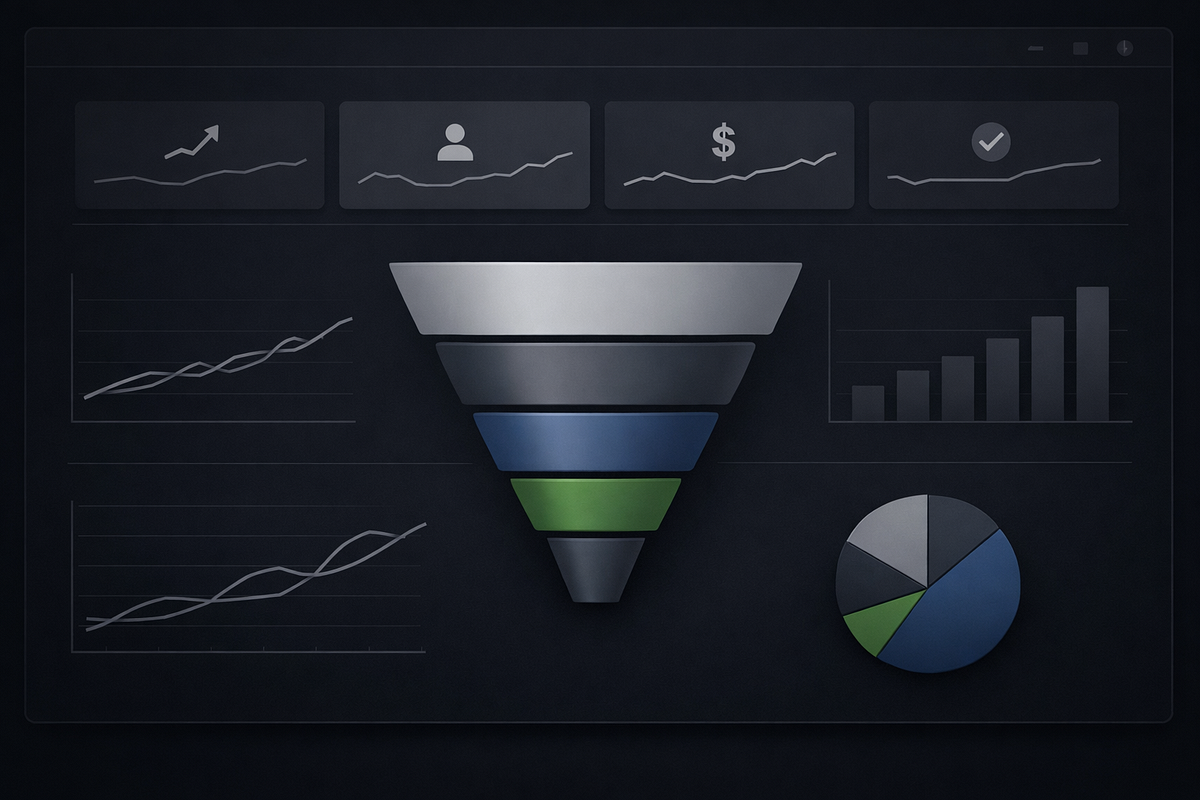
It is not “another analytics tool.” It functions as a command center for conversion optimization — a centralized layer that connects traffic, behavior, funnel stages, and outcomes into one decision-making system.

In this article, I’ll explain:
- Why most funnels underperform at scale
- Where traditional analytics and CRO tools break down
- How FunnelCockpit enables faster, higher-impact optimization decisions
- Practical patterns and diagnostics you can apply immediately
Why Funnels Break Down as Complexity Grows
Funnels rarely fail because they are built incorrectly. They fail because complexity outpaces visibility.
As businesses grow, they add:
- Multiple traffic sources (SEO, ads, email, affiliates)
- Multiple funnels and offers
- Variants, launches, evergreen sequences, and experiments
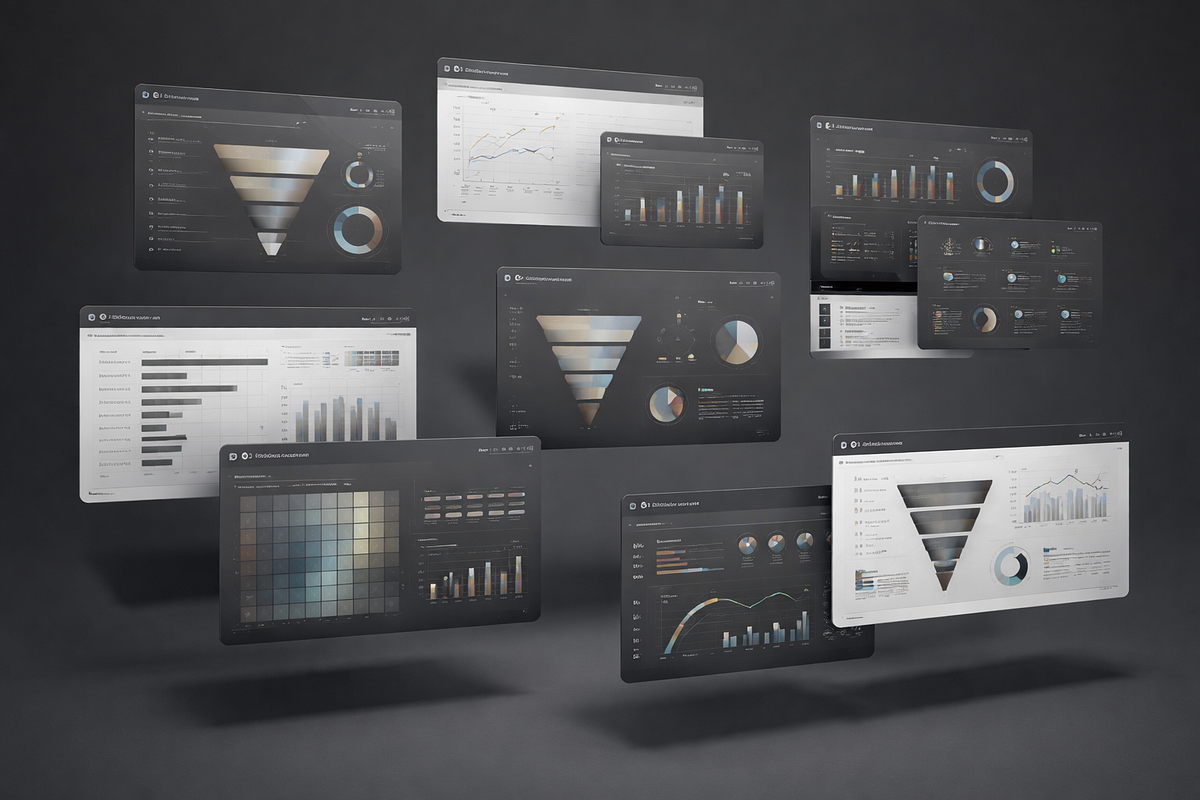
At that point, common tools begin to hinder decision-making.
The Three Most Common Failure Modes
- Page-level optimization without funnel context
Teams optimize landing pages, emails, or checkout steps in isolation, without understanding how those changes affect the full conversion path. - Fragmented analytics
Web analytics, email platforms, ad dashboards, and spreadsheets all tell partial stories. Stitching them together manually slows down decisions and introduces errors. - Vanity metrics over revenue signals
Traffic, CTRs, and engagement look healthy — while conversions quietly leak between stages.
The result is a paradox I see constantly:
Funnels with high traffic but poor revenue — and no clear explanation why.
The Core Problem FunnelCockpit Solves
FunnelCockpit addresses a single, critical problem:
There is no centralized, conversion-focused view across the entire funnel once you operate at scale.
Most tools answer questions like:
- “How many users visited this page?”
- “Which email had the highest open rate?”
- “Which ad got the most clicks?”
FunnelCockpit answers different — and more important — questions:
- Where exactly are prospects dropping off between stages?
- Which funnels, offers, or traffic sources actually drive revenue?
- What should we optimize next for the highest impact?
That distinction is what turns analytics into action.

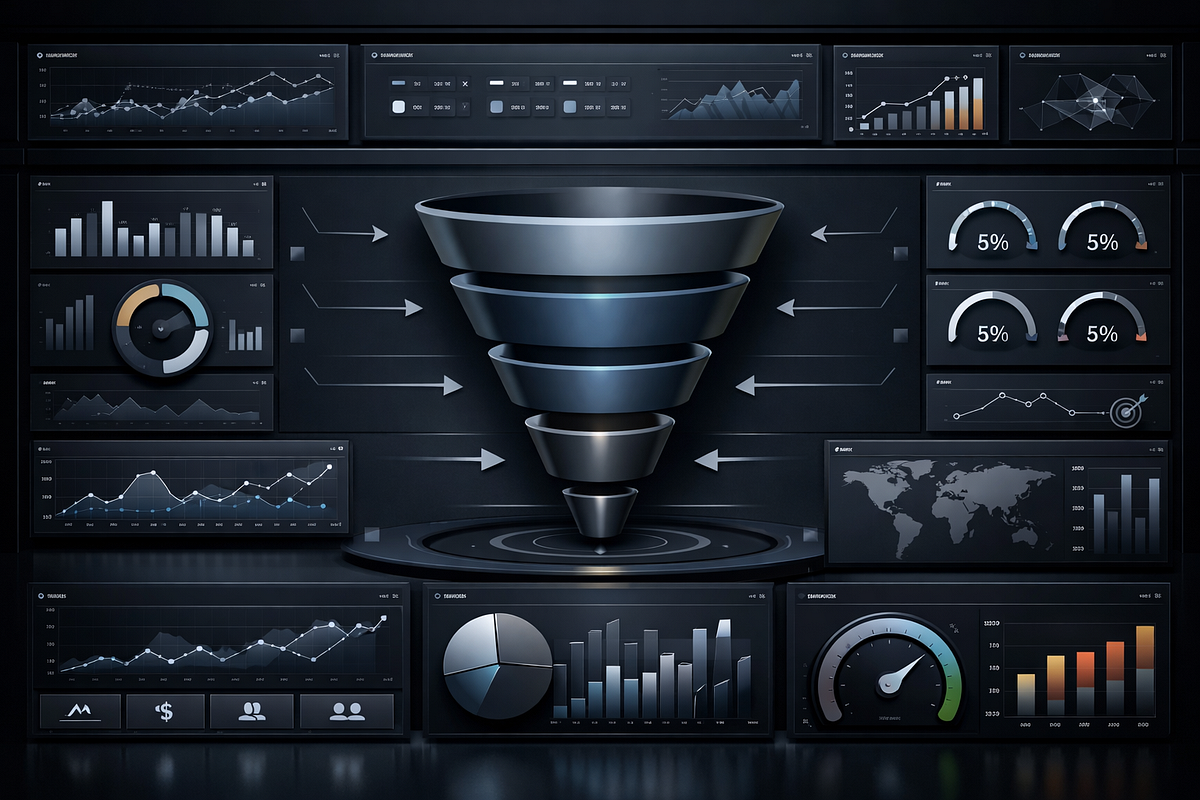
FunnelCockpit as a Conversion Command Center
I think of FunnelCockpit as a navigation system, not a reporting tool.
Its value comes from four core pillars:
1. Centralized Visibility
FunnelCockpit aggregates funnel performance across traffic sources, steps, and offers into a single view. Instead of mentally stitching together reports, you see end-to-end performance immediately.
2. Diagnostics
Rather than dumping raw metrics, it highlights:
- Stage-to-stage conversion drop-offs
- Bottlenecks and friction points
- Underperforming funnels relative to peers
This dramatically reduces time-to-insight.
3. Decision Prioritization
One of the biggest optimization failures I see is teams working on the wrong problems.
FunnelCockpit helps answer:
“If we fix one thing this week, what will move revenue the most?”
That alone eliminates enormous wasted effort.
4. Iteration at Scale
Funnels are not static assets. FunnelCockpit supports continuous monitoring and comparison, making iterative optimization repeatable instead of reactive.
What FunnelCockpit Does Differently Than Other Tools
Versus Traditional Analytics Platforms
Analytics tools excel at event tracking and traffic analysis. They struggle with:
- Multi-funnel comparison
- Clear stage-based conversion views
- Optimization prioritization
FunnelCockpit sits above raw analytics, translating data into funnel-level insight.
Versus CRO Tools
Heatmaps and A/B testing tools are invaluable — but they are page-focused.
FunnelCockpit provides the context that answers:
“Is this page worth optimizing at all?”
Without that context, teams often micro-optimize low-impact steps.
Versus CRMs
CRMs manage contacts and pipelines. FunnelCockpit manages conversion performance.
Used together, they close the loop between behavior, conversion, and revenue.

Real-World Results (Anonymized Case Studies)
Case 1: B2B SaaS Funnel Optimization
Problem: High traffic, poor trial-to-paid conversion, no visibility across campaigns.
What Changed: FunnelCockpit exposed post-signup drop-offs and underperforming acquisition paths.
Results:
- +18% increase in trial-to-paid conversions
- 12% CAC reduction through smarter traffic allocation
- Bottlenecks identified in hours, not days
Case 2: Info-Product Launch Funnels
Problem: Multiple webinar funnels, inconsistent sales, unclear winners.
What Changed: Cross-funnel comparison revealed which sequences and offers actually converted.
Results:
- 25% revenue lift during launch week
- 15% reduction in lead-to-webinar drop-off
- Clear scaling path for winning variants
Case 3: DTC E-Commerce Funnel
Problem: Fragmented analytics across ads, landing pages, and checkout.
What Changed: Centralized visibility exposed checkout friction and time-to-conversion issues.
Results:
- +22% checkout completion rate
- 15% monthly revenue growth without increasing ad spend
A Practical Mental Model: The Funnel Command Center
Instead of thinking in linear funnels, I recommend this model:
Visibility → Diagnostics → Decision → Iteration → Comparison
If any layer is missing, optimization slows or breaks down entirely.
This is why tools like FunnelCockpit matter — not because they add data, but because they restore clarity.

Quick Funnel Diagnostics You Can Apply Today
Ask yourself:
- Where are the largest stage-to-stage drop-offs?
- Which funnels or traffic sources generate revenue — not just clicks?
- Are we optimizing pages, or conversion paths?
- If one stage improved by 10%, which would impact revenue the most?
If these questions are hard to answer quickly, that’s a visibility problem — not an optimization problem.
Final Thoughts
After working with funnels handling hundreds of thousands of sessions and multiple six-figure revenue streams, I’m convinced of one thing:
Conversion optimization fails more often from poor visibility than poor execution.
FunnelCockpit works because it treats funnels as dynamic systems, not static pages. It gives teams a centralized command center for understanding behavior, prioritizing action, and scaling what works.
If you already generate meaningful traffic and revenue, but struggle to see where performance leaks occur, this is exactly the layer most businesses are missing.


Comments
Post a Comment