How a Quantum Computing System Works: From Qubits to Algorithms
Quantum computing is often described in headlines as “the next revolution,” but the way a quantum computer actually works is very different from the hype. To understand it properly, you need to see it as a stacked system — starting from fragile physical qubits and moving all the way up to algorithms that must survive real-world noise.
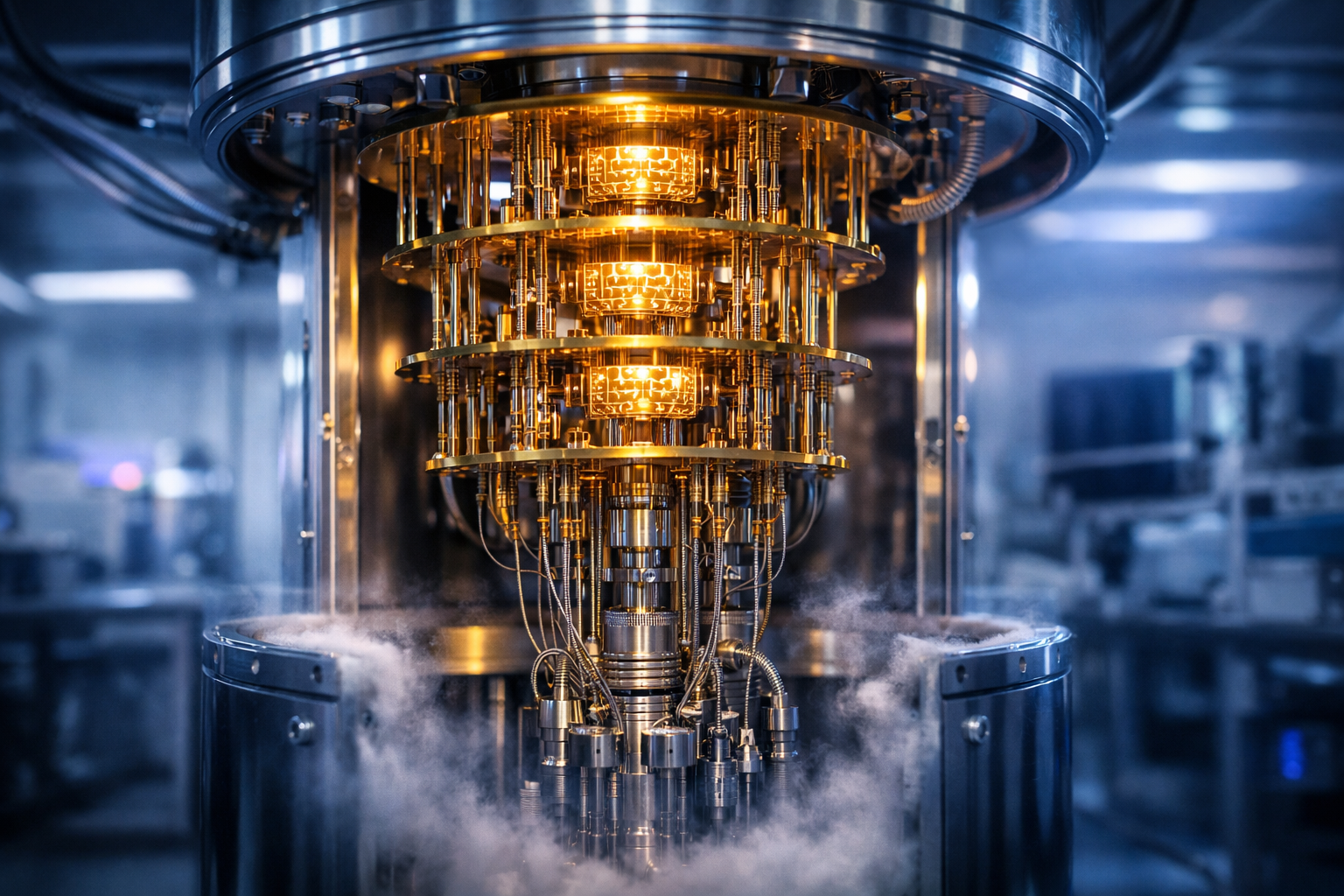
Most people encounter quantum computers the same way I have: not inside a physics lab, but through cloud-accessible devices and simulators. That perspective — working with real hardware constraints through software — reveals what quantum computing truly is today: powerful in theory, delicate in practice, and deeply constrained by engineering realities.
Let’s walk through the system from the ground up.
1. The Foundation: What a Qubit Really Is
A classical bit is binary: 0 or 1.
A qubit is described by a quantum state:
∣ψ⟩=α∣0⟩+β∣1⟩|\psi\rangle = \alpha|0\rangle + \beta|1\rangle∣ψ⟩=α∣0⟩+β∣1⟩
where α and β are complex probability amplitudes, and
∣α∣2+∣β∣2=1|\alpha|² + |\beta|² = 1∣α∣2+∣β∣2=1.
This is where many popular explanations go wrong. A qubit is not literally “0 and 1 at the same time.” Instead, it exists in a superposition of probability amplitudes that only produce a definite 0 or 1 when measured.
How I Explain It Practically
For intuition, analogies help — like a spinning coin that hasn’t landed yet. But for engineers, the Bloch sphere is more useful. It shows that a qubit’s state is a point on a sphere, and quantum gates are just rotations of that state vector.
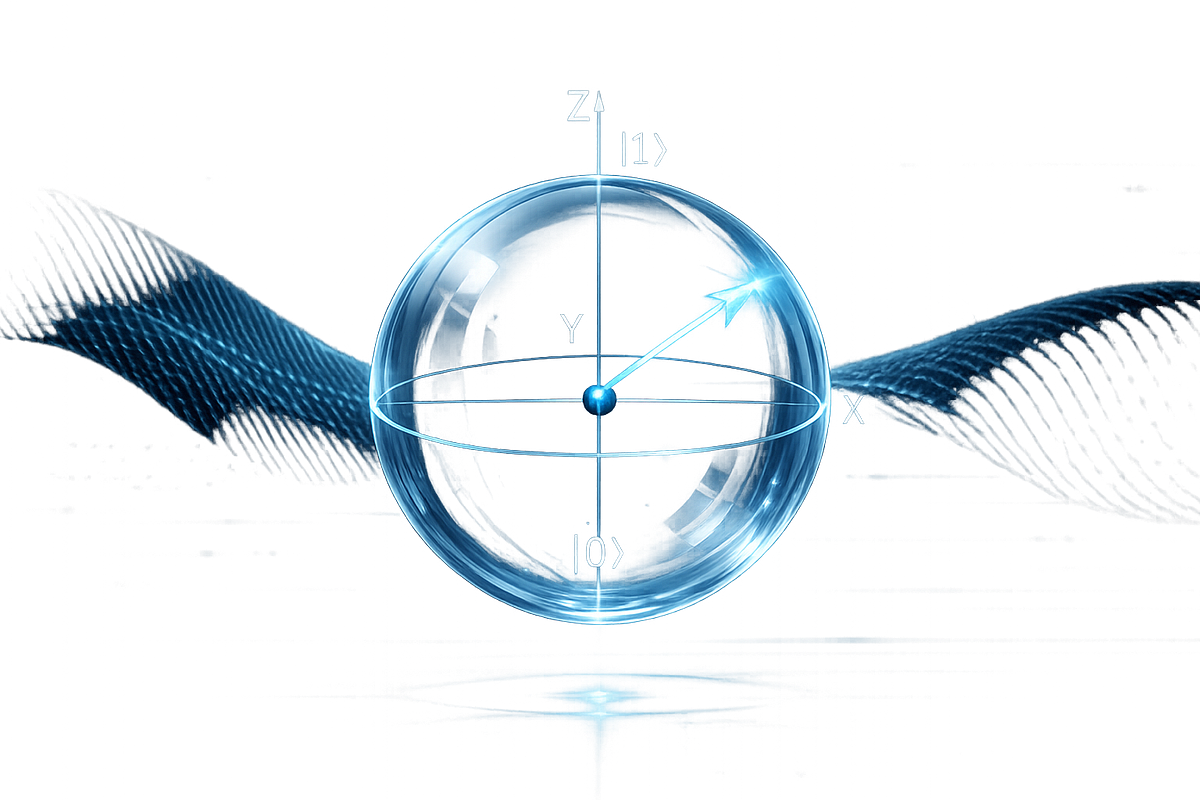
This geometric view connects directly to how we program circuits: we’re applying operations that rotate qubit states in a controlled way.
2. Entanglement: Correlation, Not Communication
Entanglement is the second key resource in quantum computing. When qubits are entangled, their states can no longer be described independently.
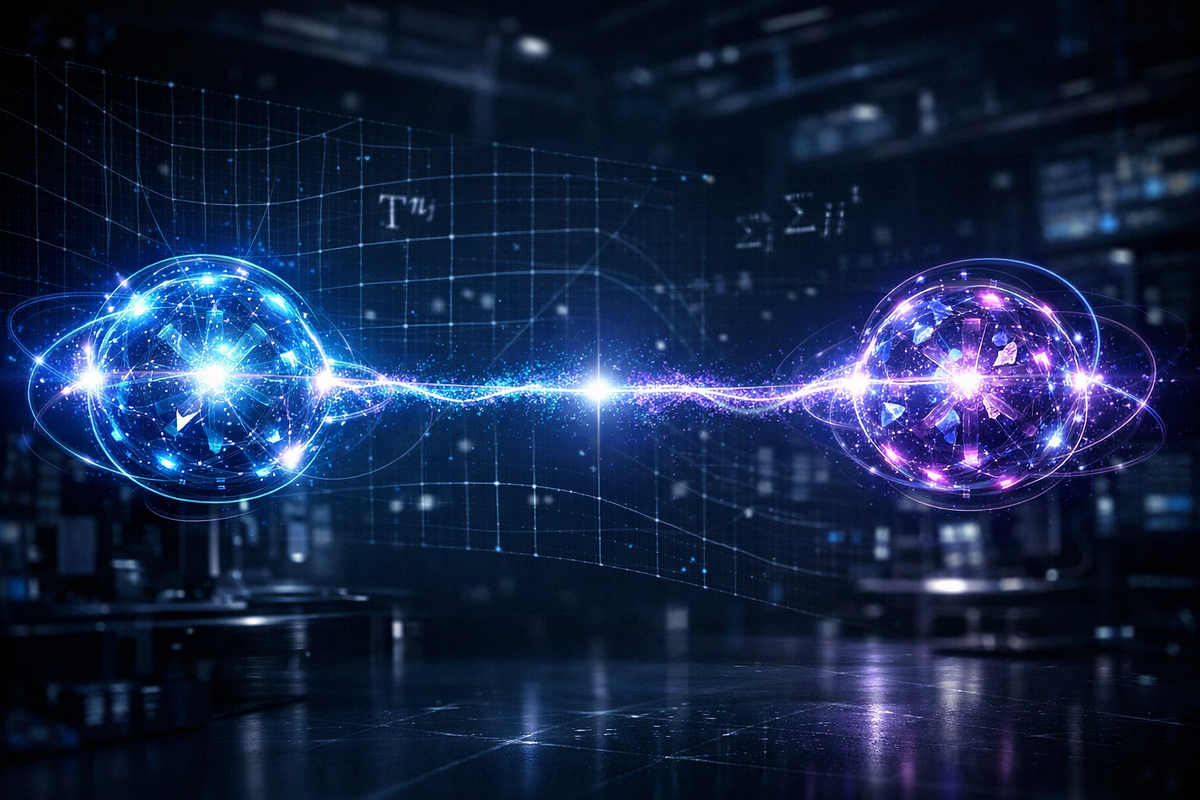
A common myth is that entangled qubits “communicate instantly.” They don’t. What they share is correlation, not controllable information transfer.
From a systems perspective, entanglement is valuable because it allows quantum computers to represent and manipulate joint probability spaces that would explode exponentially on classical machines. That’s the real power — not sci-fi messaging, but state space scaling.
3. Physical Hardware: Where Theory Meets Engineering
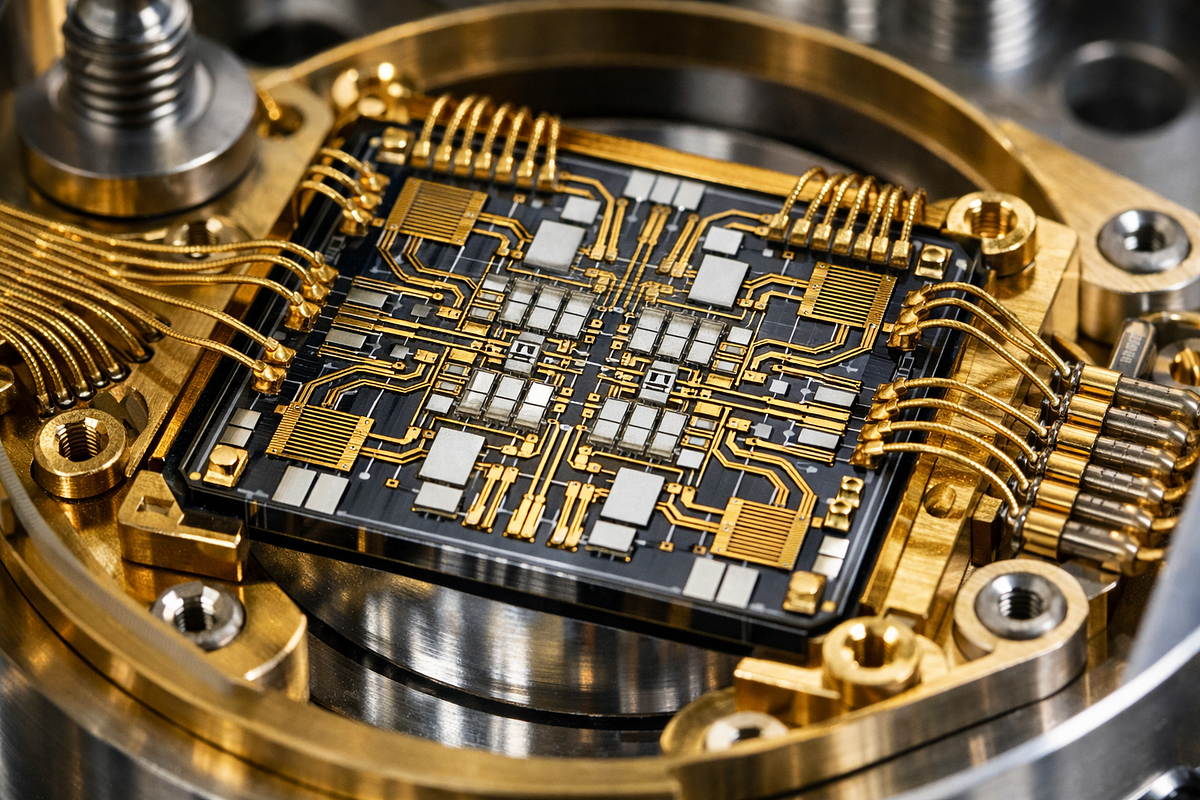
While many qubit technologies exist, most hands-on work today happens through superconducting qubit systems, which are widely accessible via cloud platforms.
High-Level Hardware Landscape
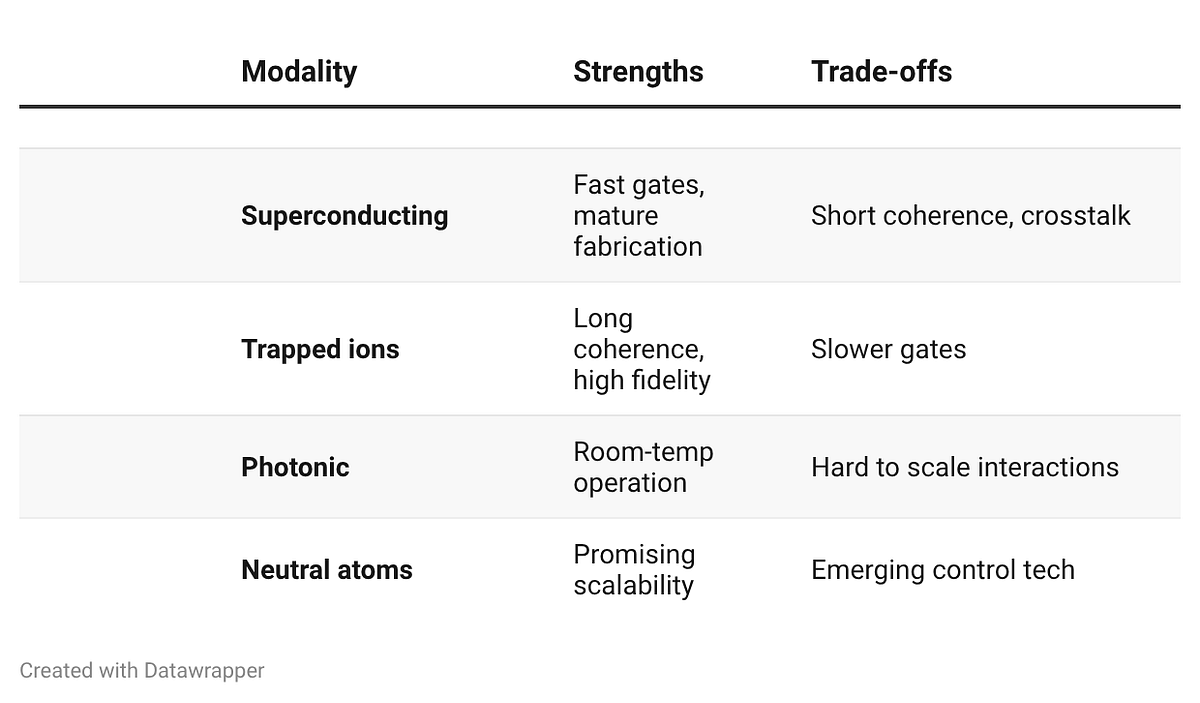
Superconducting systems dominate cloud access, so they often shape how developers experience quantum computing.
Real Constraints You Don’t See in Simulators
Working with real devices quickly reveals issues absent from ideal simulations:
- Decoherence — Qubits lose information over time; deeper circuits fail more often
- Gate fidelity limits — Two-qubit gates are especially noisy
- Connectivity graphs — Not all qubits can talk directly; SWAP gates add depth
- Crosstalk — Neighboring qubits interfere with each other
- Calibration drift — Identical circuits can behave differently on different days
In practice, these constraints shape algorithm design more than theory does.
4. From Qubits to Quantum Gates
Quantum gates are unitary operations that rotate qubit states.
Single-qubit gates manipulate superposition and phase.
Two-qubit gates (like CNOT) create entanglement.
In cloud platforms, we design circuits made of these gates. But the circuit you design is not the circuit the hardware runs. A compiler (transpiler) must:
- Map logical qubits to physical ones
- Insert SWAP gates for connectivity
- Decompose gates into hardware-native operations
This compilation step can double or triple circuit depth, which directly increases error rates.
5. Circuits in the Real World: Simulation vs Hardware
One of the most important lessons from hands-on experimentation is this:
A circuit that works perfectly in simulation can completely fail on real hardware.
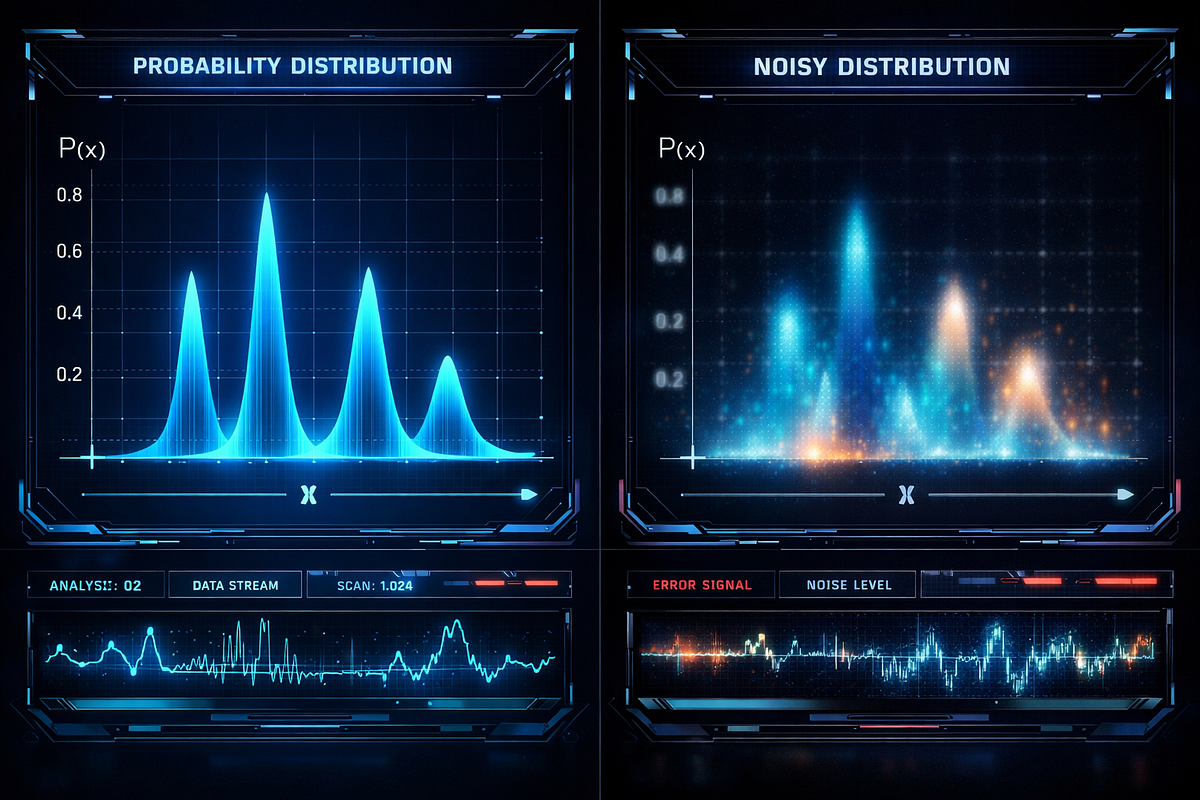
For example, even a small Grover search circuit can produce noisy, nearly random output once hardware errors accumulate. Two-qubit gate noise and decoherence dominate long before theoretical limits are reached.
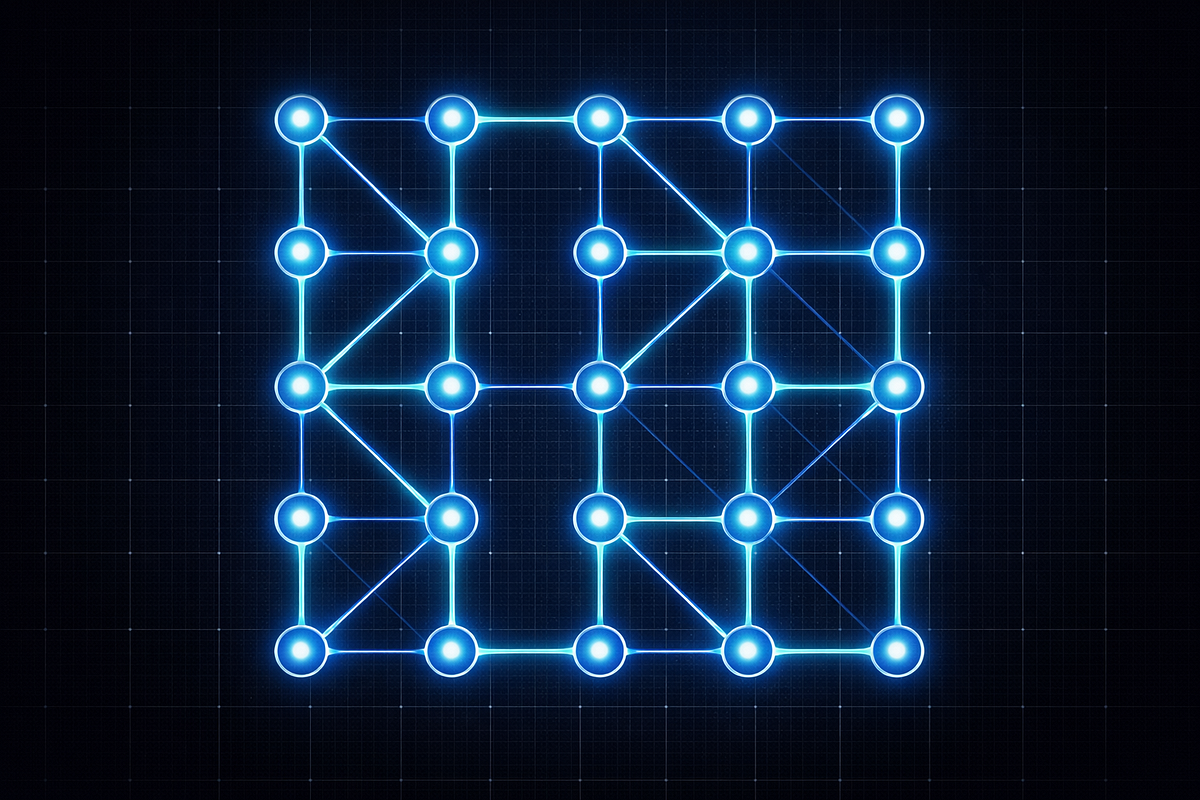
This is why shallow, hardware-aware circuit design is essential in the NISQ (Noisy Intermediate-Scale Quantum) era.
6. Quantum Algorithms: Where Advantage Might Come From
Quantum algorithms don’t just “run faster.” They exploit interference — amplifying correct answers while canceling wrong ones.
Grover’s Algorithm
Uses amplitude amplification to speed up unstructured search. In practice, it’s a great teaching tool, but depth and noise quickly limit real-device performance.
Variational Quantum Eigensolver (VQE)
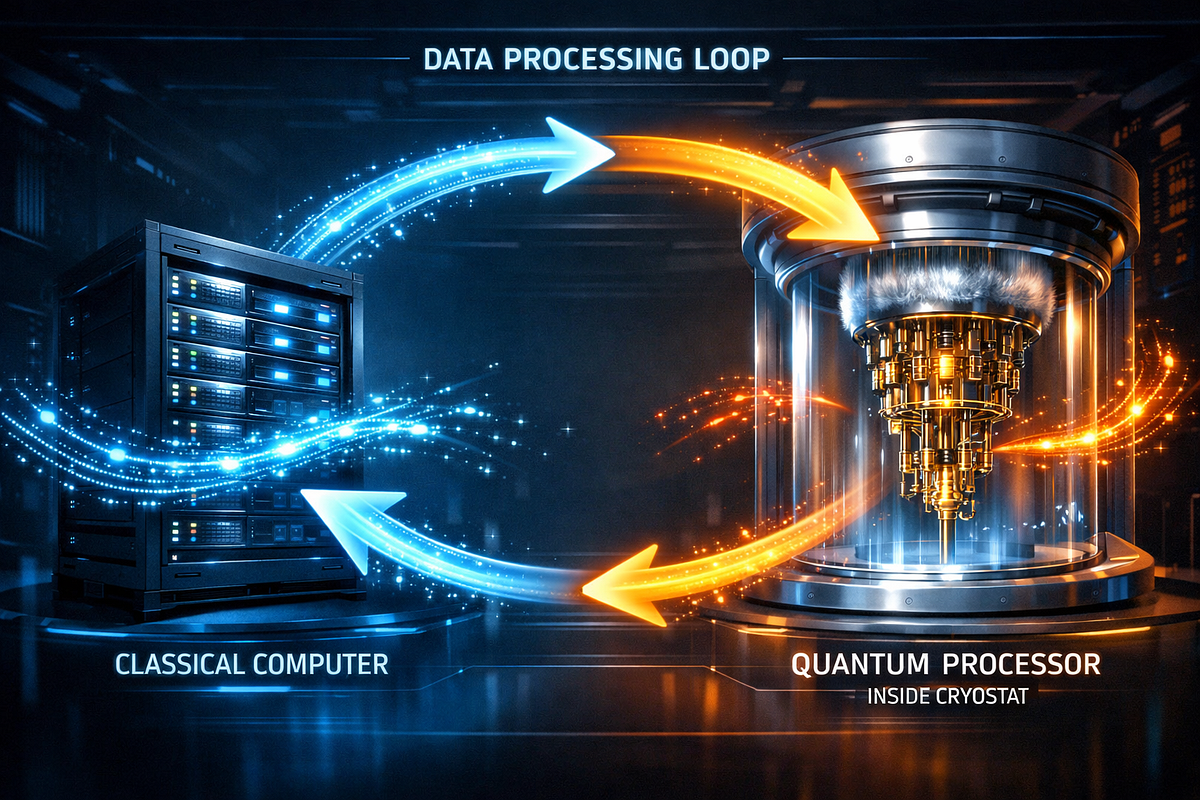
A hybrid algorithm where:
- A quantum circuit prepares a parameterized state
- A classical optimizer adjusts parameters
- The loop repeats
This hybrid model reflects how most near-term algorithms actually work.
QAOA (Quantum Approximate Optimization Algorithm)
Another hybrid method targeting combinatorial optimization. In real hardware runs, performance is heavily tied to circuit depth vs noise trade-offs and hardware connectivity.
Hard Truth About NISQ Algorithms
They are slightly overhyped in the media — but extremely valuable for learning how algorithms and hardware interact. They are stepping stones, not end solutions.
7. Noise: The Invisible Adversary
Noise is not a minor imperfection — it is the central limiting factor of today’s systems.
In experiments, I’ve seen:
- Circuits fail once depth crosses a small threshold
- Hardware topology forcing redesigns due to SWAP overhead
- Output distributions vary over time due to recalibration
Interestingly, simulations with realistic noise models sometimes show unexpected behavior, including cases where structured noise partially cancels out errors — a reminder that ideal simulations can mislead.
8. Why Error Correction Matters
To build large, reliable quantum computers, we need logical qubits built from many physical ones.
Surface codes — arranging qubits in 2D lattices — are a leading approach. But the overhead is enormous: thousands of physical qubits may be needed for one robust logical qubit.
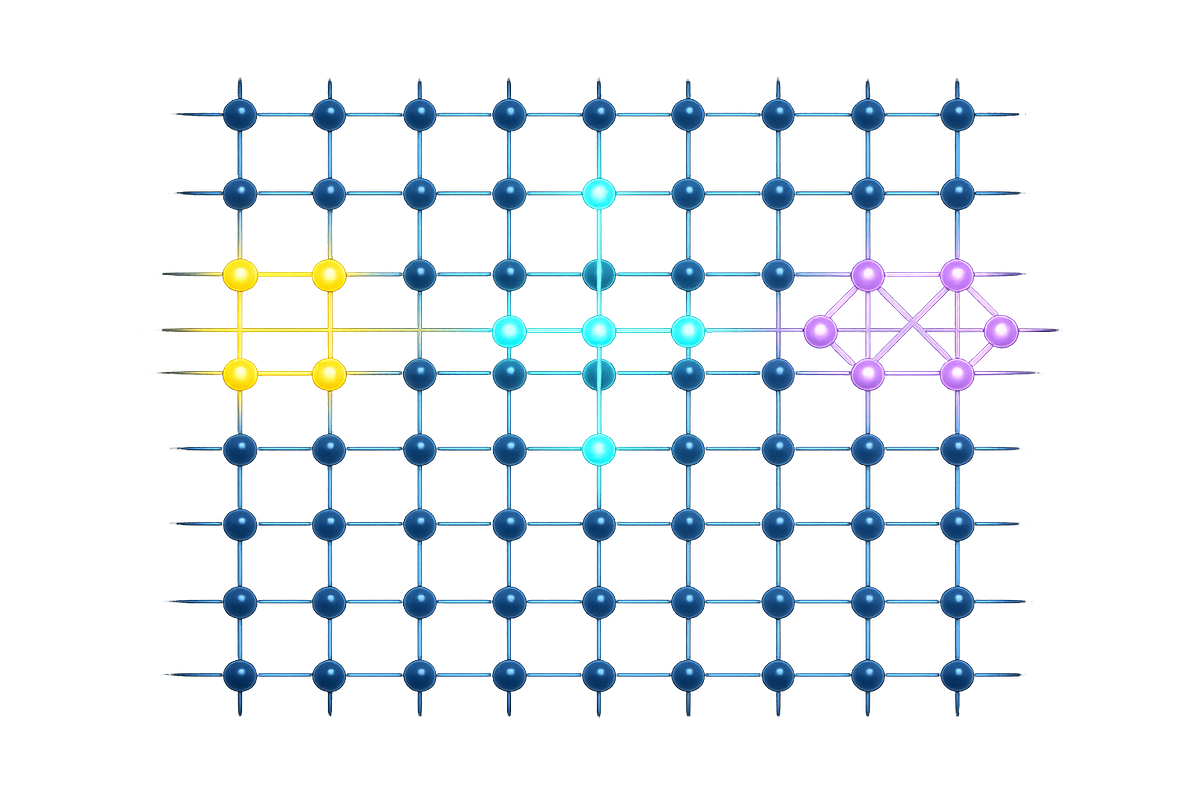
This is why scaling is hard. We can add qubits, but we cannot yet protect them well enough.
9. The Biggest Myths vs Reality
Myth: Qubits store 0 and 1 simultaneously like classical values
Reality: They store probability amplitudes, revealed only at measurement
Myth: Quantum computers will soon replace classical ones
Reality: They will likely be specialized accelerators for narrow tasks
Myth: Entanglement enables faster-than-light communication
Reality: It creates correlations, not signals
10. Where Quantum Advantage Will Likely First Appear
The first meaningful advantages are most likely in:
- Quantum chemistry simulation
- Materials science
- Specialized optimization
- Physics-based modeling problems that are classically intractable
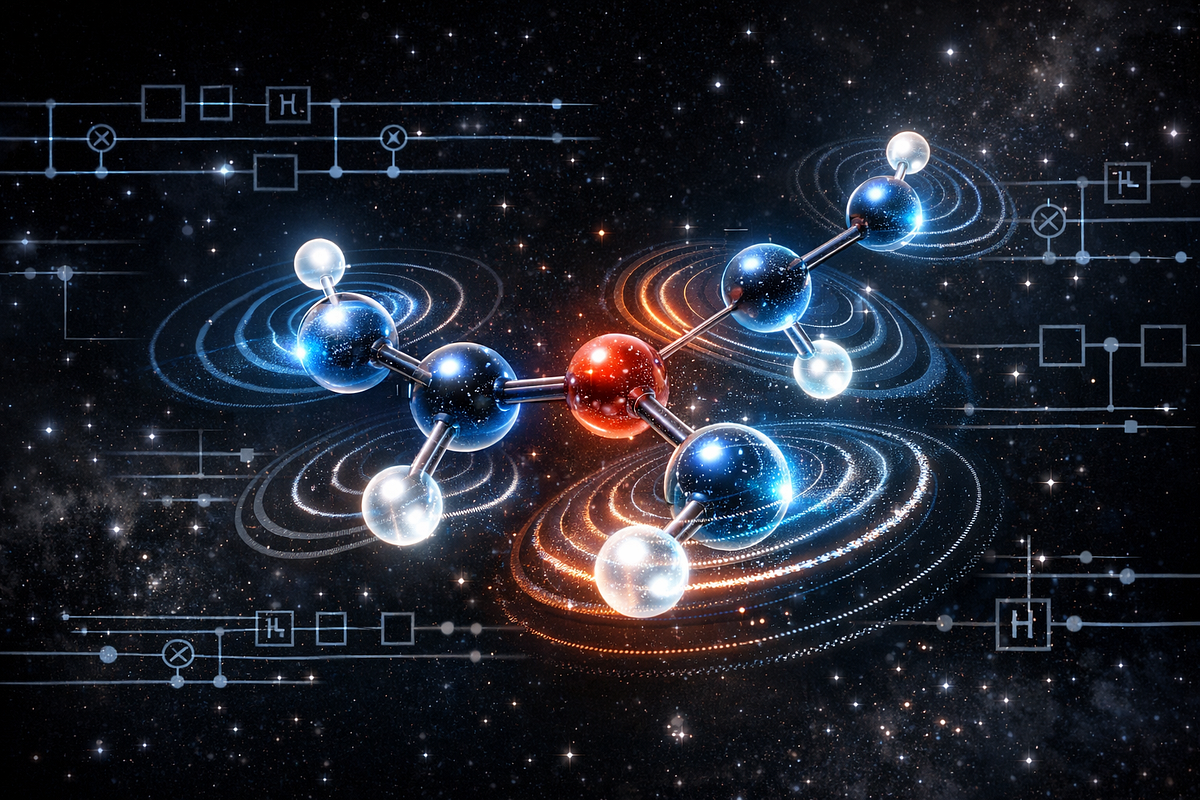
Not general-purpose computing. Do not replace your laptop.
Final Perspective
We are far from fault-tolerant, large-scale quantum computing — but closer than many think to something valuable.
Today’s quantum systems already allow:
- Real hardware experimentation
- Hybrid quantum-classical workflows
- Benchmarking of algorithms against physical limits
Quantum computing is not magic. It is a layered engineering system where physics, hardware constraints, compilers, noise, and algorithms all interact.
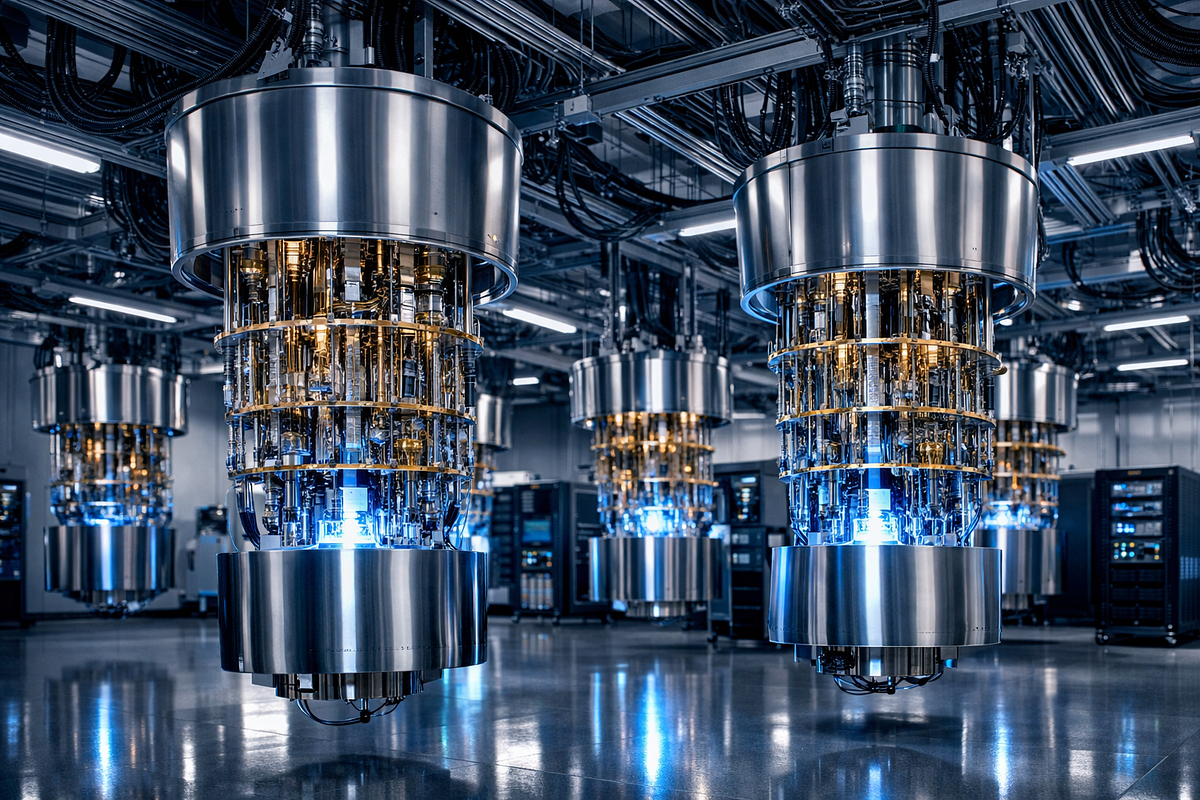
Understanding how those layers connect — from qubits to algorithms — is the key to separating real progress from hype.


Comments
Post a Comment