Architecture of a Quantum Computing System
Quantum computing is often presented as a race for more qubits. Vendor announcements highlight ever-larger processors, new physical implementations, and aggressive roadmaps toward fault-tolerant machines. Yet when you examine how real quantum computers are actually built and operated, a different picture emerges.
Modern quantum computing is not primarily constrained by qubit hardware alone. It is constrained by system architecture: how physical qubits, control electronics, classical computing, software stacks, and error management are integrated end to end.
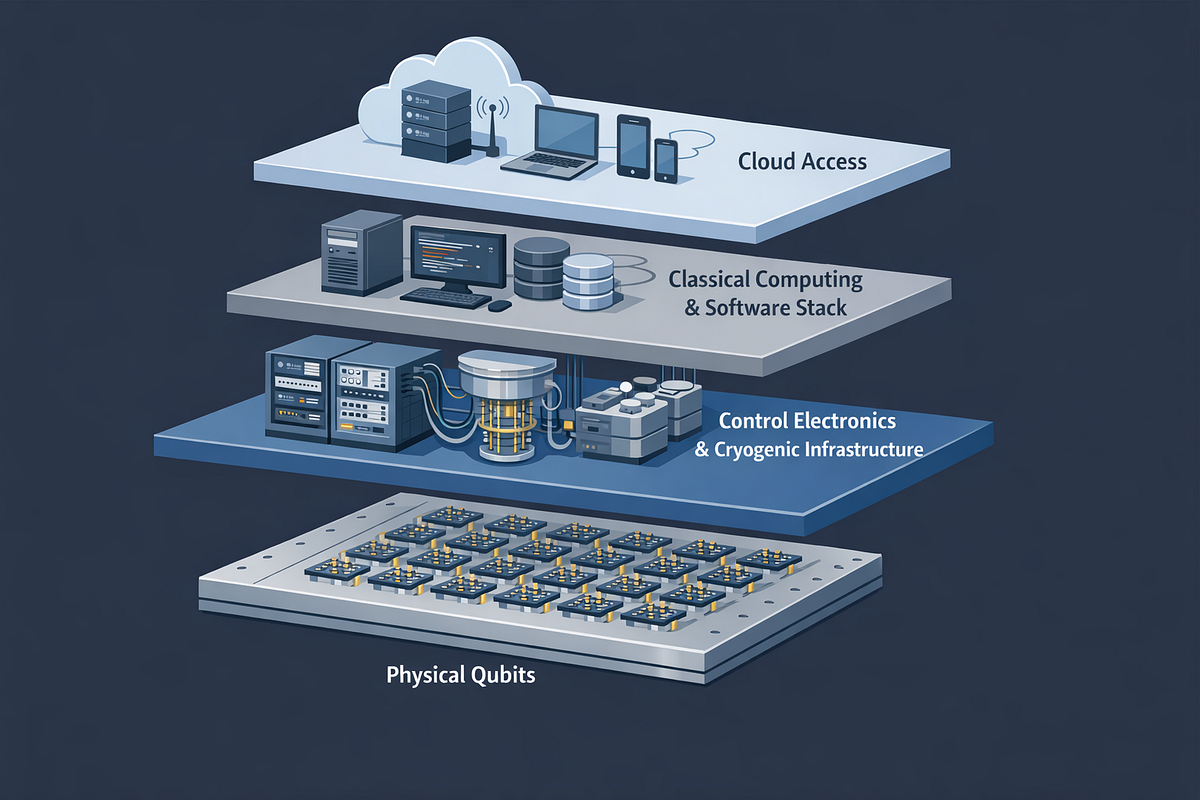
This article examines the architecture of a quantum computing system as a complete engineered stack. Rather than treating quantum computers as isolated physics experiments, it frames them as complex systems whose performance is defined by cross-layer trade-offs. This perspective is essential for engineers, researchers, and decision-makers evaluating where quantum computing truly stands today — and where progress is most likely to come from next.
1. Quantum Computing as a Systems Engineering Problem
At a high level, a quantum computing system consists of far more than a quantum processor. A usable machine requires:
- A physical qubit platform
- Precision control and readout electronics
- Cryogenic and environmental infrastructure
- Classical computing for compilation, scheduling, and feedback
- A software stack that translates algorithms into hardware-executable operations
- Error mitigation and, eventually, fault-tolerant architectures
Each layer imposes constraints on the others. Improvements in one area often expose bottlenecks elsewhere. This is why scaling quantum systems is not simply a matter of fabricating better qubits — it is a systems engineering challenge in the strictest sense.
2. The Physical Qubit Layer: Necessary, but Not Sufficient
The physical qubit layer is the foundation of any quantum computer. Today’s leading approaches include:
- Superconducting qubits, favored for fast gate times and compatibility with microfabrication
- Trapped-ion qubits, known for long coherence times and high-fidelity operations
- Photonic qubits, attractive for room-temperature operation and communication-centric architectures
- Quantum annealers are optimized for specific optimization problems rather than general gate-based computation
Each platform represents a different trade-off between coherence, connectivity, control complexity, and scalability. No approach is universally superior.

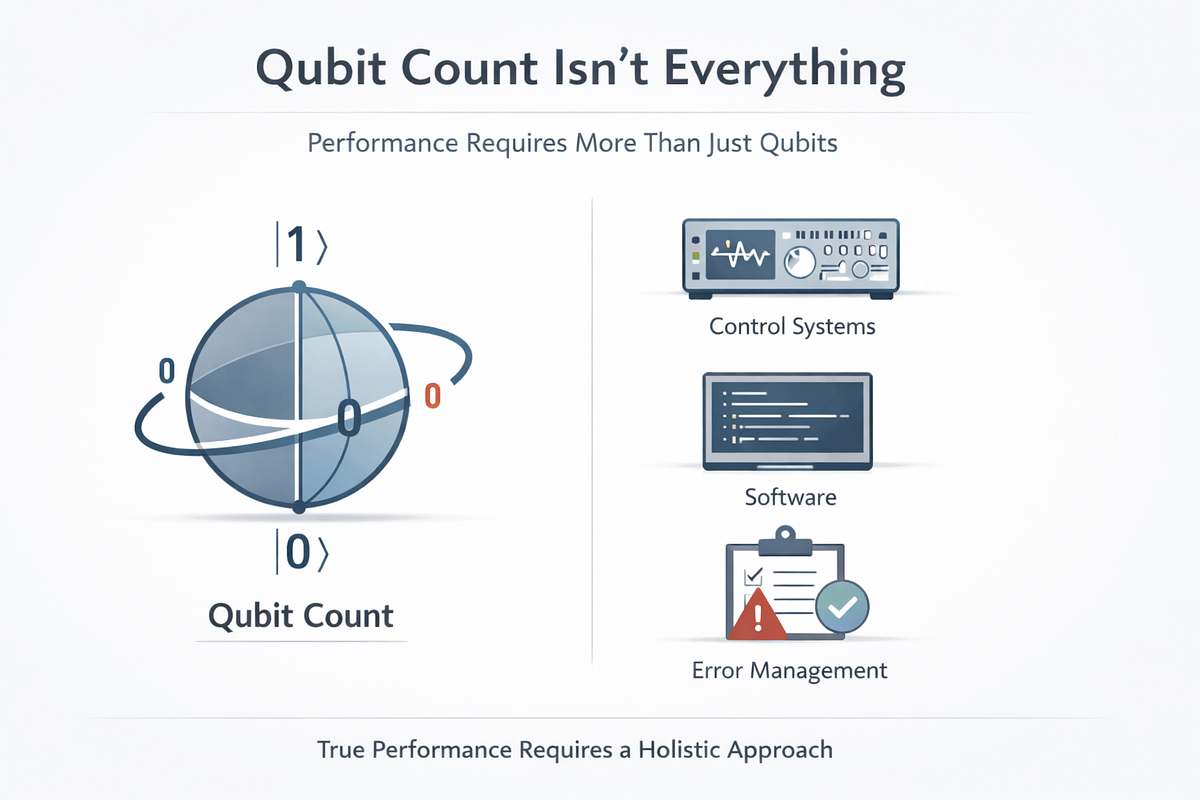
Crucially, raw qubit count is an incomplete metric. A system with more qubits but poorer control, higher noise, or limited connectivity may offer less practical computational power than a smaller, better-engineered machine. In practice, usable qubits — not nominal qubits — define system capability.
3. Control Electronics and Cryogenic Infrastructure: The Hidden Bottleneck
Control systems are among the most under-discussed yet critical components of quantum computing architecture.
Modern quantum processors rely on classical electronics to:
- Generate precise control signals
- Synchronize operations with sub-nanosecond timing accuracy
- Read out qubit states
- Actively compensate for noise and drift
As qubit counts increase, control complexity grows rapidly. Signal routing, wiring density, cross-talk, and thermal constraints — especially in cryogenic environments — become dominant scaling challenges.
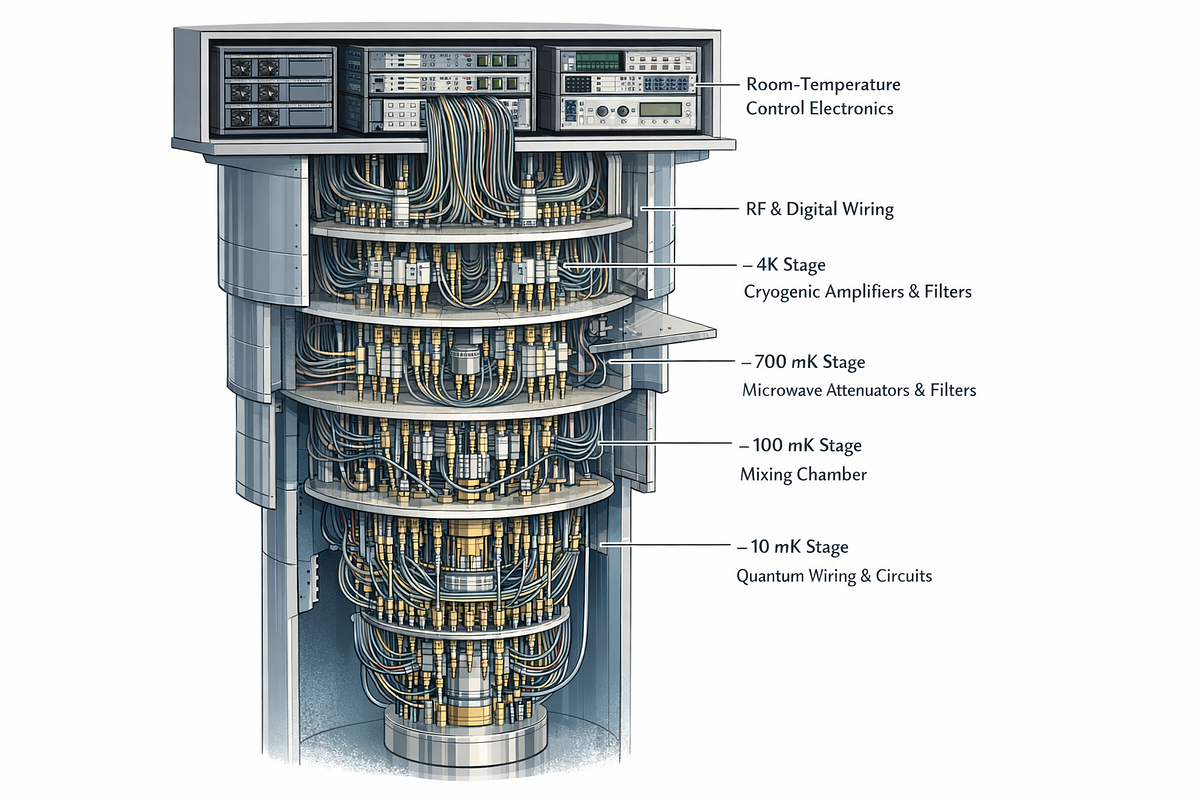
From a systems perspective, many quantum platforms are limited not by qubit physics but by the feasibility of delivering clean, synchronized control signals at scale. Without architectural innovation in control electronics and cryogenic integration, larger processors risk becoming harder to operate without delivering proportional performance gains.
4. Classical–Quantum Integration: Where Computation Really Happens
Despite the name, quantum computers are fundamentally hybrid systems. Classical computing plays a central role in:
- Compiling algorithms into hardware-specific instructions
- Scheduling and orchestrating quantum jobs
- Performing real-time feedback and error mitigation
- Post-processing measurement results
Latency, bandwidth, and scheduling efficiency in classical–quantum interfaces often dominate end-to-end execution time. This is particularly true in the NISQ era, where many algorithms rely on tight classical feedback loops.
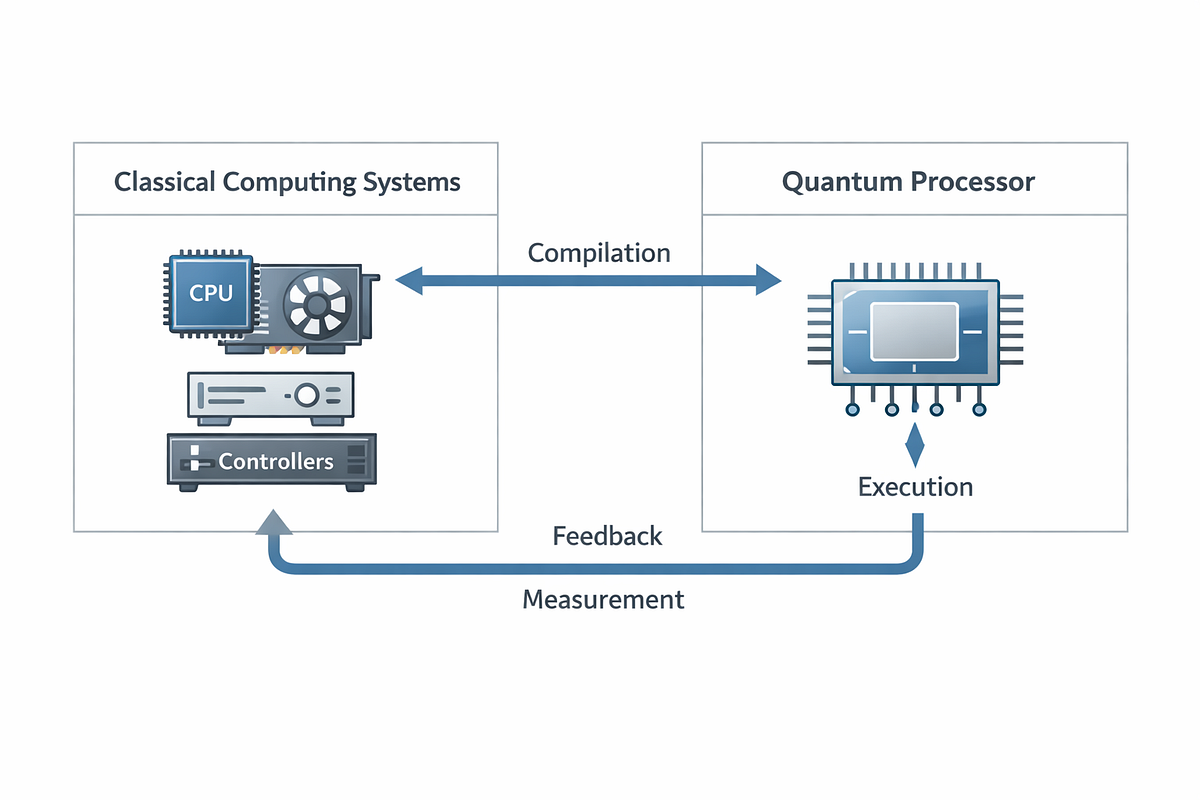
Architecturally, this means quantum advantage is not achieved by the quantum processor alone. It emerges — if at all — from effective co-design between classical and quantum components. Systems that treat this integration as an afterthought tend to underperform, regardless of qubit quality.
5. Middleware, Compilers, and Hardware Awareness
Quantum software is frequently described as hardware-agnostic. In practice, the opposite is true.
Quantum compilers and middleware must account for:
- Hardware connectivity graphs
- Native gate sets
- Noise characteristics and error rates
- Timing and control constraints
A theoretically elegant algorithm can fail if it cannot be mapped efficiently onto a real device. Conversely, hardware-aware compilation and scheduling can extract meaningful performance from noisy systems.
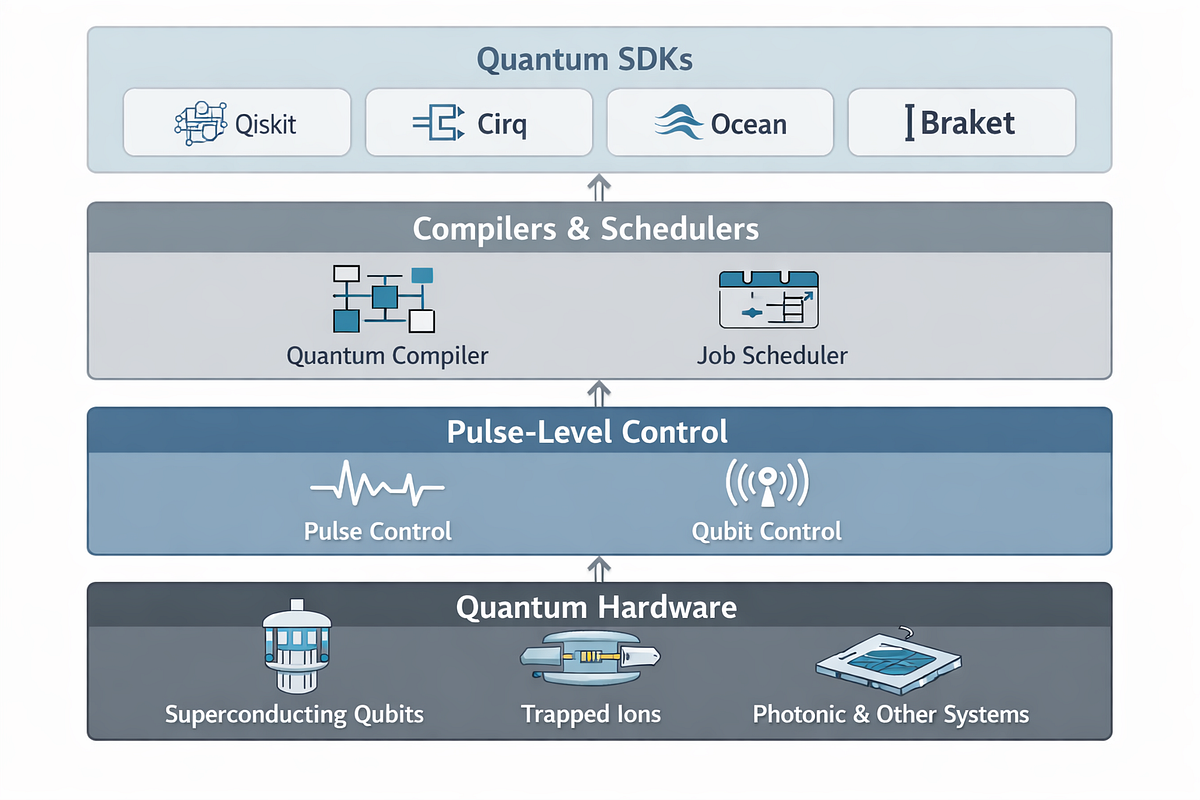
This tight coupling between hardware and software reinforces a key architectural lesson: quantum computing is not a clean abstraction stack. Performance depends on co-design across layers, not separation of concerns.
6. Error Management: Beyond Abstract Error Correction
Error correction is often discussed in theoretical terms, but its architectural implications are profound.
Moving from physical to logical qubits requires:
- Significant qubit overhead
- Continuous syndrome measurement
- High-bandwidth classical processing
- Extremely reliable control and readout
In real systems, error correction is not just a coding problem — it is an operational and architectural one. The resources required for fault tolerance extend far beyond the quantum processor itself, encompassing control electronics, classical compute capacity, and system stability.
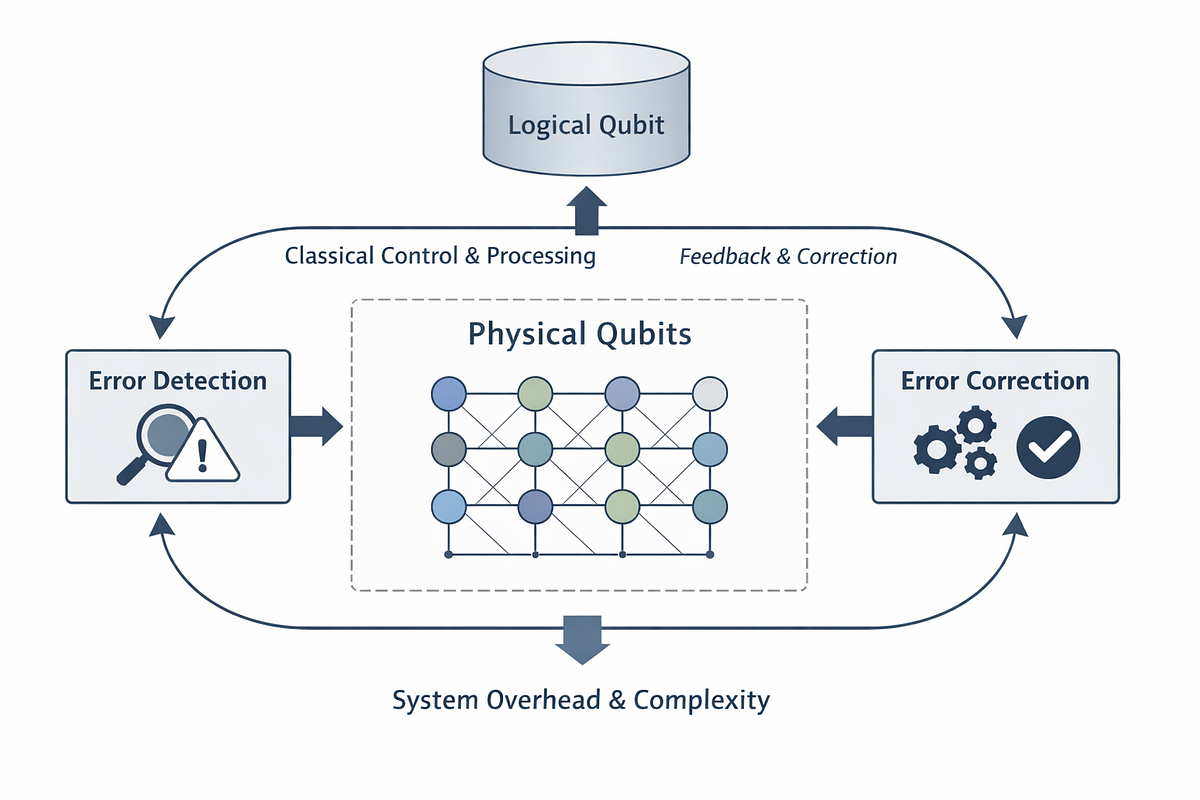
This is why timelines for large-scale fault-tolerant quantum computing are frequently optimistic. Demonstrating error correction in small experiments is fundamentally different from operating a fault-tolerant machine continuously and reliably.
7. Architectural Lessons from Real Platforms
Examining publicly documented systems reveals consistent patterns:
- Superconducting platforms demonstrate fast gates and good integration with classical electronics, but face growing calibration and control overhead as qubit counts rise.
- Trapped-ion systems offer excellent coherence, but introduce challenges in gate speed and laser-based control complexity.
- Quantum annealers highlight how architectural specialization can enable performance for certain problems while limiting generality.
- Photonic approaches show promise for communication and modularity, but face their own scaling and error-management hurdles.
Across all platforms, the same lesson appears: architectural trade-offs, not isolated breakthroughs, determine practical performance.
8. What Most People Get Wrong About Quantum Computing Architecture
Several misconceptions persist:
- “More qubits automatically mean more power.”
Without sufficient fidelity, control, and integration, additional qubits add complexity rather than capability. - “Hardware breakthroughs will solve scalability.”
Control systems, software, and operations often limit scale long before physics does. - “Quantum software is portable.”
Real performance depends heavily on hardware-specific optimization. - “Fault tolerance is just around the corner.”
The architectural overhead required remains enormous and underappreciated.
Correcting these assumptions is essential for realistic planning and investment.
9. Near-Term Reality: NISQ Systems as Architectural Testbeds
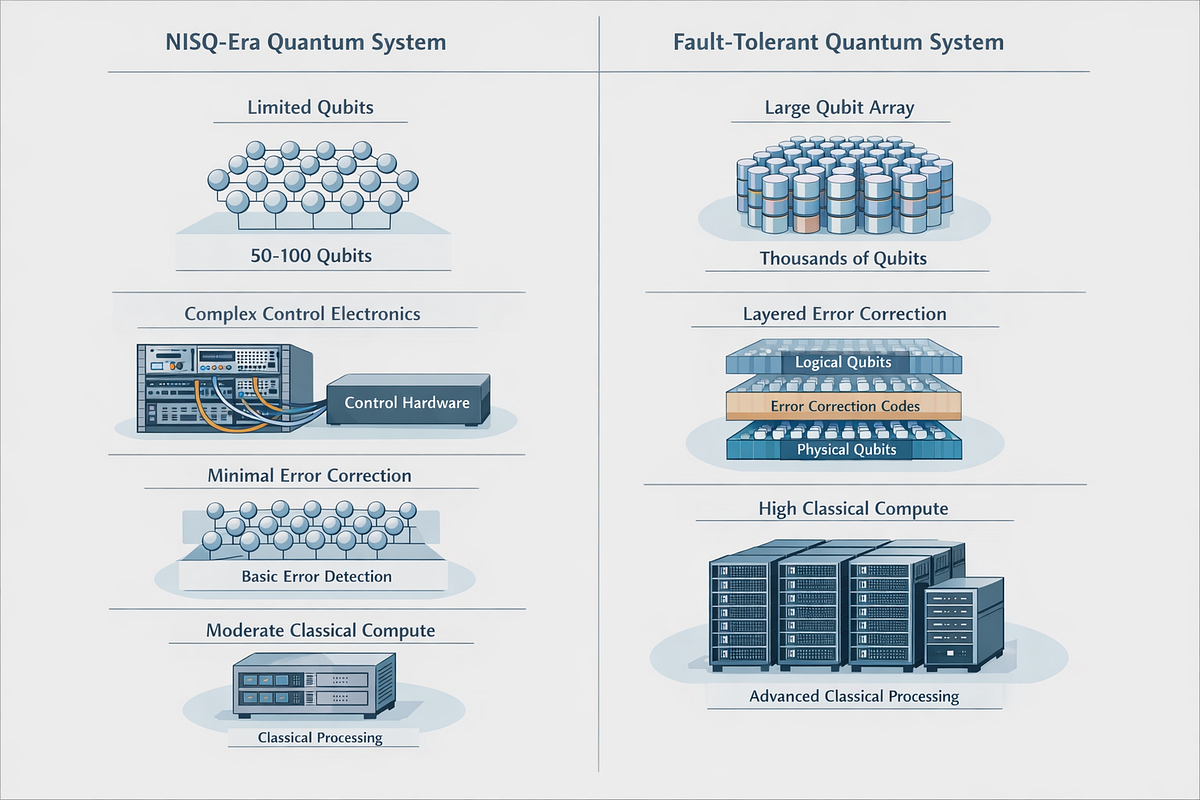
NISQ-era devices are unlikely to deliver a broad, standalone quantum advantage. Their real value lies elsewhere.
They function as testbeds for:
- Control system scalability
- Error mitigation techniques
- Hybrid classical–quantum workflows
- Hardware–software co-design
Progress in these areas will determine whether future systems can scale meaningfully, regardless of qubit technology.
10. Future Outlook: Where Architectural Progress Will Matter Most
Over the next 5–10 years, the platforms most likely to succeed will be those that:
- Design control systems for scalability from the outset
- Treat error management as a system-wide concern
- Invest deeply in hardware–software co-design
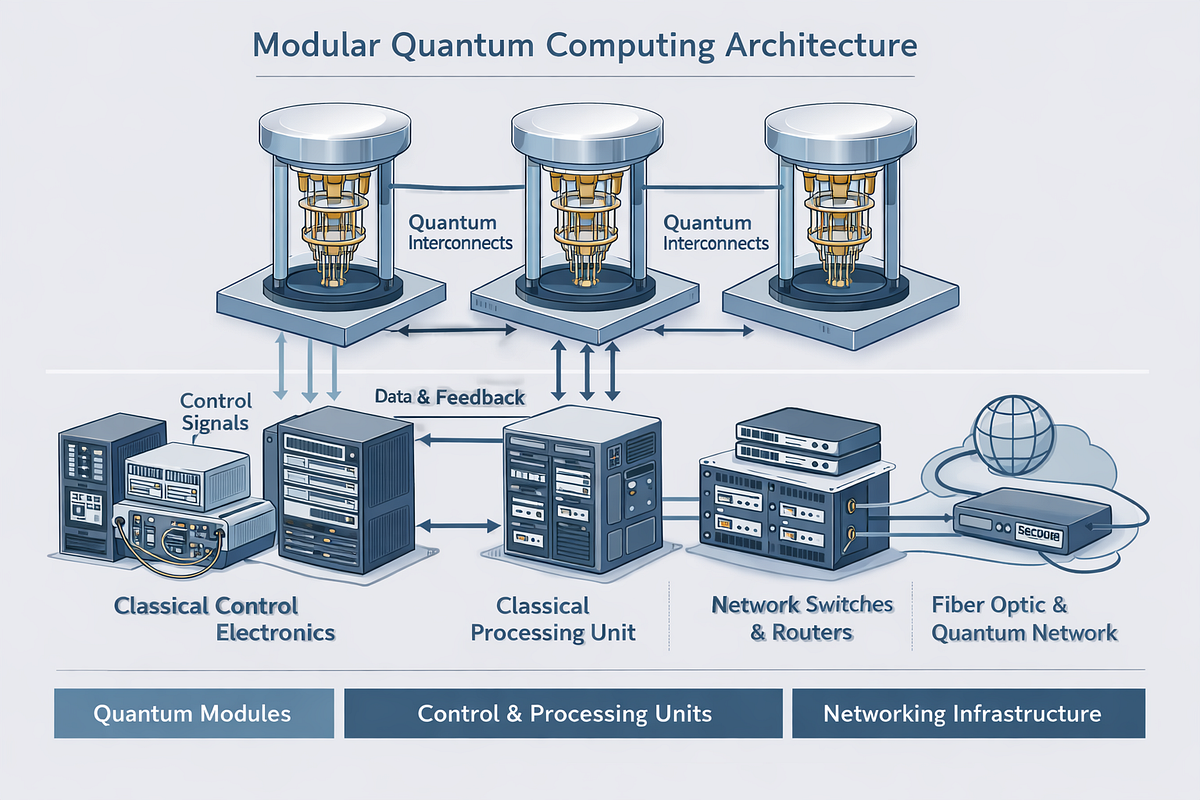
- Embrace modular and heterogeneous architectures
- Balance technical ambition with operational feasibility
The future of quantum computing will not be decided by a single qubit breakthrough. It will be decided by architectural maturity.
Conclusion: Reframing Progress in Quantum Computing
Quantum computing is often portrayed as a physics problem waiting for a breakthrough. In reality, it is already an engineering problem waiting for integration.
The most important advances today are happening not just in qubit labs, but in control electronics, system software, error management, and classical–quantum integration. Understanding quantum computing architecture as a complete system — not a collection of isolated components — is essential for separating hype from progress.
For engineers, researchers, and organizations evaluating quantum computing readiness, this systems-level perspective is no longer optional. It is the only way to assess where the field truly stands — and where it is realistically headed.


Comments
Post a Comment