Design and Implementation of a Quantum Computing System
A Full-Stack, Practical Perspective
Quantum computing is often presented as a breakthrough in physics: qubits, superposition, entanglement, and exotic hardware operating near absolute zero. While all of that is true, it is also deeply misleading. In practice, quantum computing is not primarily a physics problem — it is a systems engineering problem.
What determines whether a quantum computer is usable today is not a single component, such as qubit count or gate fidelity, but how well an entire stack of technologies works together. Hardware, control electronics, compilers, software abstractions, and classical orchestration must all align. Most real-world challenges occur at the boundaries between these layers, not within them.
In this article, I present a pragmatic, full-stack view of how quantum computing systems are designed and implemented today. This perspective is grounded in hands-on work with real quantum platforms, hybrid classical–quantum workflows, and the practical constraints of NISQ-era hardware. The goal is not to hype quantum computing, nor to dive into abstract theory, but to explain how these systems actually work in practice — and where the real trade-offs lie.
Why Quantum Computing Is a Systems Engineering Problem
A useful mental model is to stop thinking of a quantum computer as a standalone device and start thinking of it as a distributed system with a quantum accelerator.
A modern quantum computing system typically includes:
- Physical qubits implemented in specialized hardware
- Control electronics that generate precise pulses and measurements
- Firmware and calibration layers that translate abstract gates into hardware signals
- Compilers that map logical circuits onto constrained physical topologies
- Classical compute resources that orchestrate execution, preprocessing, and post-processing
- Cloud infrastructure that manages scheduling, access control, and data movement
If any one of these layers is poorly designed or poorly integrated, the entire system underperforms — regardless of how advanced the qubits themselves may be.
This is why many early expectations around quantum computing failed to materialize. The industry focused heavily on individual breakthroughs (more qubits, better coherence) while underestimating the complexity of building a coherent, end-to-end system.
What a Quantum Computing System Actually Looks Like
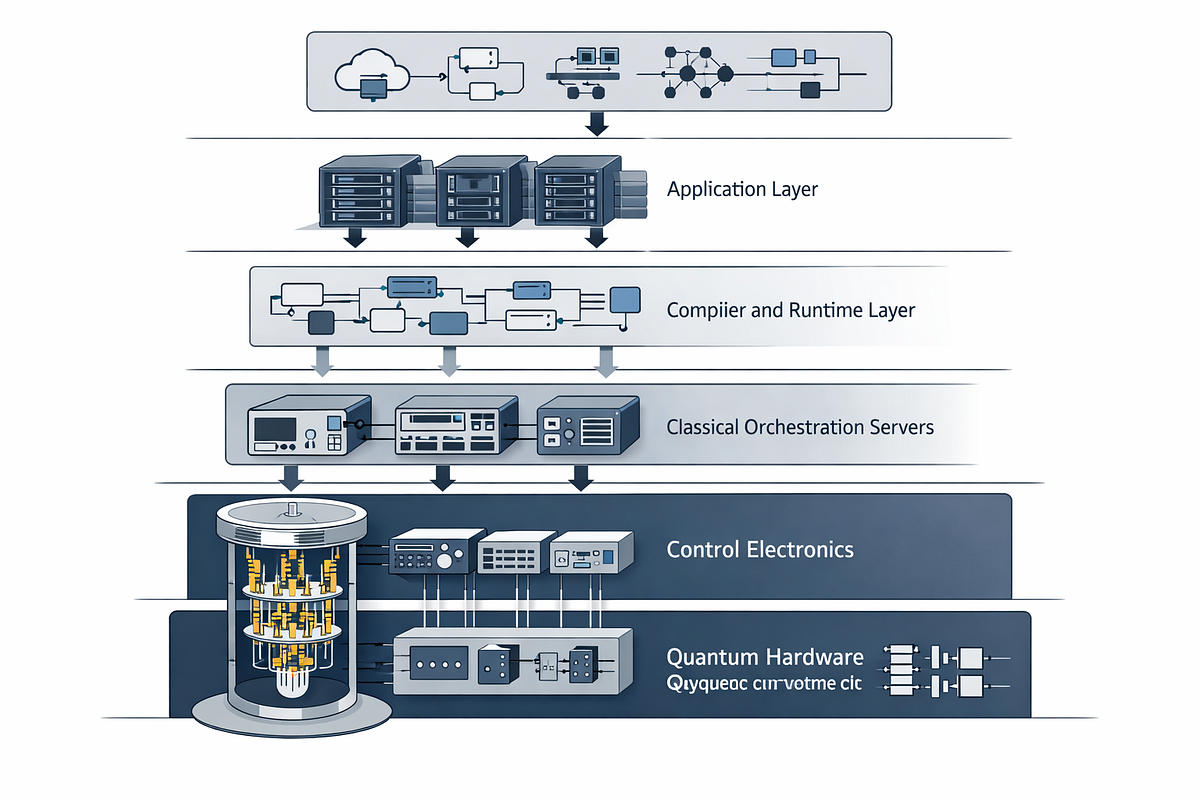
At a high level, a practical quantum computing system can be viewed as a layered architecture:
- Quantum Hardware Layer
Physical qubits are implemented using superconducting circuits, trapped ions, or other technologies. - Control and Measurement Layer
Hardware and firmware are responsible for pulse generation, timing, calibration, and readout. - Compiler and Runtime Layer
Software that translates abstract quantum programs into hardware-executable instructions. - Classical Orchestration Layer
Classical computation that prepares inputs, schedules jobs, and processes outputs. - Application Layer
Algorithms, workflows, and hybrid pipelines that solve domain-specific problems.
The key insight is that these layers are tightly coupled. Hardware constraints directly shape compiler behavior. Compiler decisions affect control requirements. Classical orchestration determines whether hybrid algorithms are feasible at all.
Treating these layers independently is one of the most common mistakes made by teams new to quantum computing.
Hardware Architectures and Their System-Level Implications
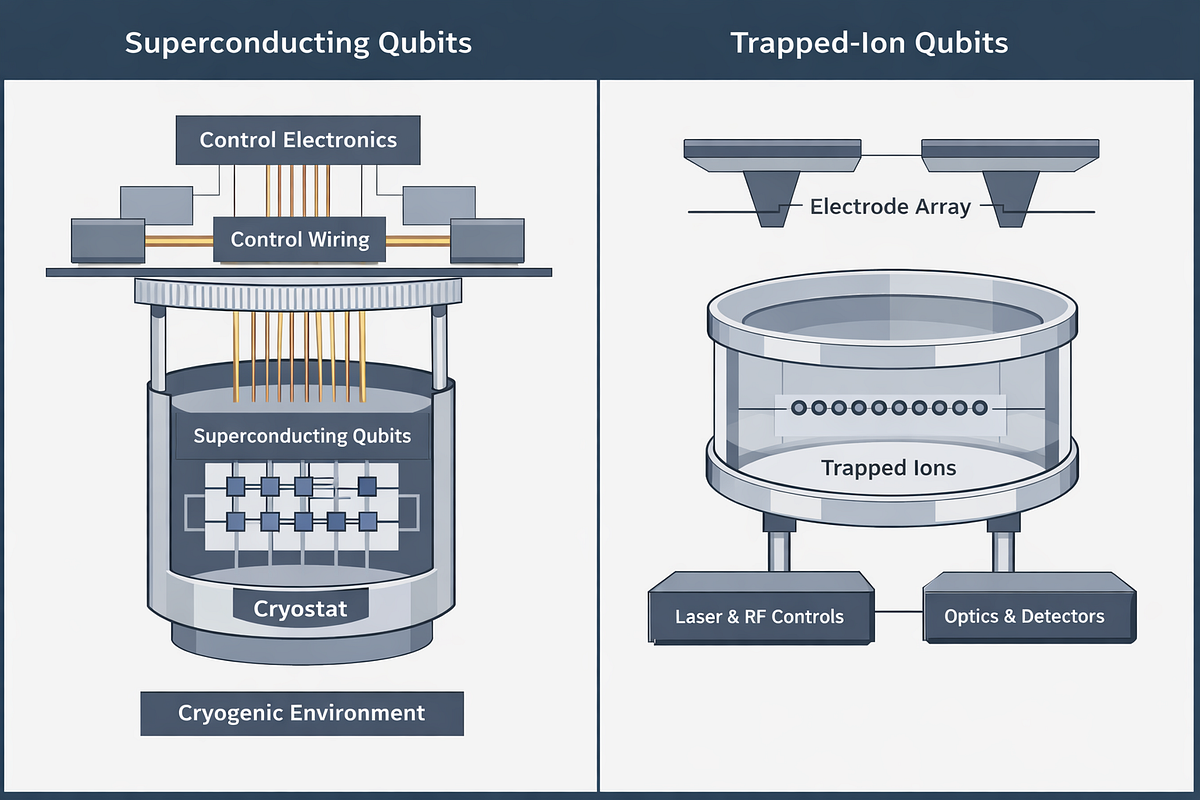
While many qubit technologies exist, two architectures dominate practical, cloud-accessible systems today: superconducting qubits and trapped-ion qubits. Understanding their system-level implications is more important than understanding their underlying physics.
Superconducting Qubits
Superconducting systems, used by platforms such as IBM Quantum and Rigetti, offer:
- Fast gate operations
- Mature fabrication techniques
- Strong integration with classical control electronics
From a systems perspective, their main challenges are:
- Relatively high noise and decoherence
- Limited qubit connectivity
- Frequent calibration requirements
These constraints push complexity upward into the software stack. Compilers must aggressively optimize qubit mapping and gate scheduling. Control systems must continuously recalibrate to maintain performance. As a result, software–hardware co-design is critical.
Trapped-Ion Systems
Trapped-ion platforms, such as IonQ, offer:
- High-fidelity gates
- Excellent qubit connectivity
- Long coherence times
However, they also introduce trade-offs:
- Slower gate execution
- More complex scaling paths
- Different control and timing constraints
From a system design standpoint, trapped-ion architectures simplify certain compiler problems (connectivity) while complicating others (timing and throughput). They often perform better on smaller, deeper circuits but face challenges when scaling to higher throughput workloads.
Annealing and Specialized Systems
Quantum annealers, such as those produced by D-Wave, represent a different paradigm entirely. They are not general-purpose quantum computers but can be highly effective for specific optimization problems.
The key lesson is that architecture choice shapes the entire system, from compiler design to application suitability. There is no universally “best” hardware — only architectures that are better suited to particular workloads and integration models.
Control Layers: The Hidden Core of Quantum Systems
Control electronics and calibration are among the most underappreciated components of quantum computing systems.
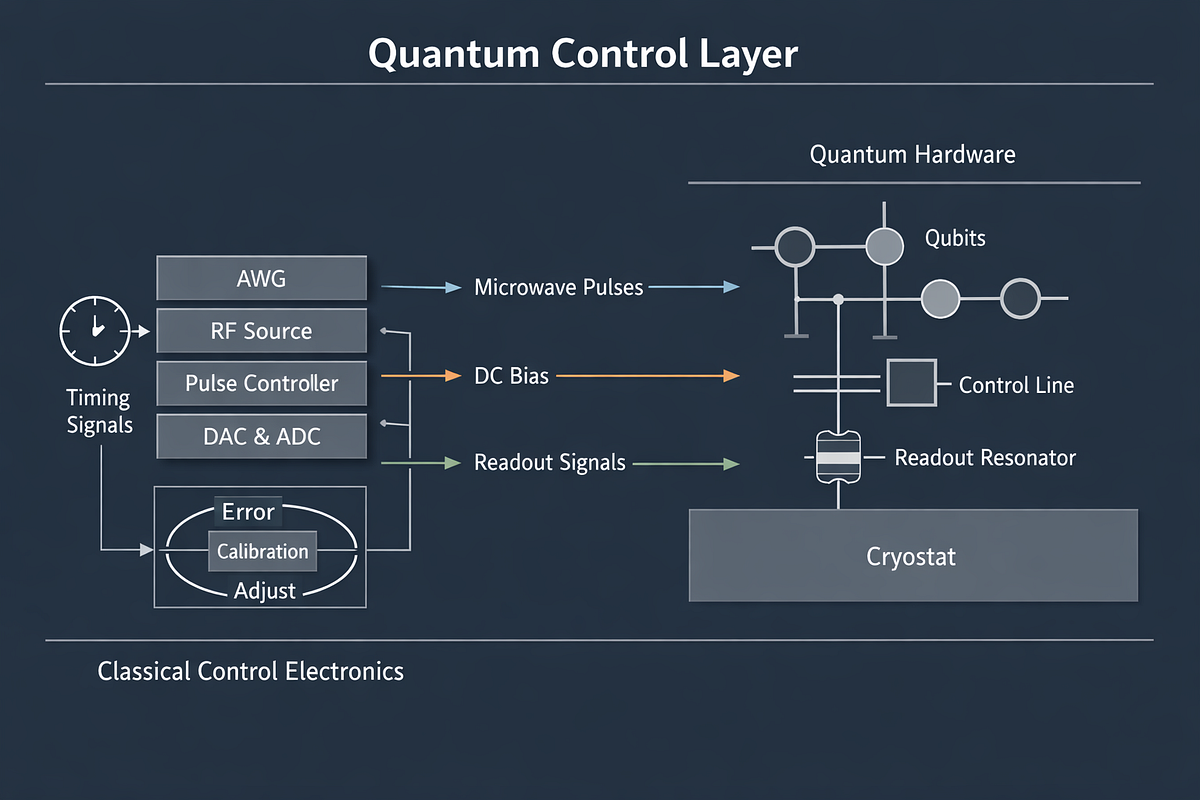
Between an abstract quantum gate and a physical qubit lies a complex translation process involving:
- Pulse shaping and timing
- Crosstalk mitigation
- Continuous calibration
- Measurement synchronization
Small imperfections in this layer can invalidate entire experiments. In practice, I have found that performance bottlenecks often originate here rather than in the algorithm itself.
This is also where system designers face a key trade-off: low-level control versus high-level abstraction.
- Low-level pulse control enables aggressive optimization but increases system complexity.
- High-level abstractions improve developer productivity but hide hardware realities.
There is no single correct choice. Effective systems often expose multiple layers of abstraction, allowing developers to drop down when optimization is required.
The Quantum Software Stack: Compilers, Abstractions, and Reality
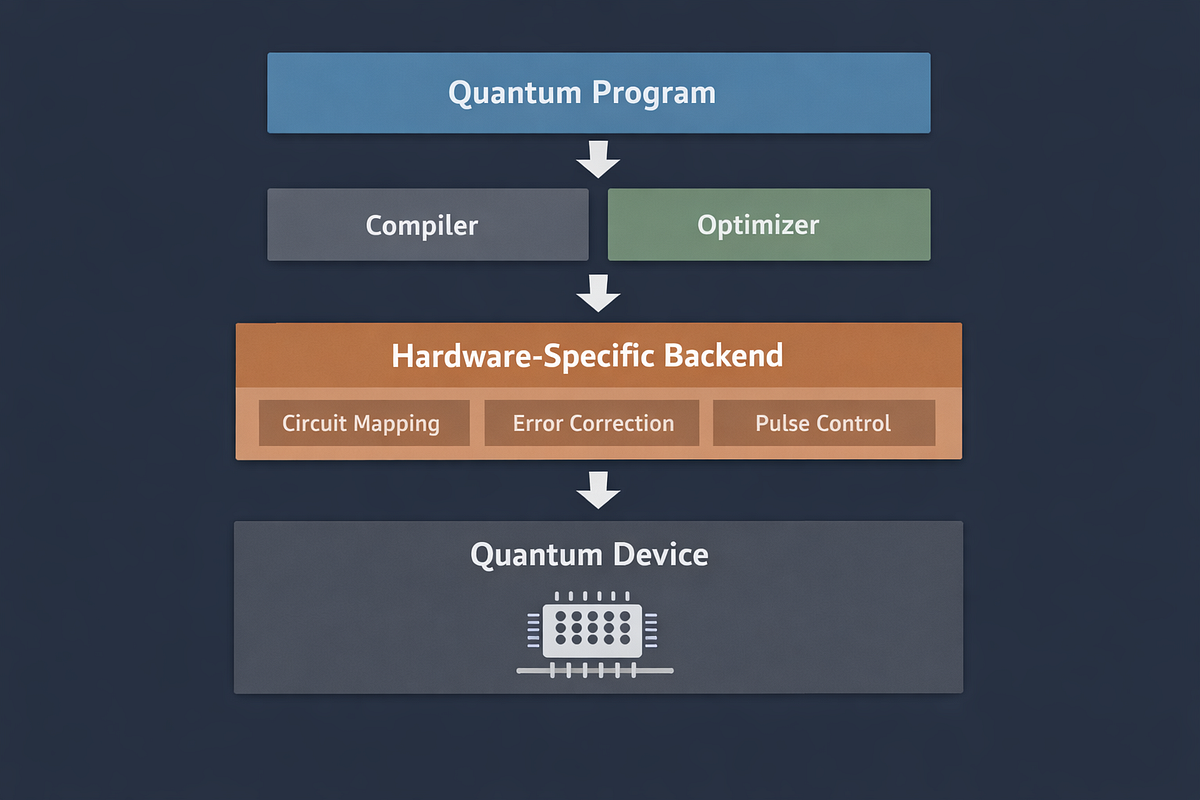
Quantum software frameworks such as Qiskit and Cirq play a central role in making quantum systems usable. They provide:
- High-level programming models
- Circuit construction tools
- Compiler passes for optimization and mapping
- Interfaces to real hardware and simulators
However, these frameworks also introduce constraints. Abstracting hardware details makes quantum computing more accessible, but it can also obscure critical system-level trade-offs.
In practice, I have repeatedly encountered situations where:
- A circuit that performs well in simulation fails on hardware due to mapping overhead.
- Compiler optimizations increase depth in unexpected ways.
- Hardware-specific features are inaccessible through high-level APIs.
The takeaway is simple: compilers are not neutral intermediaries. They encode assumptions about hardware, performance, and trade-offs. System designers must understand these assumptions to avoid unpleasant surprises.
Hybrid Classical–Quantum Workflows in Practice
One of the most important realities of quantum computing today is that quantum systems do not operate alone. Nearly all practical applications rely on hybrid classical–quantum workflows.
Common patterns include:
- Classical preprocessing to reduce problem size
- Quantum execution on carefully chosen subproblems
- Classical post-processing to interpret results
- Iterative feedback loops between classical and quantum stages
While conceptually straightforward, implementing these workflows introduces real engineering challenges:
- Latency between classical and quantum resources
- Scheduling and batching constraints
- Data serialization and transfer overhead
- Failure handling and retry logic
Early on, I underestimated how much effort would be required to make these pipelines reliable. In practice, orchestration complexity often dominates algorithmic complexity.
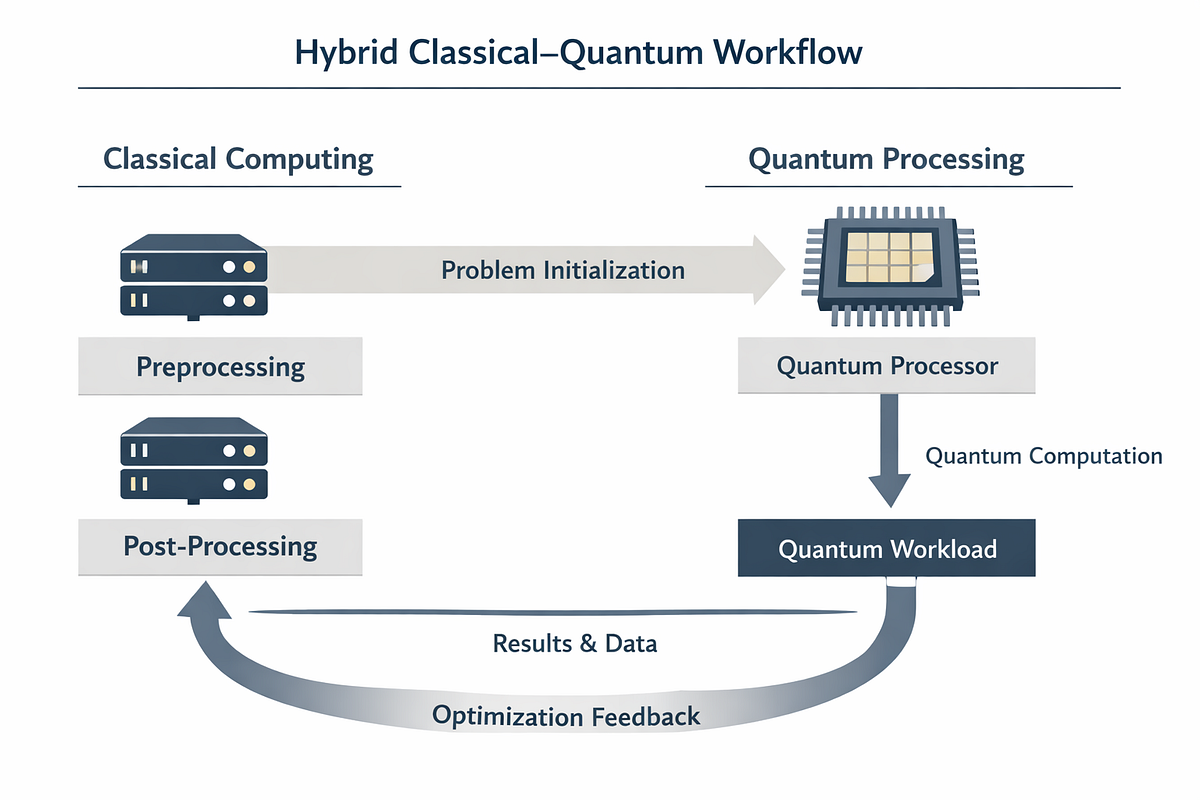
Organizations that ignore this layer tend to struggle, regardless of how advanced their quantum algorithms may be.
Lessons Learned from NISQ-Era Implementations
Working with real NISQ-era systems has consistently reinforced a few hard truths.
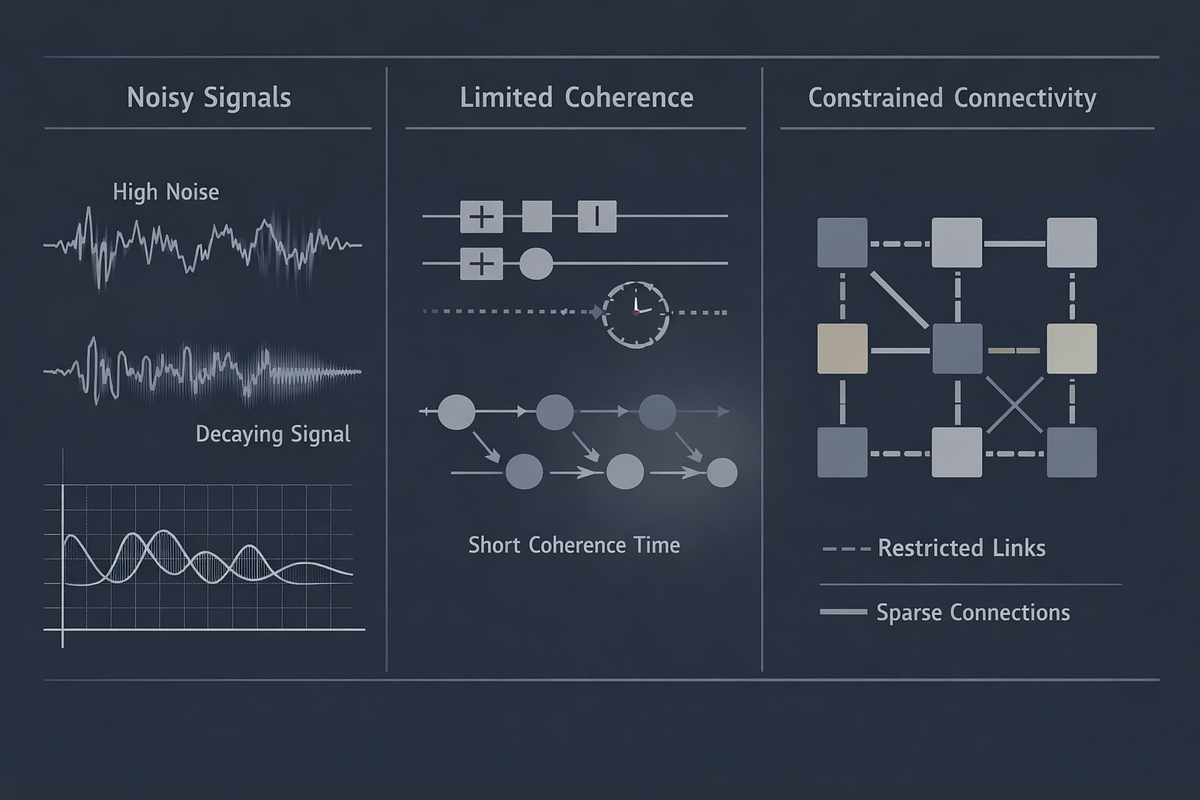
Noise Dominates Design Decisions
Idealized algorithms rarely survive first contact with real hardware. Noise, decoherence, and readout errors shape everything from circuit depth to qubit mapping.
Simulators Are Guides, Not Truth
Simulators are invaluable for development and debugging, but they do not capture calibration drift, crosstalk, or transient noise. Real hardware validation is non-negotiable.
Connectivity Matters More Than Qubit Count
Adding qubits without improving connectivity often degrades performance. Extra SWAP operations quickly overwhelm theoretical gains.
Iteration Is Unavoidable
Most initial designs fail or require redesign. Treating this as expected — not exceptional — is critical for progress.
Common Misconceptions About Quantum Computing Systems
Several misconceptions persist across industry and academia:
- More qubits automatically mean more power.
In reality, effective qubits matter more than raw counts. - Error correction is a near-term solution.
Error correction remains expensive and experimentally challenging. - Hardware is the only bottleneck.
Software stacks, orchestration, and integration are equally limiting. - Quantum computers are general-purpose today.
Current systems are highly specialized and problem-dependent.
Dispelling these misconceptions is essential for realistic planning and investment.
Under-Discussed Trade-Offs in System Design
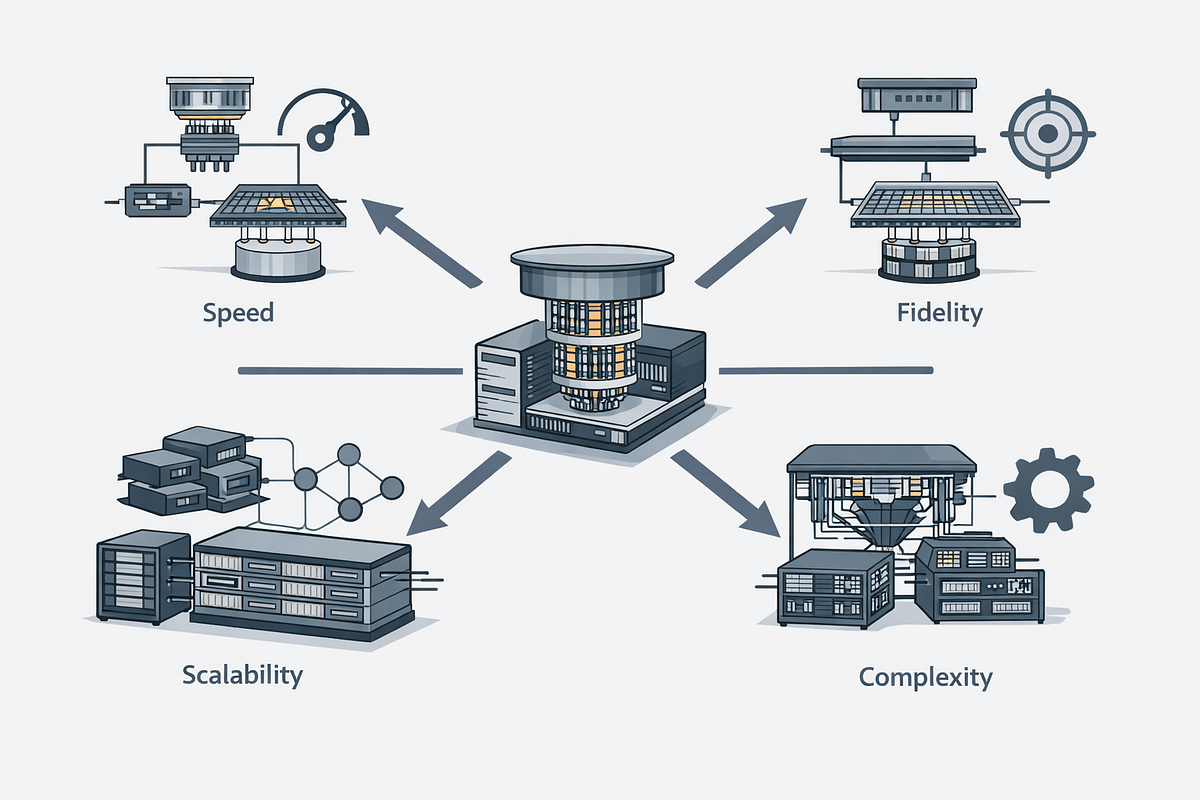
Some of the most important design trade-offs receive surprisingly little attention:
- Fidelity versus speed
- Error mitigation versus circuit depth
- Abstraction versus optimization
- Hybrid integration versus operational complexity
- Cloud accessibility versus system control
None of these trade-offs have universal answer. The correct choice depends on workload, scale, and organizational goals.
Practical Rules of Thumb
Over time, I have adopted several heuristics that consistently improve outcomes:
- Design for current hardware, not future promises.
- Keep circuits as shallow as possible.
- Validate early and often on real hardware.
- Optimize qubit mapping aggressively.
- Leverage classical computation wherever possible.
- Apply error mitigation selectively.
- Modularize workflows to support iteration.
These rules are not theoretical ideals — they are survival strategies for working with NISQ-era systems.
Hype Versus Reality
Quantum computing is neither a near-term miracle nor a dead end. It is an emerging technology with real constraints and real opportunities.
The hype tends to focus on breakthroughs and timelines. The reality is slower, more incremental, and far more dependent on engineering discipline than on headline announcements.
Meaningful progress today comes from:
- Careful system integration
- Realistic expectations
- Incremental experimentation
- Hybrid architectures
Promising Paths Forward
From a system design perspective, the most promising directions include:
- Superconducting and trapped-ion architectures with improved control and calibration
- Hybrid classical–quantum systems
- Specialized quantum accelerators for optimization and simulation
- Continued investment in software stacks and orchestration
Conversely, approaches that ignore system-level integration or assume premature fault tolerance are unlikely to deliver near-term value.
How Organizations Should Prepare Today
Organizations interested in quantum computing should focus on:
- Building hybrid classical–quantum workflows
- Developing full-stack expertise
- Experimenting via cloud-accessible platforms
- Training engineers and architects — not just theorists
- Designing modular, adaptable systems
Quantum readiness is not about owning hardware; it is about understanding how quantum systems fit into real computational pipelines.
Conclusion: Why Full-Stack Thinking Matters
The future of quantum computing will not be determined by qubits alone. It will be determined by how well we design, integrate, and operate complete systems.
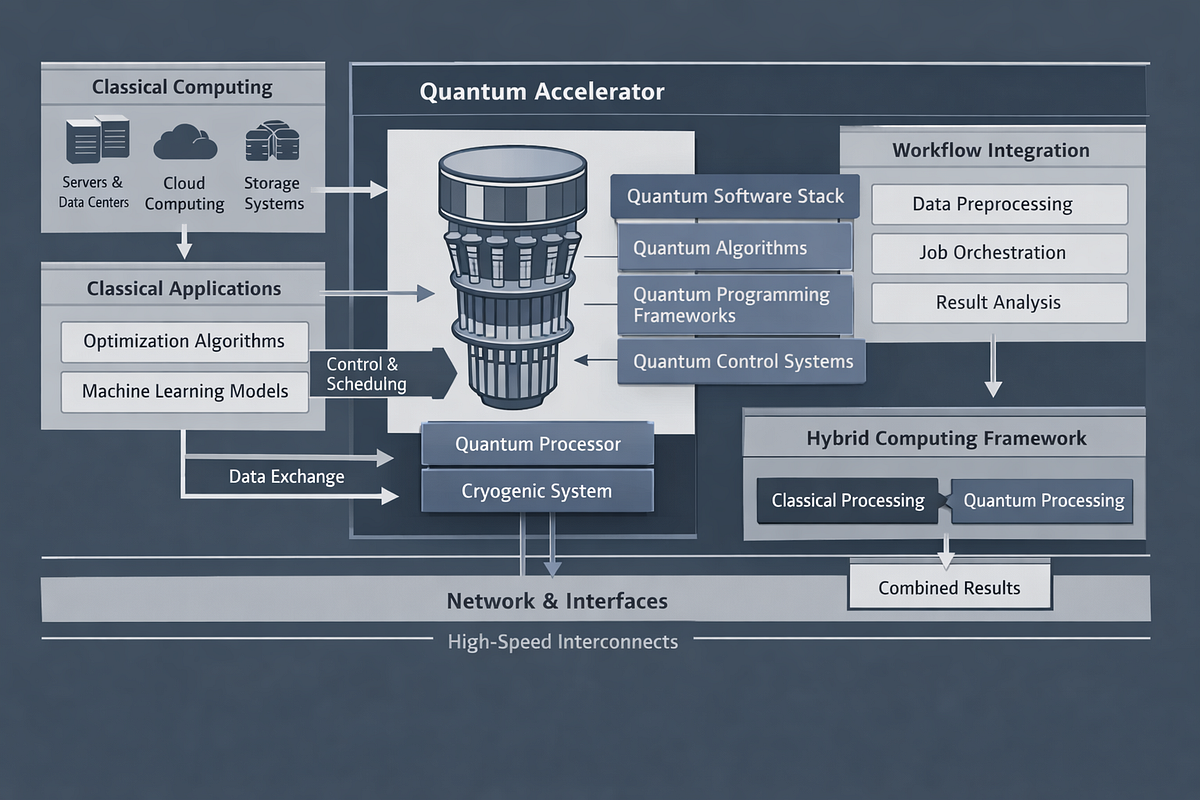
Quantum computing today is an engineering challenge before it is a scientific one. Those who approach it with a full-stack, pragmatic mindset will be best positioned to extract real value — both now and as the technology matures.
Understanding the system is the first step toward making quantum computing practical.


Comments
Post a Comment