FunnelCockpit: Your All-in-One Funnel Performance Dashboard
Why serious funnel optimization starts with revenue, not reports
For more than a decade, I have worked hands-on with funnels, analytics stacks, paid traffic, CRMs, and revenue attribution systems. I have built funnels from scratch, inherited broken ones, optimized high-ticket offers, scaled SaaS onboarding flows, and audited more dashboards than I care to remember.
Across all of that work, one pattern keeps repeating:
Most funnels are not underperforming because of bad marketing — they are underperforming because teams cannot see where revenue is actually being lost.
That realization is why tools like FunnelCockpit matter. Not as “another dashboard,” but as a fundamentally different way of understanding funnels: as revenue systems, not collections of pages or events.
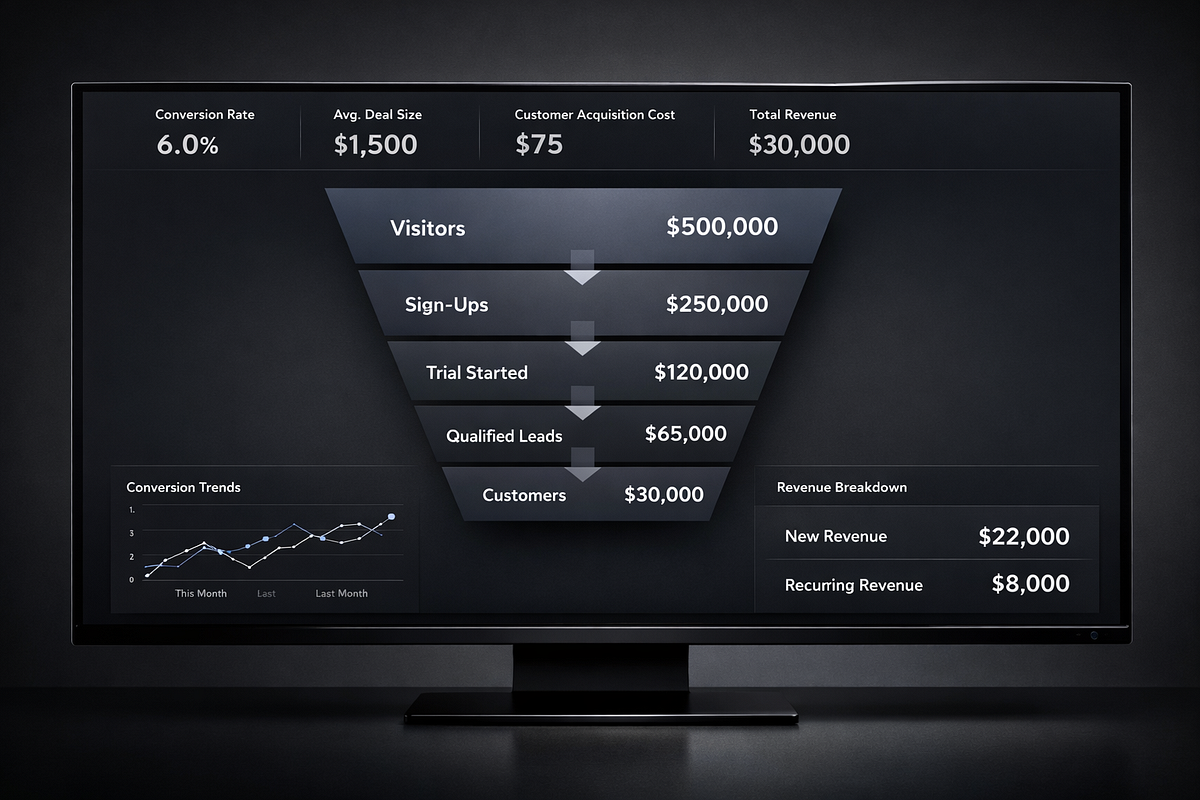
This article is written from a practitioner’s perspective — not as vendor marketing, but as someone who uses FunnelCockpit to diagnose leaks, prioritize optimizations, and make decisions that materially impact revenue.
The Core Problem: Funnel Analytics Are Fragmented by Design
Before FunnelCockpit, nearly every team I worked with relied on a familiar patchwork:
- Ad platforms for clicks, leads, and self-reported ROAS
- GA4 for events, sessions, and funnel visualizations
- CRMs and email tools for leads, automations, and sales
- Checkout systems for actual revenue
- Spreadsheets to glue everything together
On paper, this looks comprehensive. In practice, it consistently fails once funnels become multi-step, multi-channel, and revenue-critical.
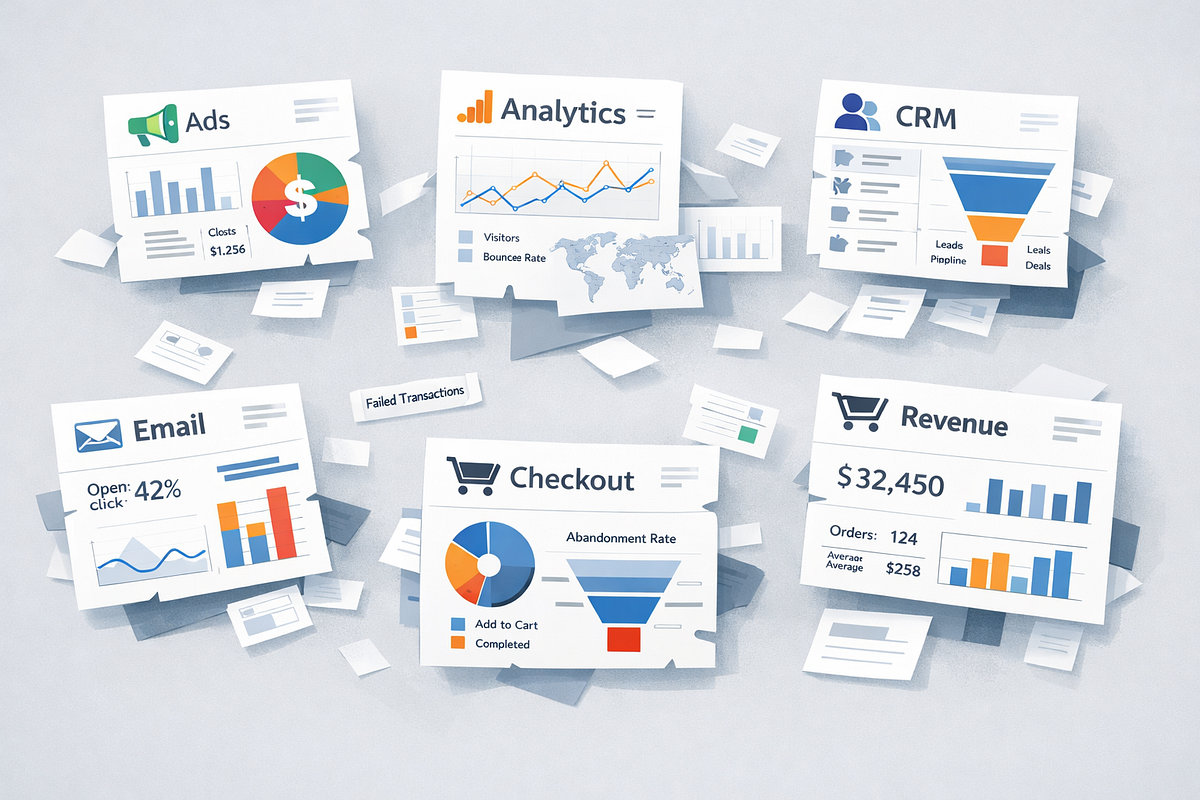
Why this setup breaks down
- No end-to-end visibility
You can see parts of the funnel, but not the full journey from click → lead → sale → LTV. - Decisions driven by incomplete metrics
Teams optimize for CTR, cost per lead, or platform-reported ROAS — metrics that often have little correlation with profit. - Manual reporting becomes a bottleneck.
Hours spent exporting data and reconciling mismatched numbers, just to answer basic questions like:
Which funnel actually makes money? - Analytics tools don’t scale with funnel complexity
As soon as you introduce webinars, email sequences, upsells, or external checkouts, traditional analytics stop being actionable.
The systemic issue is not execution — it is visibility.
Funnels are revenue systems, but most analytics tools were never built to see them that way.
The Most Misunderstood Truth About Funnel Analytics
The biggest misconception I see is this:
More data leads to better decisions.
In reality, most teams are drowning in data and starving for insight.
They track hundreds of events, build complex dashboards, and still cannot answer the only question that matters:
“Which funnel step is costing us the most money right now?”
Where funnel analytics typically goes wrong:
- Confusing activity tracking with performance insight
- Obsessing over platform-native metrics instead of revenue outcomes
- Treating funnels as isolated pages instead of interconnected systems
- Chasing perfect attribution instead of decision clarity
Funnel analytics is not about reporting what happened.
It is about guiding what to fix next.
If a dashboard does not surface bottlenecks, quantify revenue impact, and help prioritize action, it is documentation — not analytics.
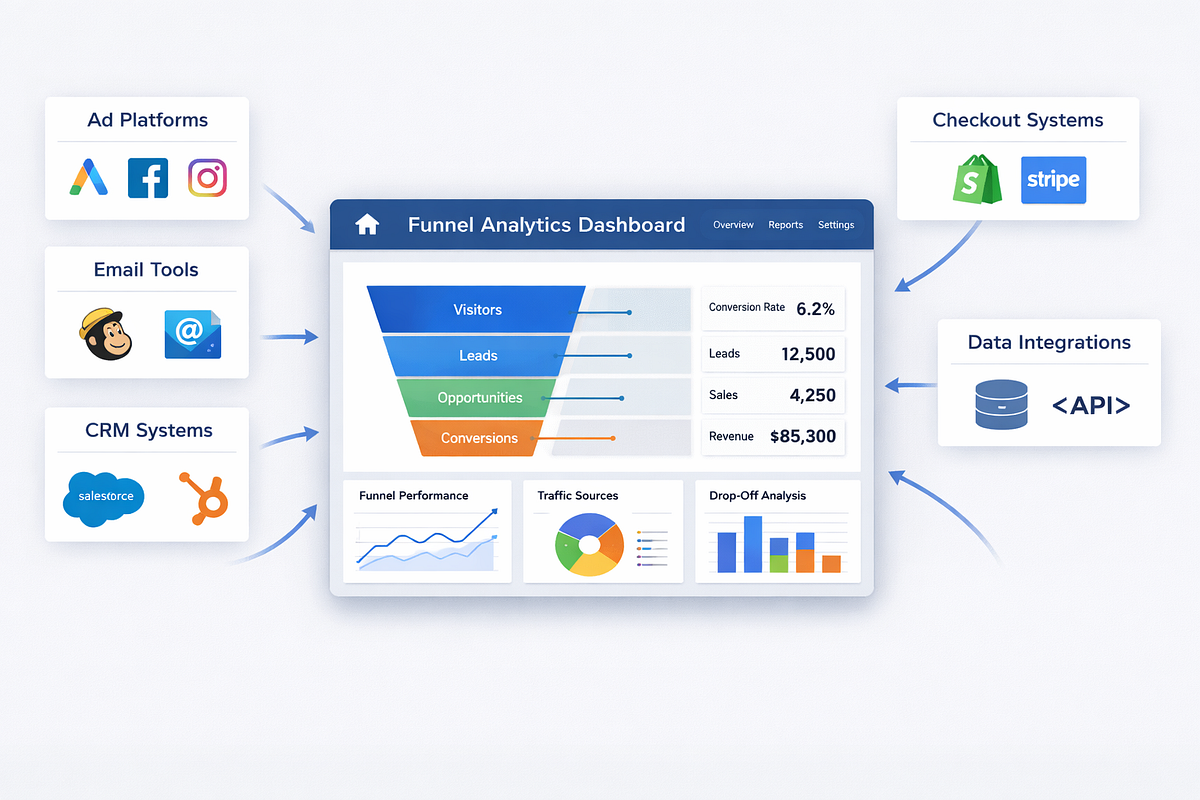
What Makes FunnelCockpit Different (Beyond the Obvious)
Most alternatives can technically show similar data. The difference is that FunnelCockpit is built around funnels as first-class objects, not retrofitted on top of events or tables.
Here are the non-obvious differentiators that matter in real funnels:
1. Funnel-native data modeling
FunnelCockpit understands flow, step dependency, and economic impact.
GA4 tracks events. BI tools visualize tables. FunnelCockpit understands where the funnel breaks.
2. Revenue-first KPIs by default
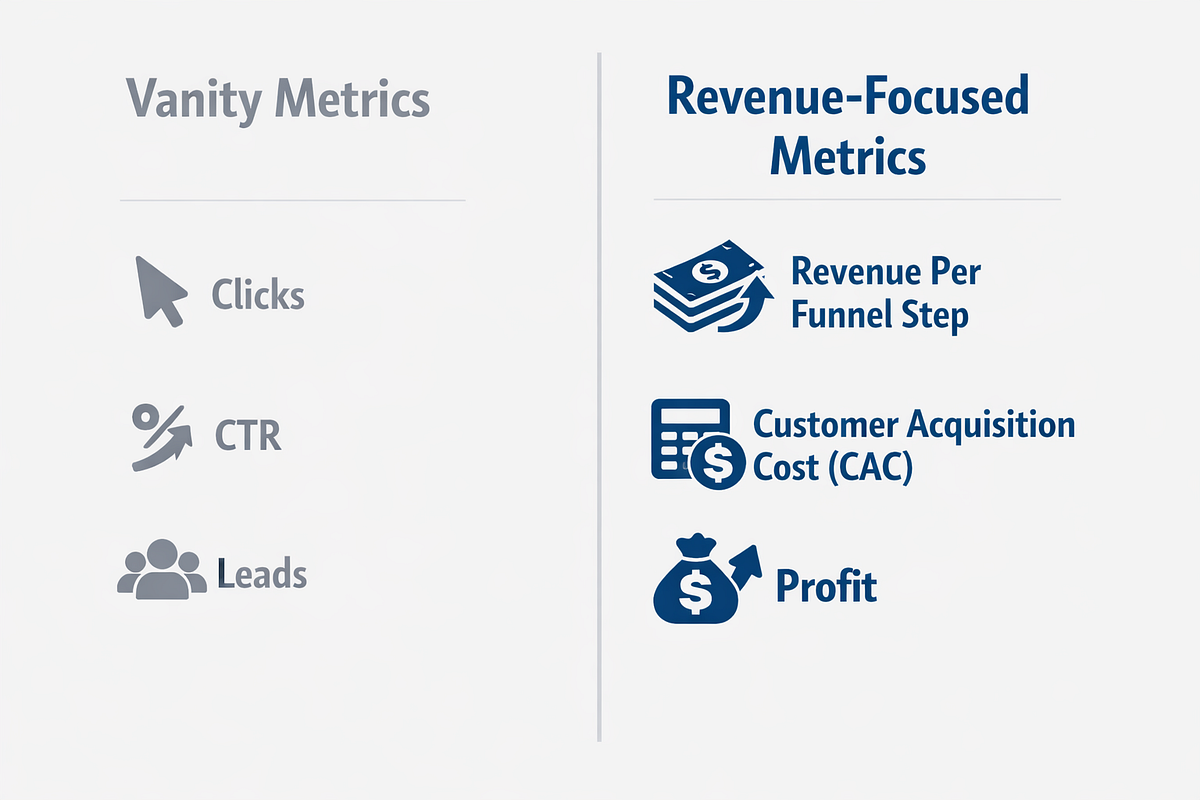
Not clicks. Not leads.
Metrics like revenue per funnel step, cost per paying customer, and revenue-weighted leakage drive every view.
3. Cross-tool reality checks
Ad platforms self-attribute. CRMs lack traffic context. Analytics tools lack revenue truth.
FunnelCockpit acts as a neutral layer that exposes inconsistencies instead of hiding them.
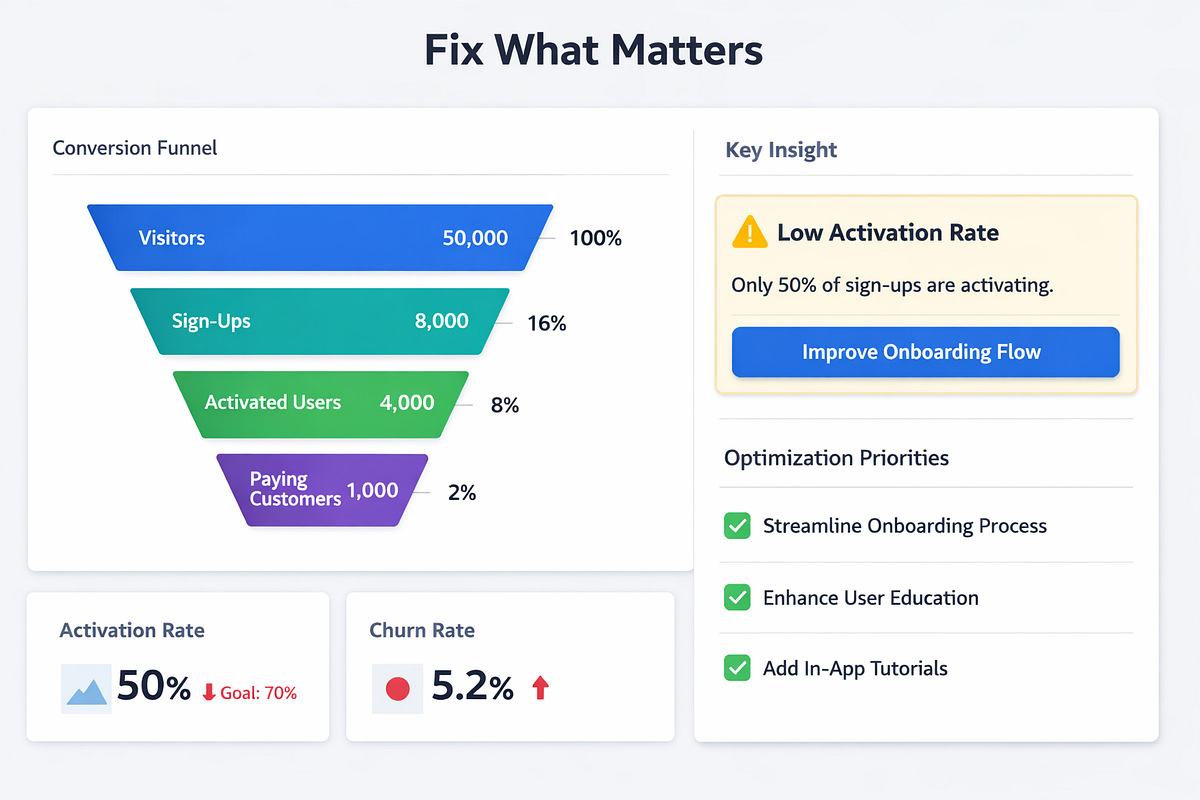
4. Actionable prioritization
Most dashboards answer “How did we do?”
FunnelCockpit answers “What should we fix first to make more money?”
5. Built for operators, not analysts
No SQL, no constant schema maintenance, no dashboard sprawl.
Insights stay usable even as funnels, traffic sources, and clients scale.
The result is not more reporting — it is faster, clearer decisions.
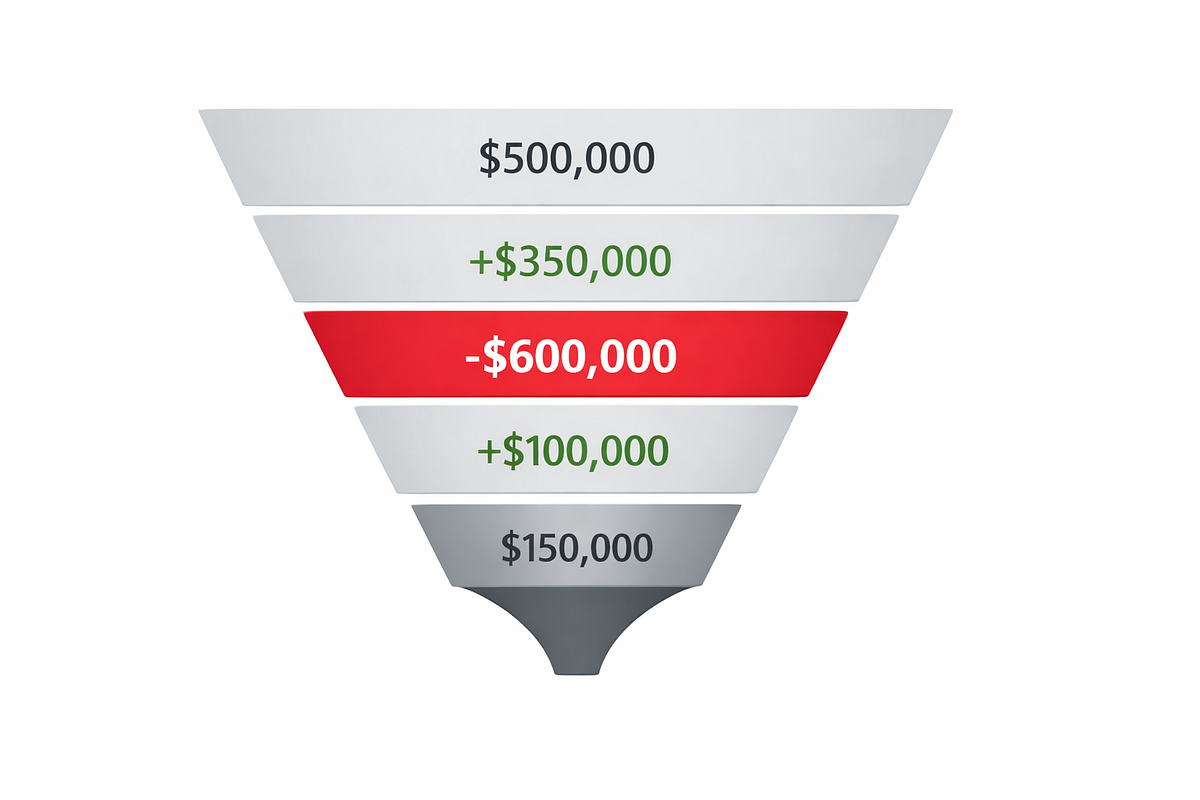
The Feature Everyone Underestimates: Step-Level Revenue Impact
Nearly every user thinks they understand their funnel — until they see revenue attached to every step.
Conversion rates alone are deceptive.
A step with a “healthy” conversion rate can still destroy profitability if it sits before high-value actions. Conversely, a step with a scary drop-off may be irrelevant if it carries little revenue weight.
Once you see revenue impact per step, decisions change immediately:
- You stop optimizing what looks broken
- You start fixing what is actually costing money
- You realize how small improvements upstream compound downstream
This is the moment FunnelCockpit stops being “analytics” and becomes a decision system.
Real-World Results: What This Looks Like in Practice
Case Study: High-Ticket Coaching Funnel
Funnel: Webinar → Application → Sales Call (€5,000 offer)
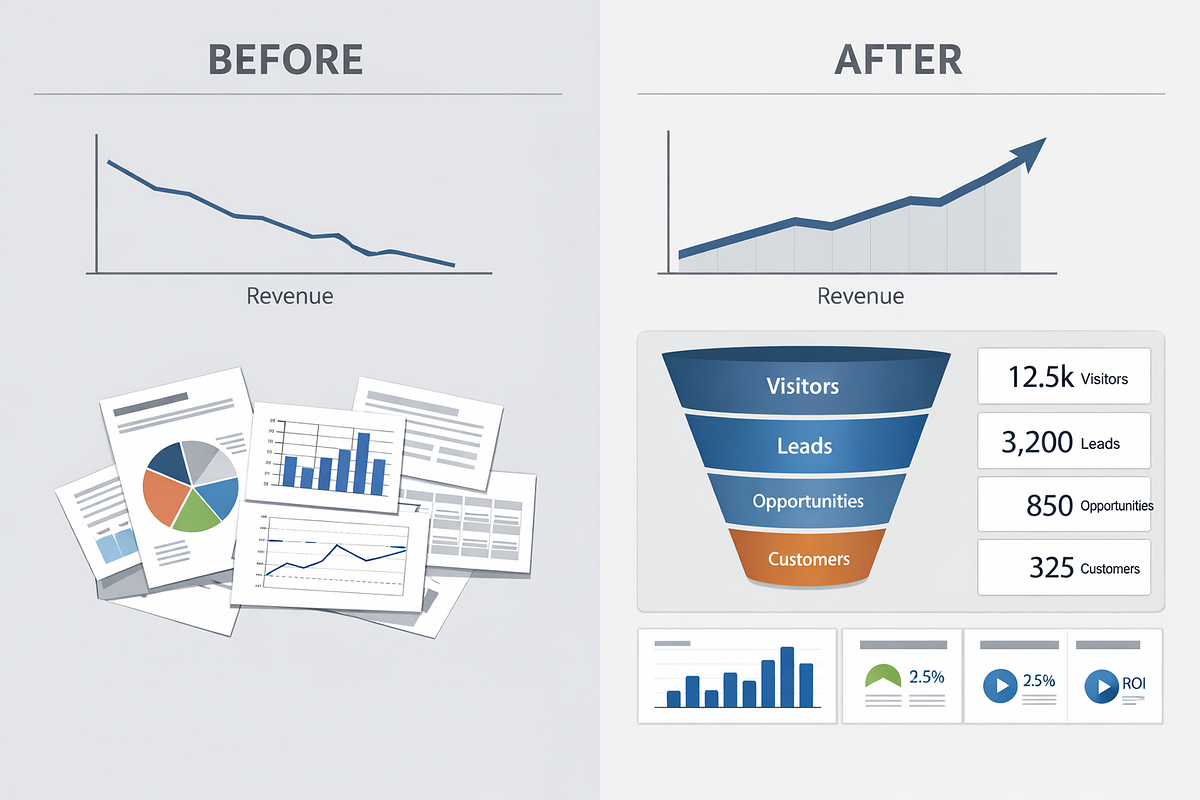
Before:
- Strong CTR and platform ROAS
- “Decent” conversion rates across steps
- Flat revenue and rising ad spend
What FunnelCockpit revealed:
The webinar registration step was not the biggest drop-off — but it caused the largest revenue loss.
Decision:
Fix the single step with the highest revenue-weighted leakage.
Outcome:
- +28–30% increase in booked calls
- €10k–€15k monthly revenue lift
- No increase in ad spend
Without step-level revenue visibility, this insight would have remained invisible.
Case Study: SaaS Free-Trial Funnel
Funnel: Lead magnet → Free trial → Paid subscription
Before:
- Optimized for trial signups
- No clarity on which traffic converted into revenue
- High churn masked by vanity metrics
After:
- CAC reduced by 25%
- Trial-to-paid conversion up 18%
- 10+ hours/week saved on attribution reporting
Case Study: E-commerce Multi-Step Checkout
Before:
- Conflicting ROAS across platforms
- High abandoned cart rate, unclear revenue impact
- Fragile custom dashboards
After:
- 15% lift in funnel revenue
- 20% reduction in abandoned cart losses
- Manual reporting eliminated
The Metrics That Actually Matter (And the Ones That Don’t)
Overrated
- Clicks and CTR
- Lead volume
- Platform-reported ROAS
Criminally underused
- Revenue per funnel step
- Cost per paying customer
- Revenue-weighted funnel leakage
- Payback period and LTV ratios
If you could track only three metrics, they should be:
- Revenue per funnel step
- CAC per paying customer
- Funnel leakage weighted by revenue
Everything else is secondary.
Who FunnelCockpit Is — and Is Not — For
Best fit:
- Multi-step funnels
- Paid traffic environments
- High-ticket, SaaS agencies, and revenue-driven e-commerce
- Teams that want decisions, not just data
Not ideal for:
- Single-page, one-off campaigns
- Businesses unwilling to connect revenue data
- Teams focused only on vanity metrics
Being clear about this builds trust — and sets realistic expectations.

What You Should Do Differently After Reading This
- Stop optimizing vanity metrics
- Map your funnel end-to-end
- Measure revenue impact per step
- Prioritize fixes based on profit, not percentages
- Centralize funnel performance into one decision-ready view
Funnels fail quietly when revenue leaks stay hidden.
They scale predictably when visibility is clear.
Final Thought: The Misconception to Let Go Of
High clicks, leads, or conversion rates do not mean your funnel is working. Funnels are revenue systems.
Until you see how each step affects profit, you are optimizing in the dark.
FunnelCockpit does not give you more data.
It gives you clarity about what actually matters.
And in my experience, that clarity is what separates funnels that “look good” from funnels that reliably make money.


Comments
Post a Comment