Monitor, Optimize, and Scale Funnels With FunnelCockpit
After more than seven years working hands-on with sales funnels across SaaS, coaching, e-commerce, and service-based businesses, I’ve learned one hard truth:
Funnels don’t fail because marketers lack tactics.
They fail because marketers lack visibility.
At low traffic and spend levels, intuition can carry you surprisingly far. But once funnels reach meaningful scale — five to six figures per month in revenue — guesswork becomes expensive. Decisions based on partial data lead to missed opportunities, wasted ad spend, and scaling mistakes that could have been avoided.
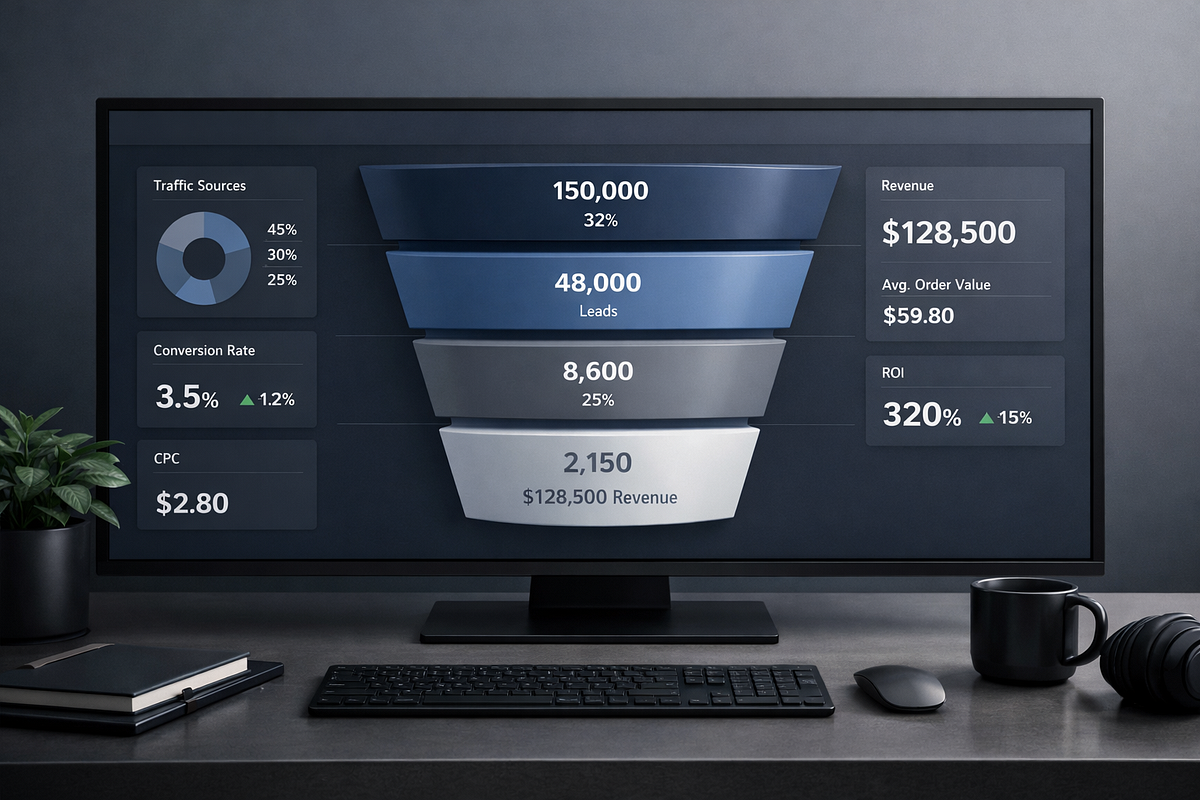
This is where funnel-centric monitoring and analytics become non-negotiable — and why FunnelCockpit has become a core part of my workflow.
This article breaks down how I use FunnelCockpit to monitor, optimize, and scale funnels responsibly, with real examples, strong opinions, and a framework you can apply immediately.
Why Traditional Analytics Breaks Down at Scale
Most marketers are not short on data. They’re drowning in it.
A typical analytics stack looks something like this:
- Google Analytics or GA4 for traffic
- Ad platform dashboards for clicks and spend
- Email tools for opens and clicks
- Checkout platforms for revenue
- Spreadsheets to “connect the dots.”
The problem isn’t effort — it’s fragmentation.
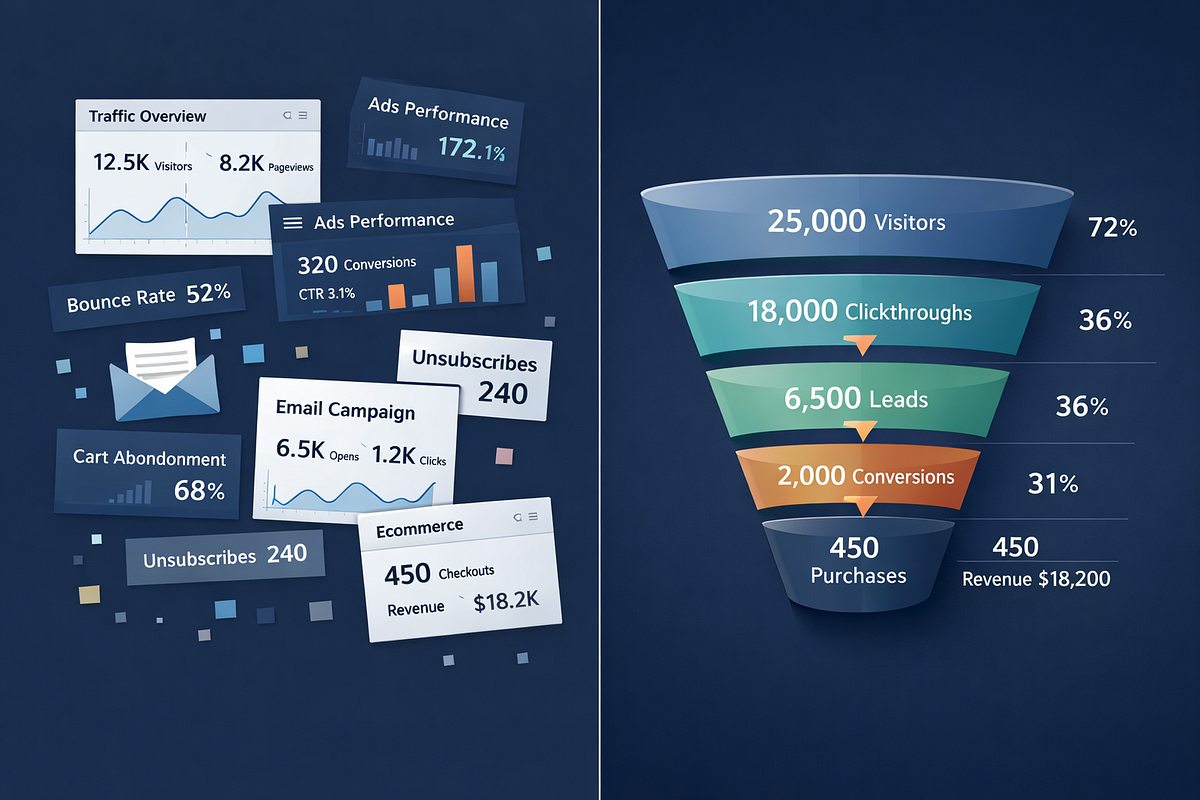
Each tool tells part of the story, but none answers the only question that actually matters:
“What is happening inside the funnel — step by step — and how does that impact revenue?”
Before FunnelCockpit, this fragmentation led to the same recurring issues:
- Blind spots between traffic and revenue
- Conflicting numbers across platforms
- Slow, reactive decision-making
- Scaling based on vanity metrics rather than profit
At higher spend levels, those gaps don’t just confuse teams — they cost money.
FunnelCockpit as a Monitoring System (Not a Reporting Tool)
I don’t use FunnelCockpit as a passive dashboard. I use it as a command center.
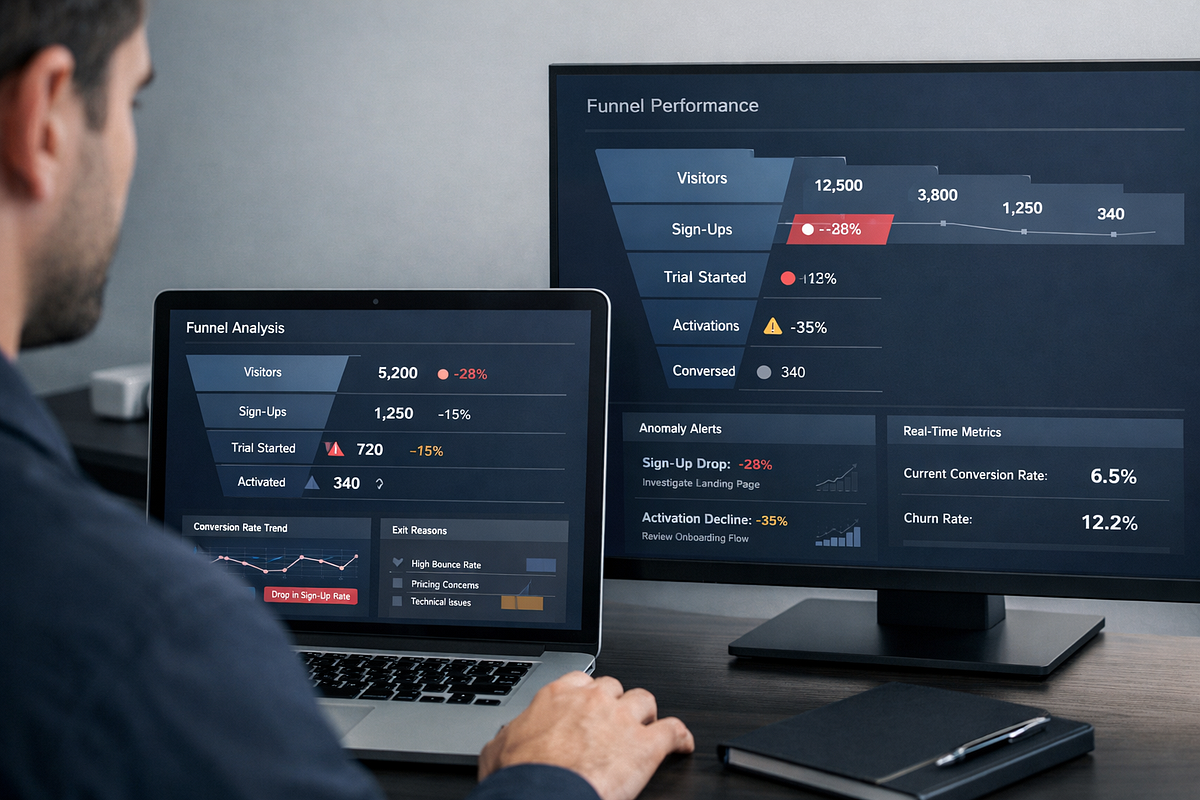
Daily Monitoring: Catch Issues Before They Get Expensive
Daily, I monitor:
- Traffic and opt-in consistency
- Step-to-step conversion rates
- Sudden anomalies or drop-offs
If a page breaks, an email fails to send, or checkout conversions dip, I see it immediately — often the same day. That alone has prevented multiple four-figure losses.
Weekly Funnel Reviews: Optimize What Actually Matters
Weekly reviews focus on a single question:
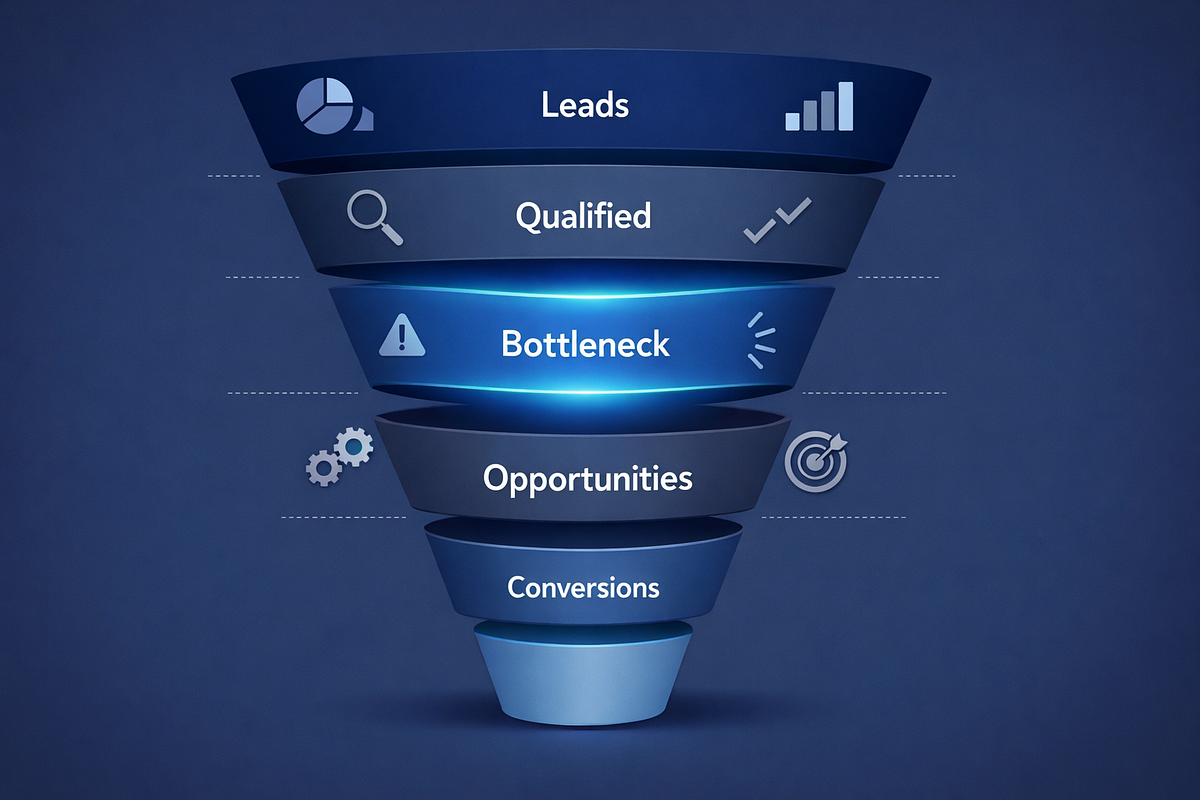
Where is the weakest step in the funnel right now?
Instead of tweaking headlines or creatives blindly, FunnelCockpit shows exactly where prospects stall or drop off. Optimization then becomes targeted, not speculative.
Optimization: Fix the Bottleneck, Not the Symptom
One of the most common mistakes I see is optimizing the wrong thing.
Marketers obsess over:
- CTR
- Page views
- Opt-in rates
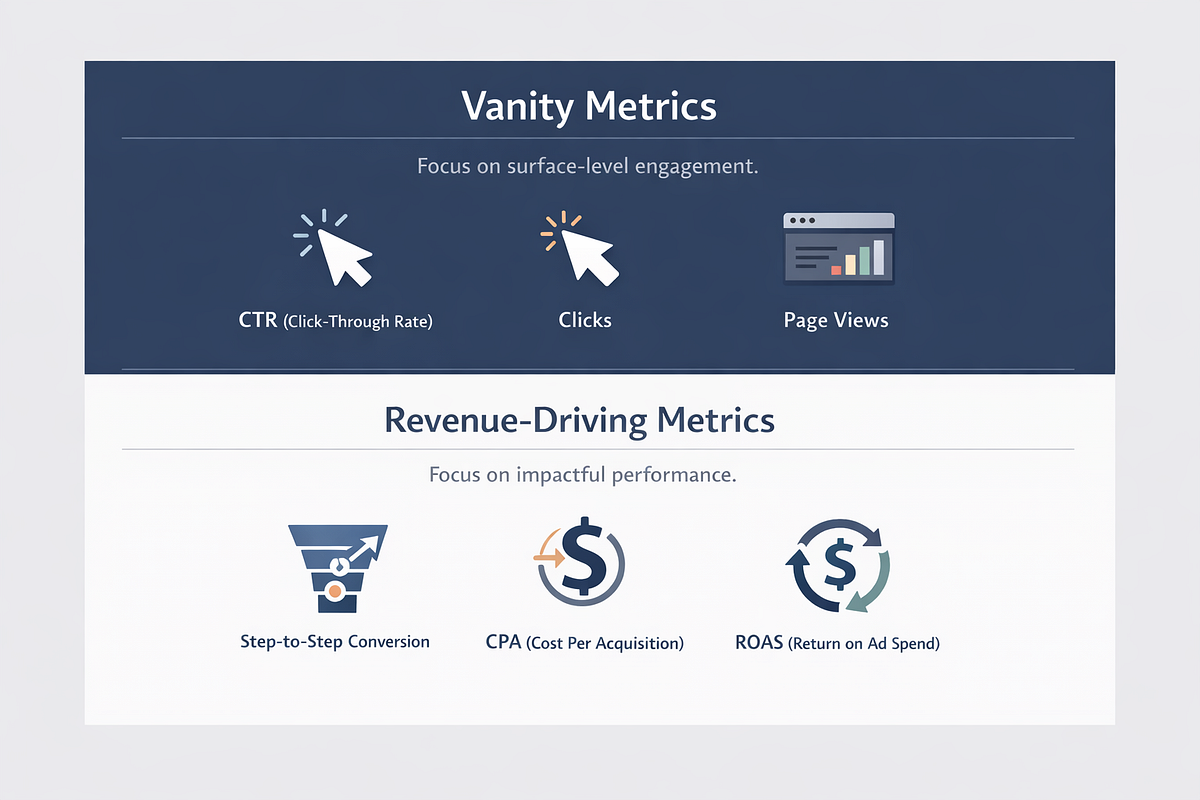
These metrics are not useless — but they are often misleading.
What actually moves revenue are step-to-step conversion rates and downstream outcomes.
Case Study: High-Ticket Lead Generation Funnel
Funnel:
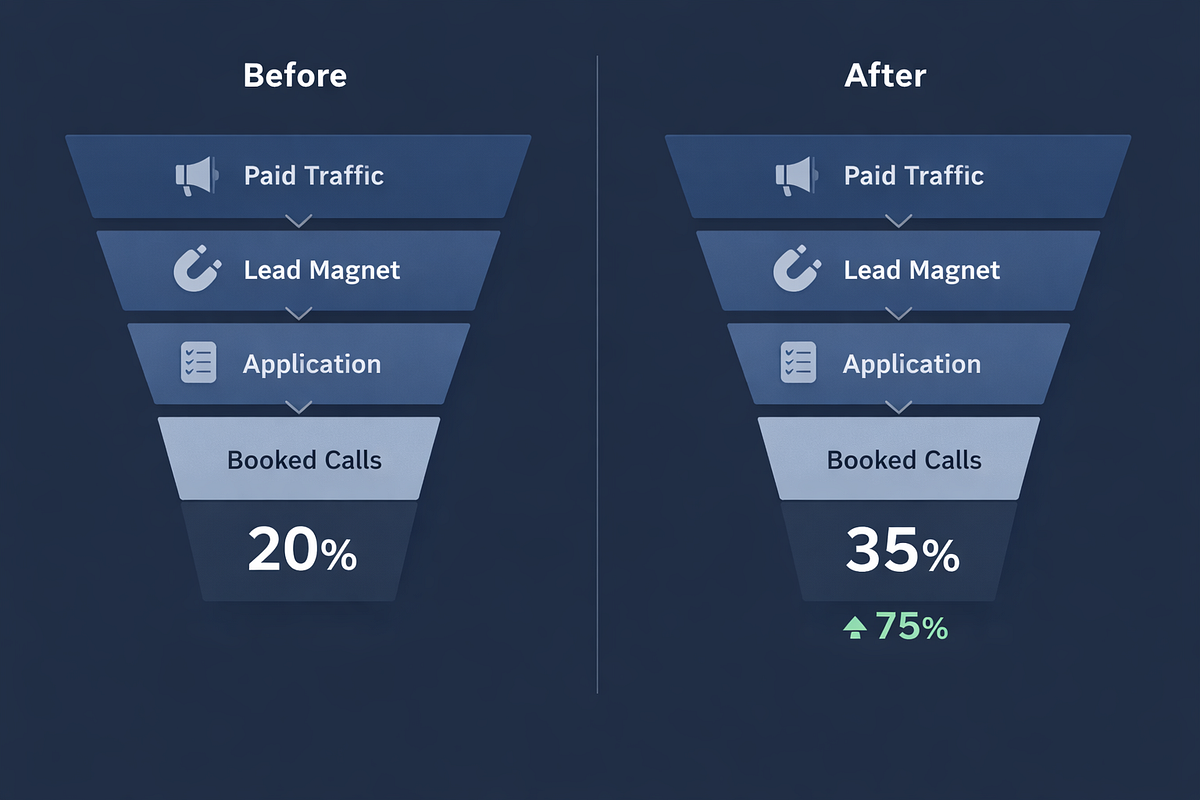
Paid traffic → Lead magnet → Application → Strategy call
Problem:
CTR and opt-in rates were strong, but booked calls were declining.
What FunnelCockpit Revealed:
A significant drop-off between application confirmation and calendar booking.
Action Taken:
Simplified the booking flow and reduced friction.
Result:
- +22% booked calls
- ~18% lower cost per booked call
- Diagnosis in hours, not days
The issue wasn’t traffic quality. It was funnel friction — and without step-level visibility, it would have been misdiagnosed.
Scaling: When Not to Increase Spend Is as Important as When to Do It
Here’s a contrarian but experience-backed opinion:
Scaling before fully understanding your funnel is the fastest way to lose money.
Funnels break during scaling for predictable reasons:
- Small leaks become large losses
- Traffic quality shifts
- Follow-up systems fail under volume
- Tracking gaps surface under pressure
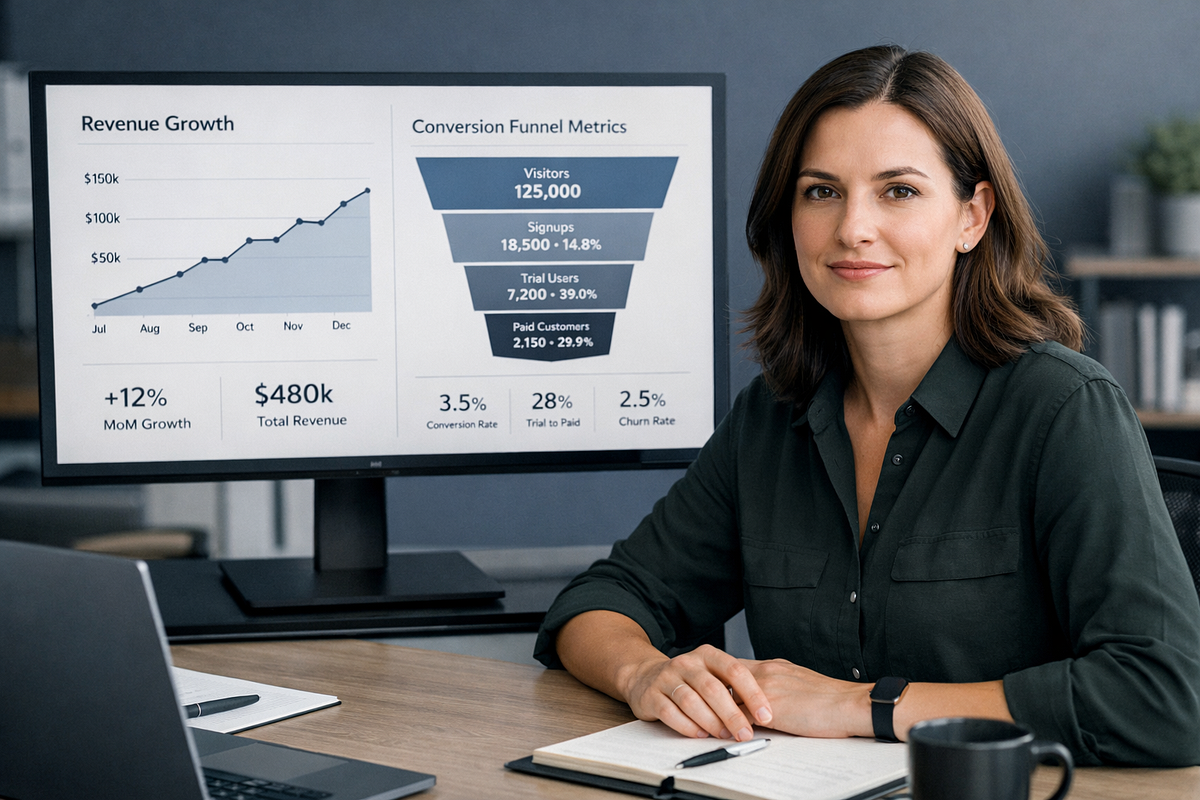
FunnelCockpit helps prevent this by acting as an early warning system.
Example: Avoiding a $20k+ Scaling Mistake
Scenario:
A SaaS funnel showed strong CTRs and opt-ins. The plan was to scale ad spend aggressively.
What FunnelCockpit Showed:
A drop-off between trial activation and paid conversion — completely invisible in ad dashboards.
Root Cause:
A broken onboarding email sequence.
Outcome:
- Scaling paused before wasting $20k+
- Onboarding fixed
- Trial-to-paid conversion improved by ~17%
- Scaling resumed with confidence
This is the difference between feeling ready to scale and being ready to scale.

Metrics That Matter (And the Ones That Don’t)
Overrated Metrics
- CTR in isolation
- Page views and sessions
- Opt-in rates without downstream context
- Ad platform “performance scores.”
- Email open rates without revenue impact
Metrics That Actually Drive Decisions
- Step-to-step conversion rates
- Cost per qualified lead or acquisition
- Lead-to-sale or trial-to-paid conversion
- Checkout completion rate
- Funnel-level ROAS and revenue
FunnelCockpit surfaces these metrics naturally — without forcing you to stitch together five tools and a spreadsheet.
When a Funnel Is Actually Ready to Scale
A funnel is scale-ready only when:
- Every step is technically sound and measurable
- Step-to-step conversions are stable
- CPA and ROAS are predictable
- Major bottlenecks have already been addressed
- Traffic quality holds under incremental increases
Scaling is not about spending more.
It’s about amplifying a system that already works.
My Unpopular Take on Funnel Optimization
Most marketers don’t need more tactics.
They need clarity.
- Data aggregation beats clever hacks
- Visibility beats endless A/B tests
- Smaller, optimized funnels often outperform massive, leaky ones
FunnelCockpit doesn’t optimize funnels for you — but it shows you the truth. And in performance marketing, clarity is leverage.
A Simple Action to Take Today
Before changing ads, copy, or traffic sources, do this:
Audit your funnel step by step.
Ask yourself:
- Where do most users drop off?
- Which step actually limits revenue?
- Would scaling this funnel amplify profit — or amplify leaks?
If you can’t answer those questions confidently, your funnel isn’t ready to scale.
That’s exactly the gap FunnelCockpit is designed to close.
Final Thought
Funnels don’t grow because marketers work harder.
They grow because marketers see clearly and act decisively.
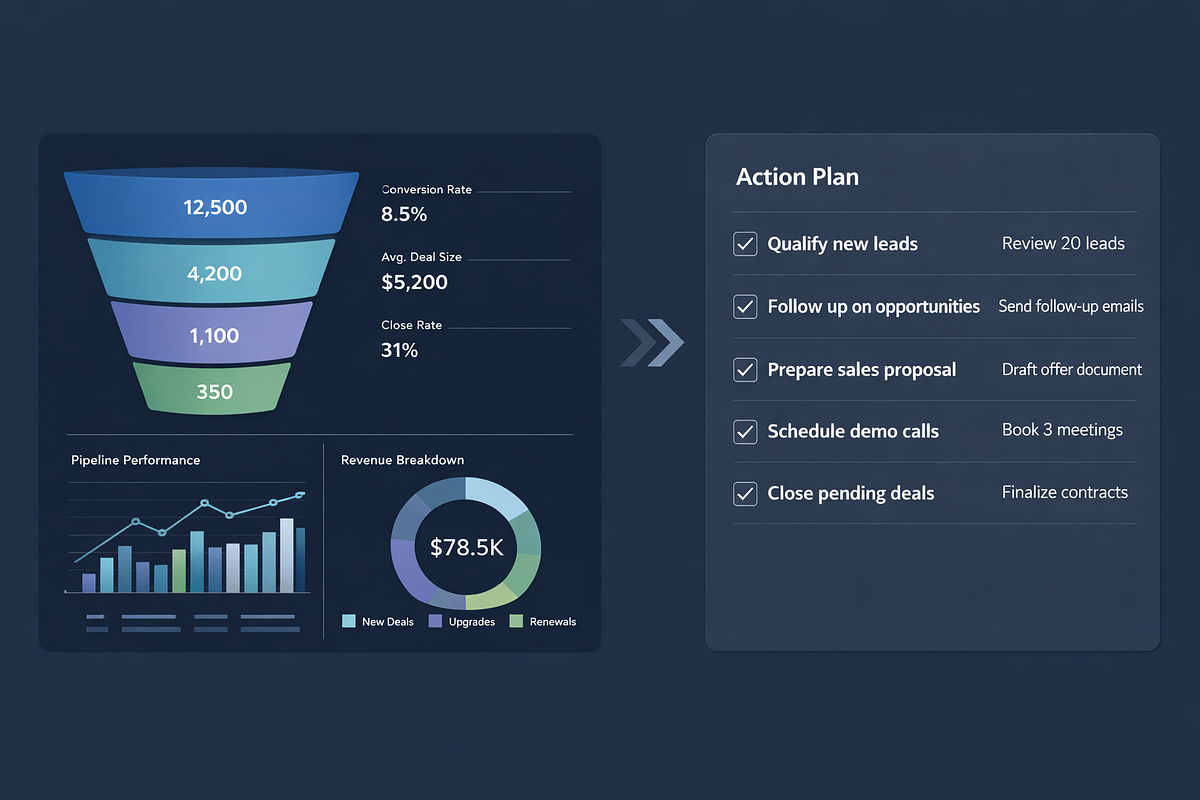
If you want to monitor funnels without blind spots, optimize without guessing, and scale without expensive mistakes, funnel-centric visibility isn’t optional — it’s foundational.


Comments
Post a Comment