A Practical Overview of Quantum Computing Systems
Quantum computing is often discussed in terms of qubits, algorithms, and theoretical breakthroughs. In practice, however, today’s quantum machines live or die by system-level engineering decisions: how hardware, control, software, and operations interact under real-world constraints. From a systems and engineering perspective, the limiting factors of quantum computing are far less about theory and far more about orchestration, reliability, and architectural discipline.
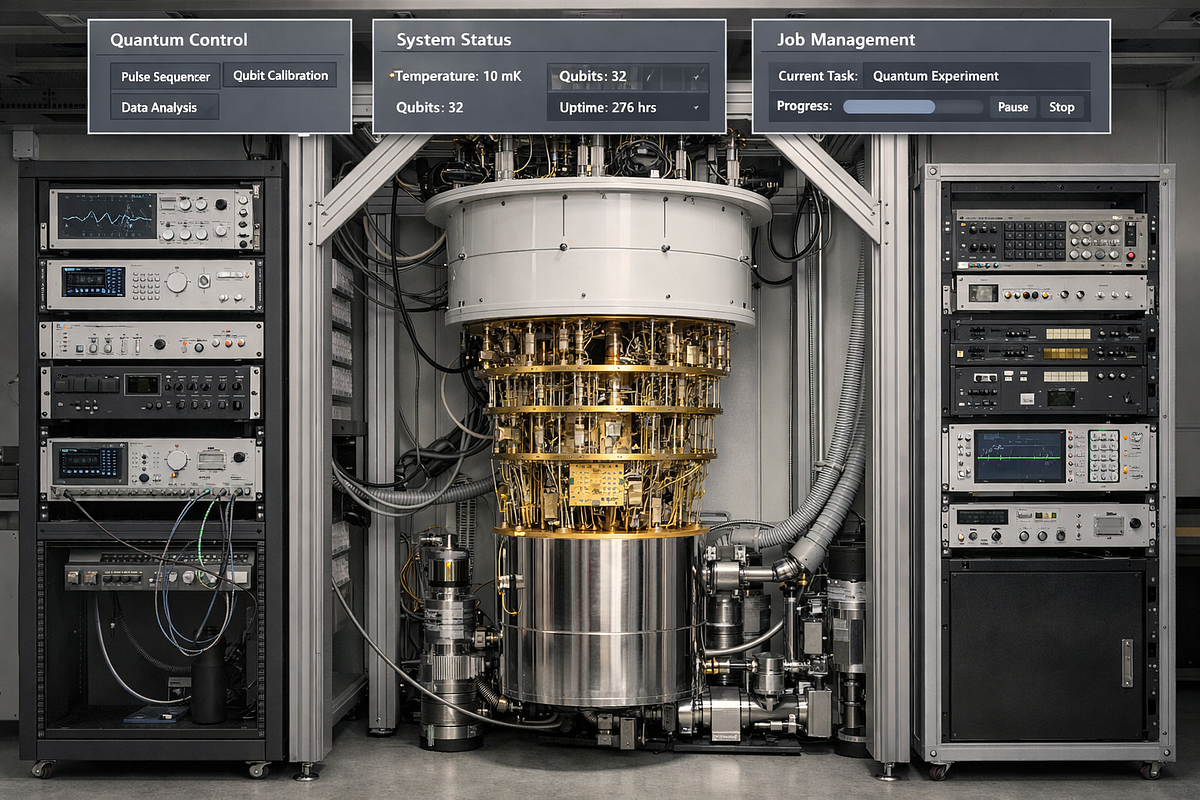
This article provides a practical overview of quantum computing systems as they exist today, grounded in hands-on experience with cloud-accessible hardware, simulators, and hybrid workflows. The goal is not to predict a quantum revolution, but to help technical leaders build a realistic mental model of what quantum systems can (and cannot) deliver, and how to evaluate progress beyond marketing headlines.
Quantum Computers Are Systems, Not Just Qubits
One of the most persistent misconceptions in the field is the idea that qubit count alone defines system capability. While qubit scaling is necessary, it is nowhere near sufficient.
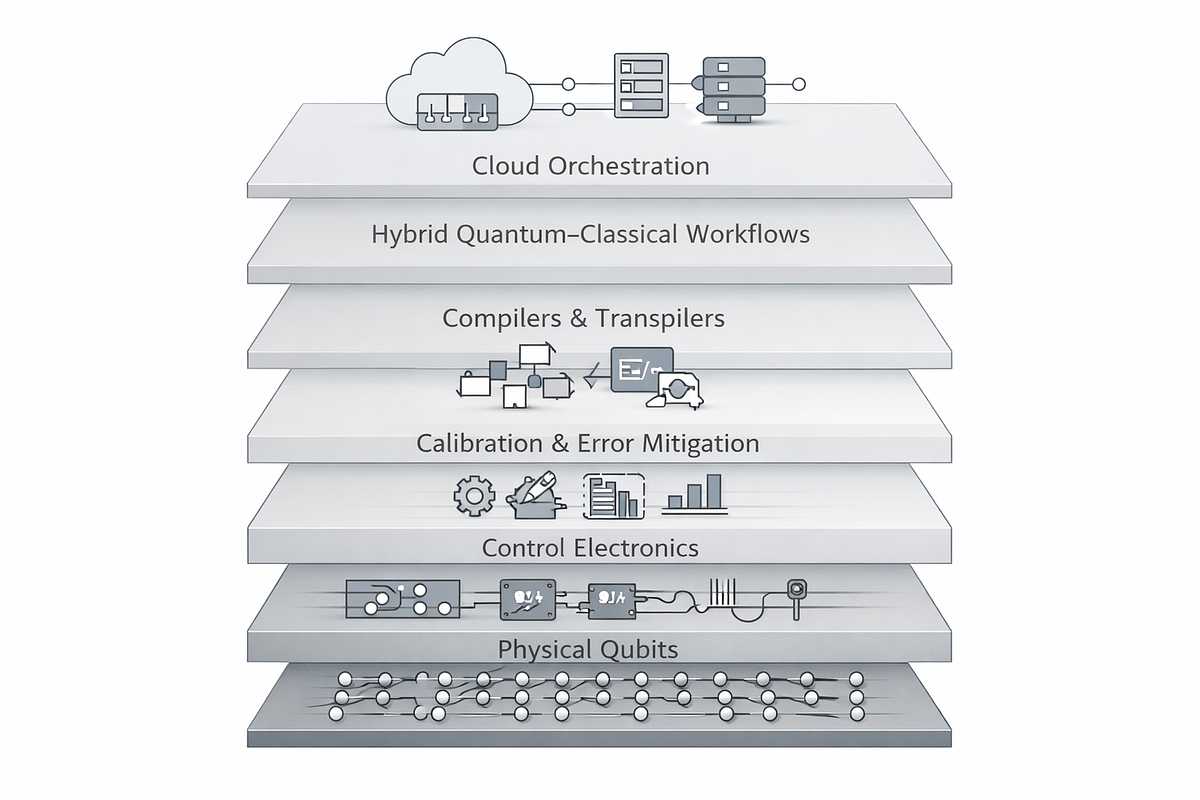
A usable quantum computer is an integrated system comprising:
- Physical qubits with finite coherence and error rates
- Control electronics and calibration pipelines
- Cryogenic and environmental infrastructure
- Compilers and transpilers that map algorithms onto constrained hardware
- Error mitigation or correction layers
- Cloud orchestration and hybrid quantum–classical workflows
In practice, performance bottlenecks often arise far from the qubits themselves. Connectivity constraints, calibration drift, control noise, and software overhead frequently dominate what can actually be executed. Increasing qubit count without addressing these layers tends to produce machines that look impressive on paper but struggle to run meaningful workloads.
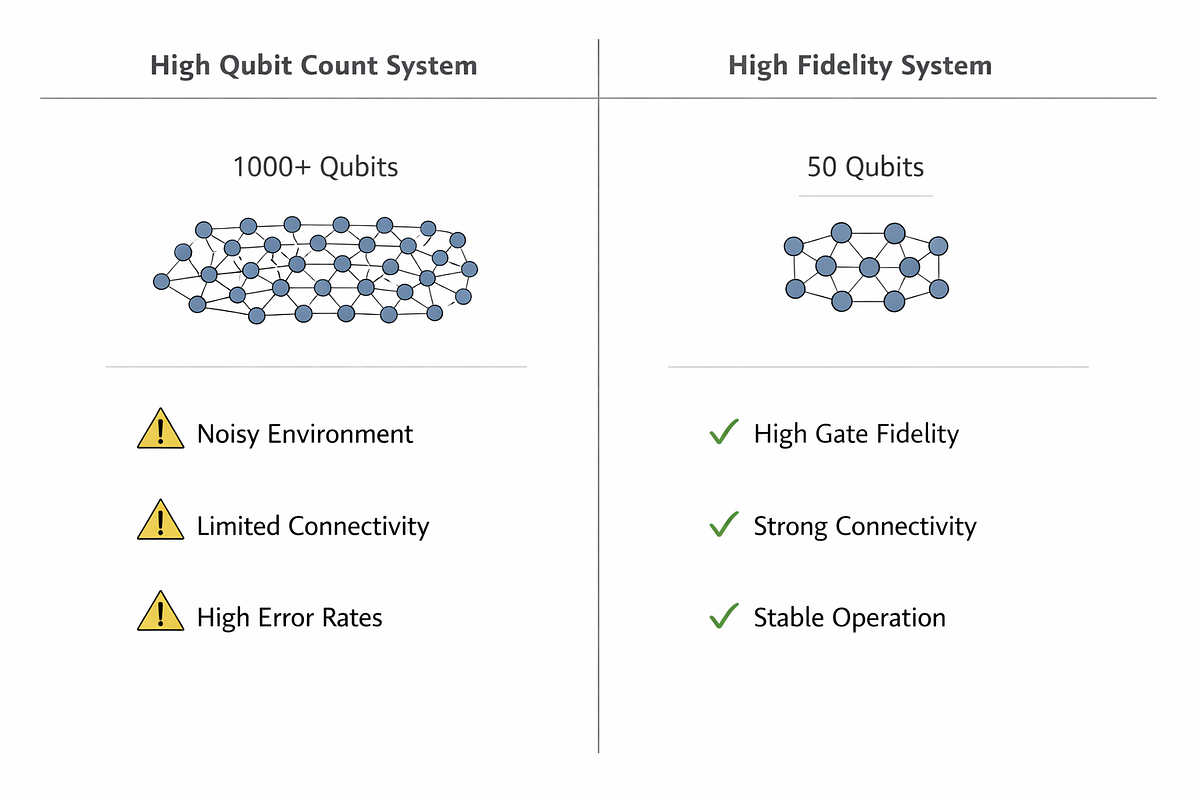
From a systems perspective, the progress of quantum computing should be evaluated by how well these layers evolve together — not by any single metric in isolation.
The Reality of NISQ-Era Machines
Most current platforms fall under the umbrella of noisy intermediate-scale quantum (NISQ) systems. These machines are real, accessible, and increasingly sophisticated — but they are also fragile, noisy, and operationally complex.
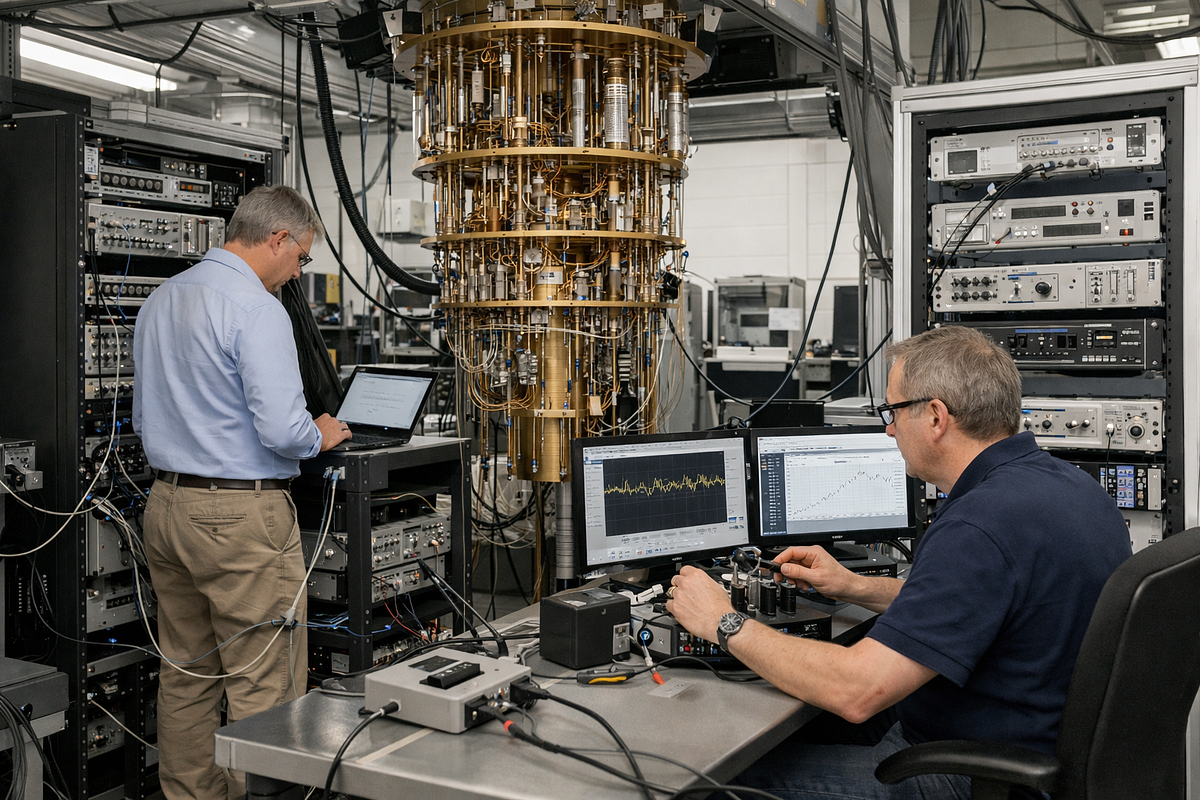
Hands-on experimentation with cloud-accessible superconducting and trapped-ion platforms makes this clear very quickly. Even relatively small circuits can be constrained by:
- Limited qubit connectivity, forcing additional gates and increasing error
- Gate fidelity that restricts circuit depth
- Run-to-run variability due to calibration and noise
- Significant overhead from transpilation and error mitigation
As a result, success in the NISQ era is less about running idealized algorithms and more about careful system management. Benchmarking, calibration awareness, and workflow tuning often matter more than algorithmic novelty. This reality is rarely reflected in high-level discussions, but it defines what is achievable today.
Architectural Trade-Offs Matter More Than Headlines
Different quantum computing paradigms — superconducting qubits, trapped ions, photonic systems, neutral atoms, and annealers — each come with distinct system-level trade-offs.
For example:
- Superconducting systems offer fast gate speeds and mature tooling, but face challenges in coherence, connectivity, and cryogenic complexity.
- Trapped-ion systems provide excellent gate fidelity and connectivity, but scaling introduces control and performance challenges.
- Annealing systems can be effective for certain optimization workflows, but require careful problem mapping and classical integration to be useful.
There is no universally “best” architecture today. What matters is how well a platform aligns with specific workloads, operational constraints, and integration requirements. Evaluating architectures purely on qubit count or roadmap promises misses the real engineering questions that determine usability.
Software, Error Mitigation, and the Hidden Work
One of the most undervalued aspects of quantum computing is software and orchestration. SDKs, compilers, and workflow tools have improved substantially, but they still demand deep expertise to use effectively.
In real experiments, choices around transpilation, circuit layout, and error mitigation can determine whether an algorithm produces meaningful results at all. These layers introduce trade-offs of their own: error mitigation improves accuracy but increases execution time and complexity, while aggressive optimization can reduce reliability.

Hybrid quantum–classical workflows further complicate matters. Integrating noisy quantum outputs with classical preprocessing and postprocessing often introduces overhead that outweighs raw execution speed. This does not make such workflows useless — but it does mean their value lies in careful design, not naive expectations of acceleration.
In many near-term use cases, software and orchestration decisions have a larger impact on outcomes than incremental hardware improvements.
What Hands-On Pilots Actually Deliver
In practice, most early quantum projects deliver learning value rather than immediate commercial returns — and that is not a failure. Running benchmark circuits on real hardware exposes constraints that are invisible in theory. Hybrid optimization pilots reveal where quantum devices can complement classical methods, and where overhead dominates.
What consistently proves challenging is how quickly system-level limitations accumulate. Noise, connectivity, and operational variability often require careful tuning just to achieve repeatable results. These experiences reinforce a key lesson: near-term quantum success depends on disciplined engineering and realistic expectations, not on chasing ambitious application claims.
Organizations that treat early projects as evidence-gathering exercises — rather than proof of imminent advantage — are far better positioned to make informed decisions later.
Evaluating Vendor Claims with a Systems Lens
From a systems standpoint, the most credible platforms today are those that invest heavily in calibration, tooling, and operational reliability. Cloud accessibility, transparent metrics, and reproducible results matter more than ambitious roadmaps.
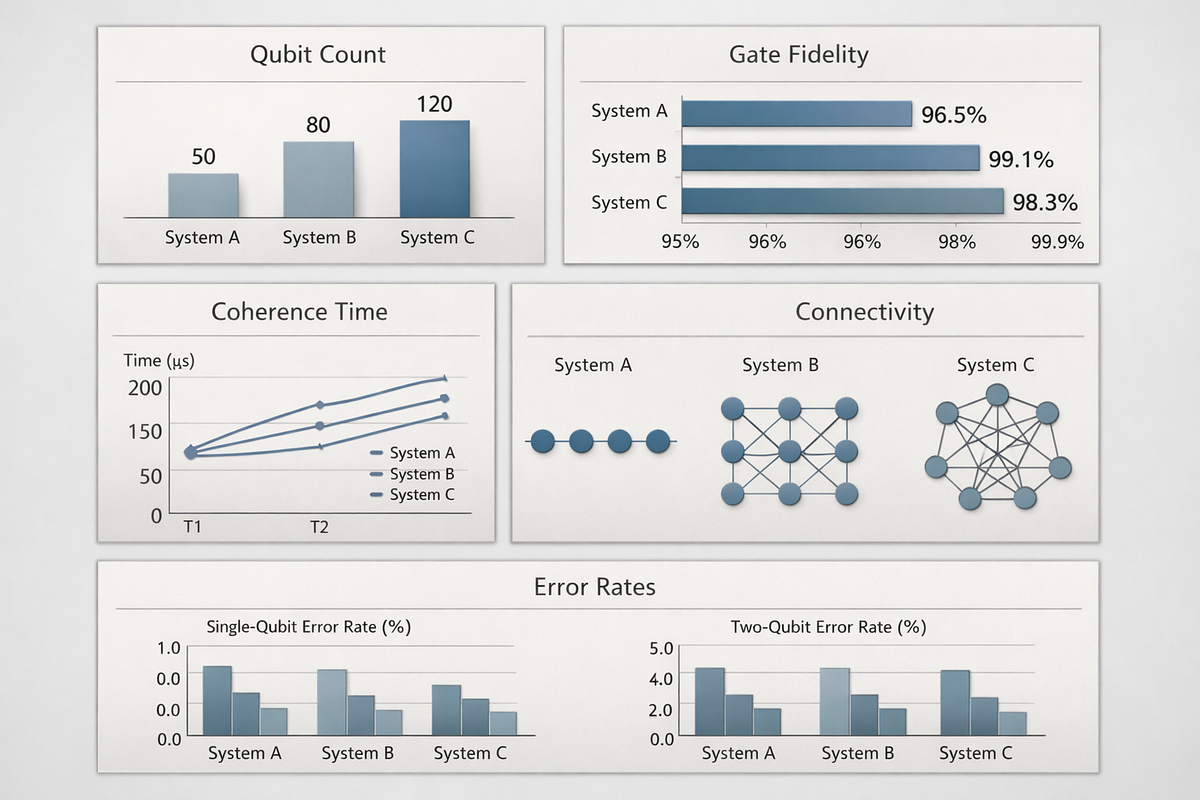
Claims centered on qubit count or isolated algorithm demos should be treated cautiously. The more important questions are:
- Can the system run nontrivial circuits reliably and repeatedly?
- How well does the software stack expose and manage hardware constraints?
- How much operational effort is required to get meaningful results?
A system-level evaluation cuts through hype by focusing on end-to-end capability rather than isolated achievements.
Practical Guidance for Technical Leaders
For organizations considering quantum computing today:
- Start with hands-on experimentation using cloud platforms.
- Focus on benchmarking, hybrid workflows, and system behavior — not large-scale applications.
- Invest in internal expertise before expecting external value.
- Treat early efforts as learning exercises with controlled scope and expectations.
Conversely, organizations seeking immediate, broad commercial returns or plug-and-play solutions should wait. Current systems reward patience, technical depth, and architectural thinking — not urgency.
Looking Ahead: Signals That Actually Matter
Meaningful progress in quantum computing will show up first in system-level indicators:
- Sustained improvements in coherence, fidelity, and connectivity
- Demonstrable extensions of usable circuit depth
- Robust error mitigation or early fault-tolerant techniques
- Mature software and workflow tooling that lowers operational friction
Narrow quantum advantage for well-defined problems may emerge in the next few years, but broad commercial impact remains a longer-term goal. Whether the field gets there depends less on qubit milestones and more on disciplined system engineering.
Final Thoughts
Quantum computing is not stalled — but it is constrained by realities that are often ignored in public discourse. The path forward is not about chasing headlines, but about building reliable, scalable systems layer by layer.
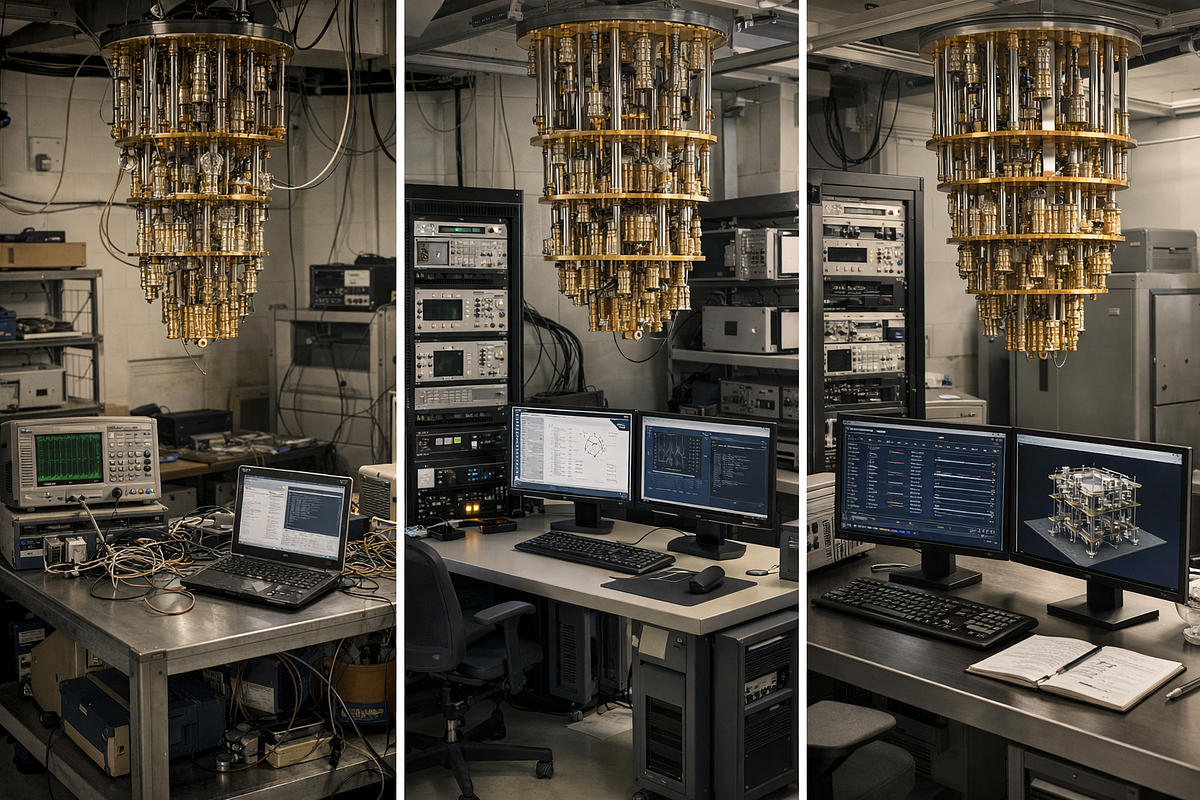
For technical leaders, the most valuable posture today is cautiously pragmatic: optimistic about long-term potential, skeptical of near-term claims, and focused on learning through real systems rather than abstract promises. That mindset, more than any specific technology choice, is what will separate meaningful progress from misplaced hype.


Comments
Post a Comment