Building Practical Quantum Computing Systems: A Systems View
For more than a decade, I’ve worked across the quantum computing ecosystem as a systems architect and industry analyst — bridging academic research, industry R&D, and advisory work with startups and enterprise teams. Over that time, one pattern has repeated consistently: most discussions about “progress” in quantum computing focus on the wrong things.
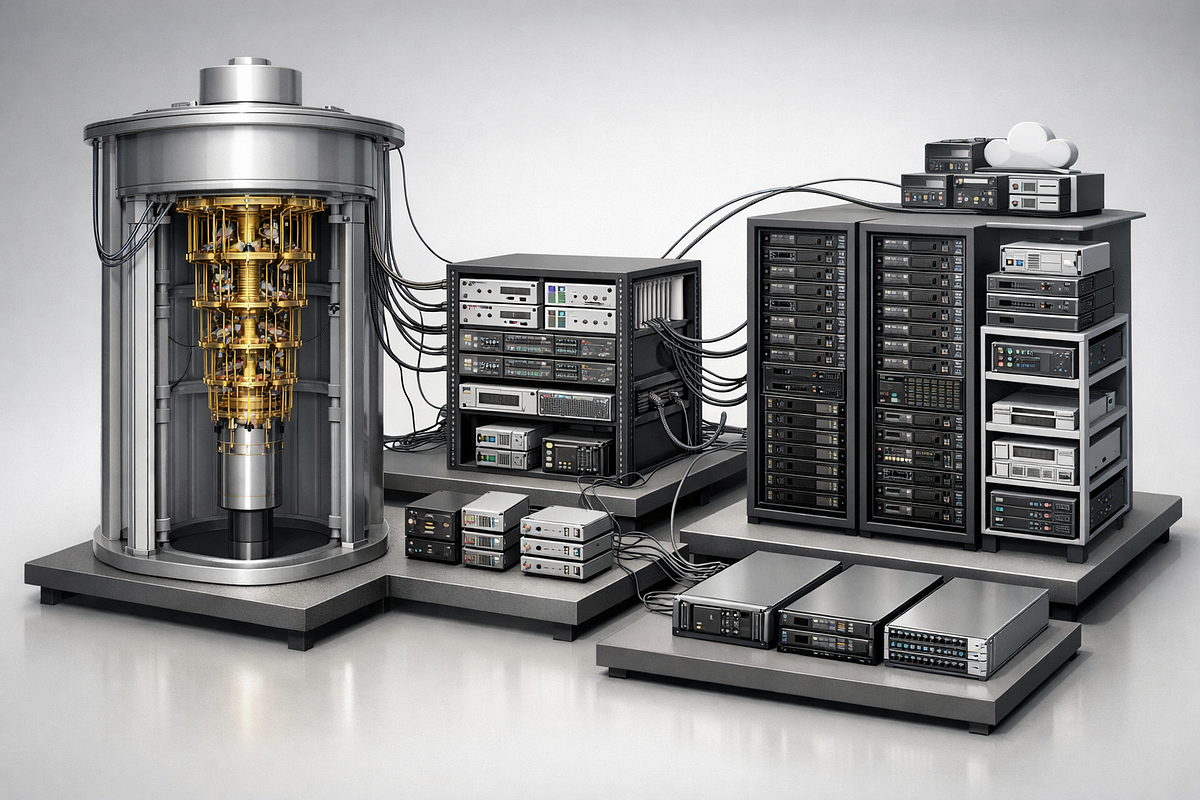
Qubit counts rise. Fidelity improves. Benchmarks make headlines.
And yet, truly practical quantum computing systems remain rare.
That is not a failure of physics. It is a failure of systems thinking.
What “Practical” Actually Means in Quantum Computing
When I talk about building practical quantum computing systems, I am not referring to scientific milestones or isolated demonstrations of quantum advantage. I mean systems that deliver repeatable, measurable value under real-world constraints.
In practice, this has far less to do with raw qubit count and far more to do with whether a system can:
- Operate reliably over time, not just during hand-tuned experiments
- Integrate cleanly into hybrid classical–quantum workflows
- Be justified economically in terms of cost per useful result
- Be operated and maintained by engineering teams, not just domain experts
A smaller, well-characterized system with predictable behavior is often more practical than a larger, unstable one. Practicality emerges from system behavior over time — uptime, reproducibility, latency, integration — not from single-shot performance metrics.
The Persistent Misunderstanding: Hardware Milestones vs. System Reality
One of the most persistent misconceptions in quantum computing is that practicality is primarily a hardware problem. It is not.
Common errors I see repeatedly include:
- Equating more qubits with more usefulness, while ignoring error rates, crosstalk, and control overhead
- Confusing demonstrations with deployability, assuming a lab success translates into an operational system
- Underestimating the classical side of the stack, where most orchestration, optimization, and failure handling occurs
- Ignoring operational economics, such as calibration labor, downtime, power, and cooling
- Assuming fault tolerance automatically implies usefulness, when the early value will arrive well before fully fault-tolerant systems
Quantum computing is not blocked by a single missing breakthrough. It is constrained by friction at the boundaries between hardware, software, and operations.
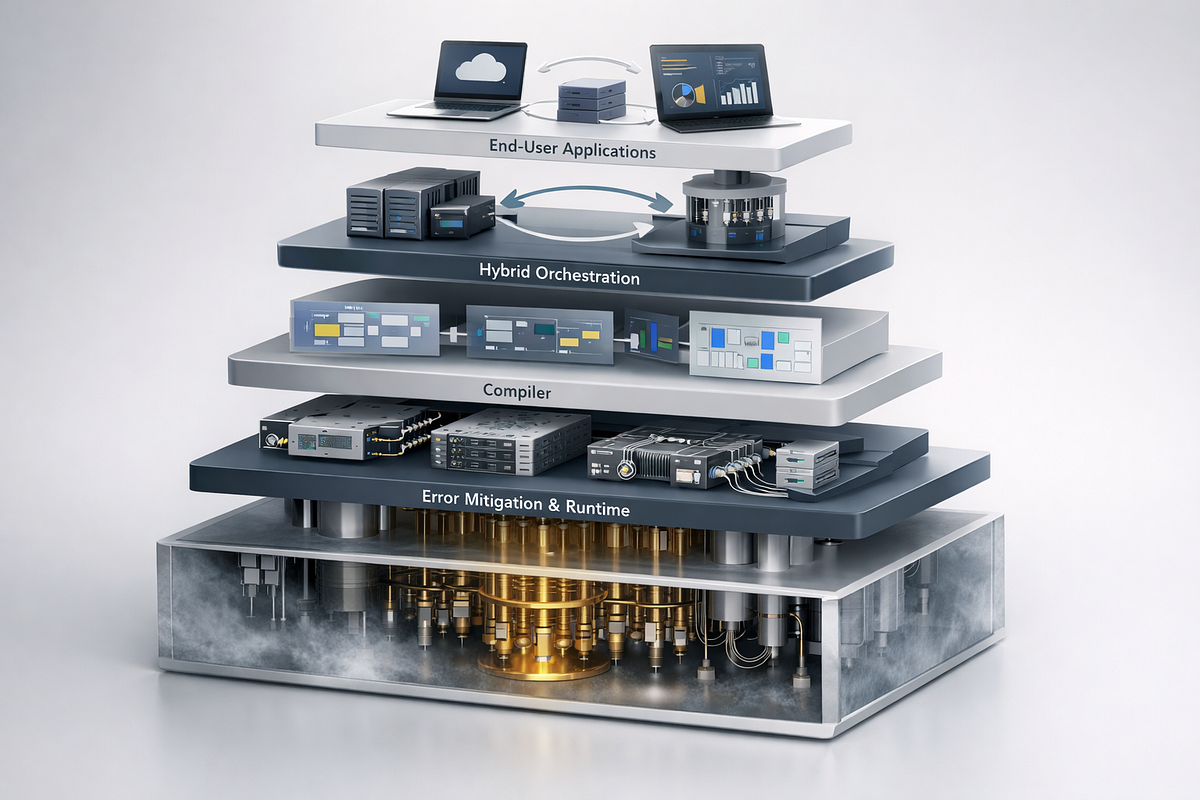
Where Practicality Is Won or Lost: The Hybrid Architecture Layer
My strongest experience — and strongest opinions — sit at the hybrid classical–quantum architecture layer. This is where abstract potential becomes concrete reality.
In real systems, the dominant constraints are often:
- Latency between classical compute, control electronics, and the quantum device
- Scheduling and orchestration of hybrid workflows
- Noise-aware compilation and hardware-specific execution paths
- Error mitigation pipelines that must run continuously, not experimentally
This is also where abstractions leak most aggressively. Compilers assume idealized gates. Hardware behaves idiosyncratically. Bridging that gap requires constant, bespoke tuning that is rarely visible in public narratives but dominates day-to-day system behavior.
Under-Discussed Bottlenecks That Actually Matter
Several of the most limiting bottlenecks in quantum computing are under-discussed precisely because they are hard to showcase:
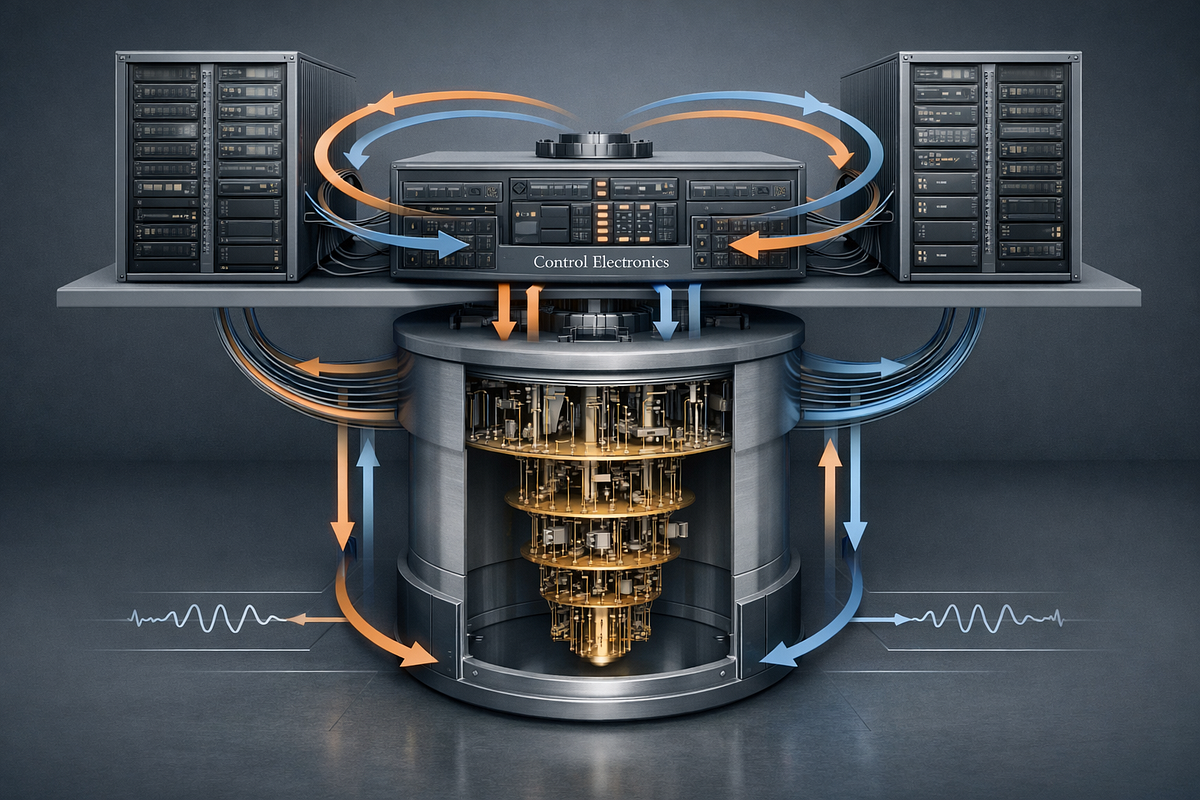
- Classical–quantum latency
Feedback loops for calibration, error mitigation, and adaptive circuits are often latency-bound long before coherence limits are reached. - Calibration drift and human overhead
Performance degrades continuously unless actively maintained. The limiting factor is often expert attention, not hardware capability. - Control electronics scalability
Cabling density, signal integrity, and power dissipation become first-order constraints well before qubit coherence does. - Benchmarking that predicts nothing useful.
Many benchmarks fail to correlate with application performance, uptime, or throughput, making rational engineering decisions difficult. - Organizational and workflow friction
Tooling often assumes expert, linear workflows. Real teams need CI/CD-like iteration, observability, and failure diagnostics — areas that remain immature.
These issues sit between layers, where responsibility is diffuse, and progress is harder to market. But they determine whether a system is usable.
Lessons from Real Hybrid Systems
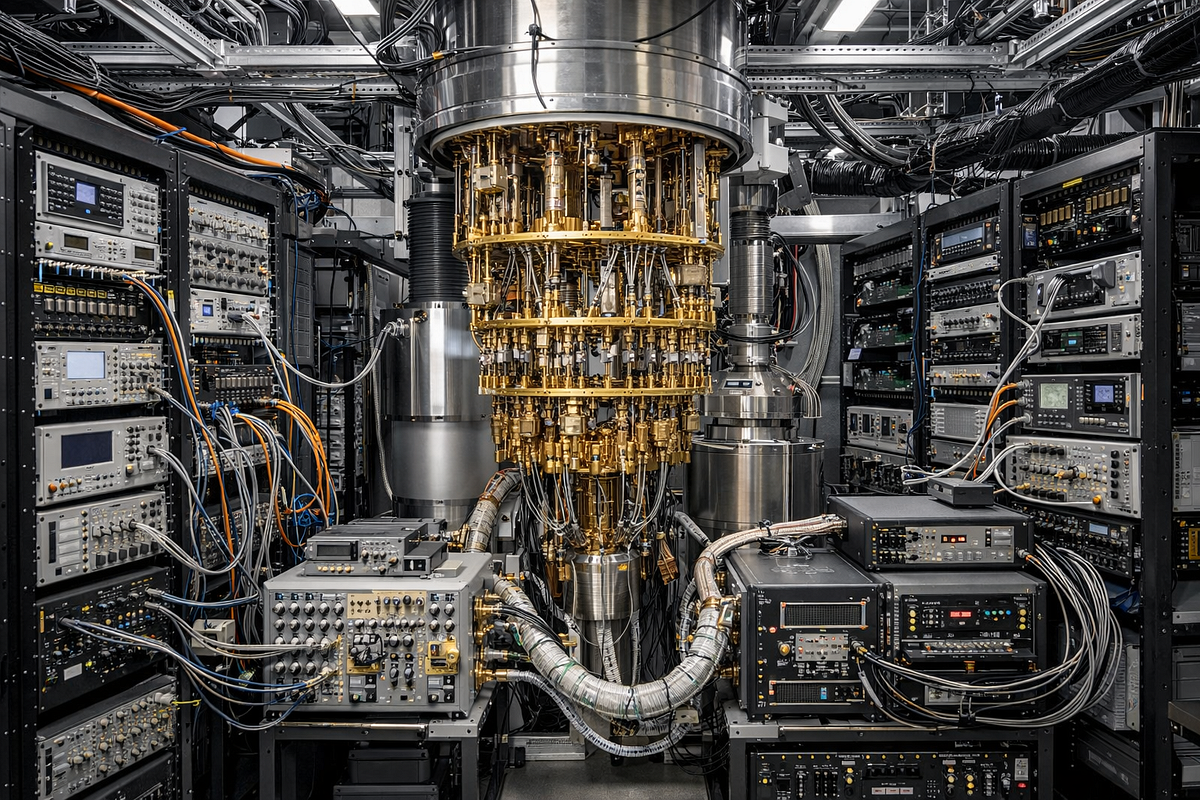
Across multiple hybrid quantum–classical projects, the most valuable lessons came not from theoretical limits, but from operational reality.
In one NISQ-era variational workflow, aggressive error mitigation combined with noise-aware compilation produced more stable results than expected. Tight classical orchestration — batching, caching, fast parameter updates — improved effective throughput more than increasing circuit depth.
At the same time, latency between quantum runs and classical feedback quietly dominated iteration speed. Calibration drift broke assumptions about reproducibility. Portability across devices proved far harder than anticipated.
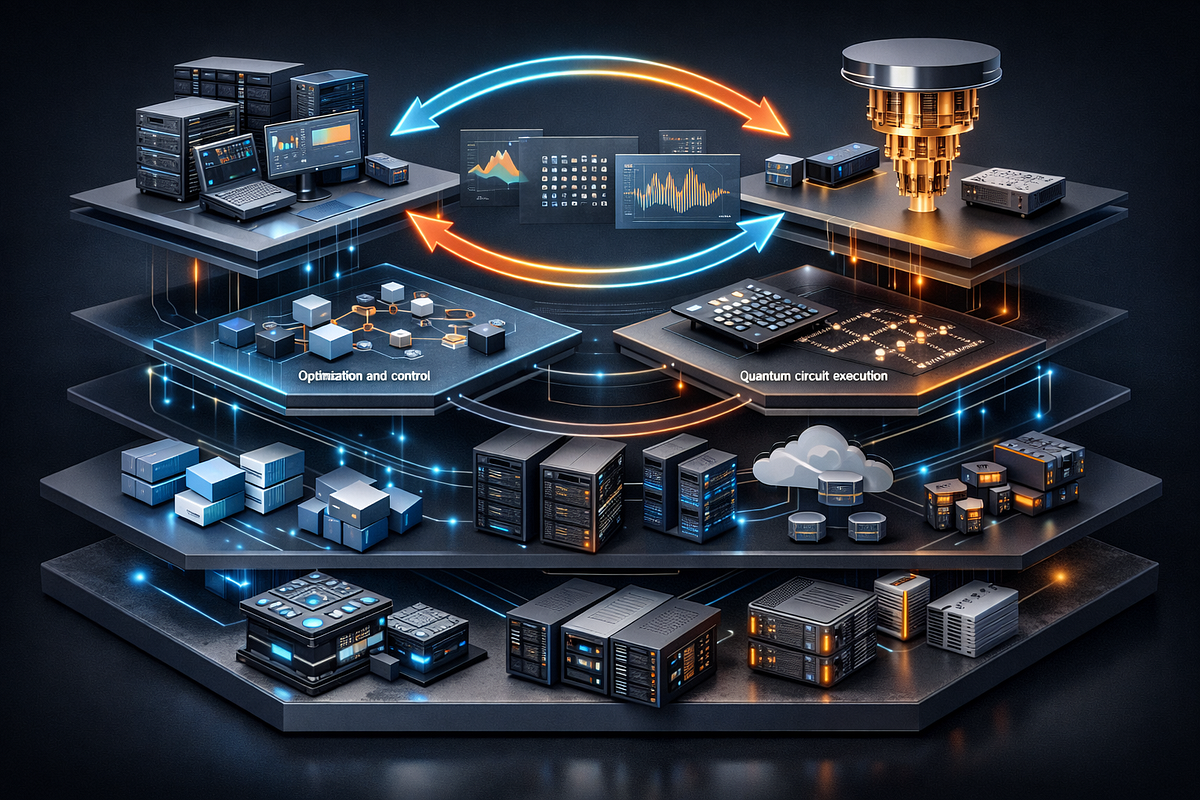
In system-level advisory work for scaled platforms, early modularization of control and software stacks paid long-term dividends. Observability and logging — often treated as secondary concerns — became essential for operability. Meanwhile, control infrastructure complexity and operational costs scaled faster than qubit count.
The consistent lesson: disciplined systems engineering matters more than isolated algorithmic or hardware breakthroughs.
Why Many Quantum Initiatives Fail Without Technical Failure
I have seen quantum initiatives stall or collapse even when the underlying technology was progressing reasonably well. The root causes were usually non-technical:
- Hype-driven timelines misaligned with engineering reality
- Organizational isolation of quantum teams from product and infrastructure groups
- Talent strategies optimized for credentials rather than system-building skills
- Funding structures that rewarded optimistic projections over operational rigor
- Success metrics tied to qubit counts instead of uptime, throughput, or integration readiness
Quantum computing cannot be treated like a conventional product roadmap. It is a long-horizon systems engineering program.
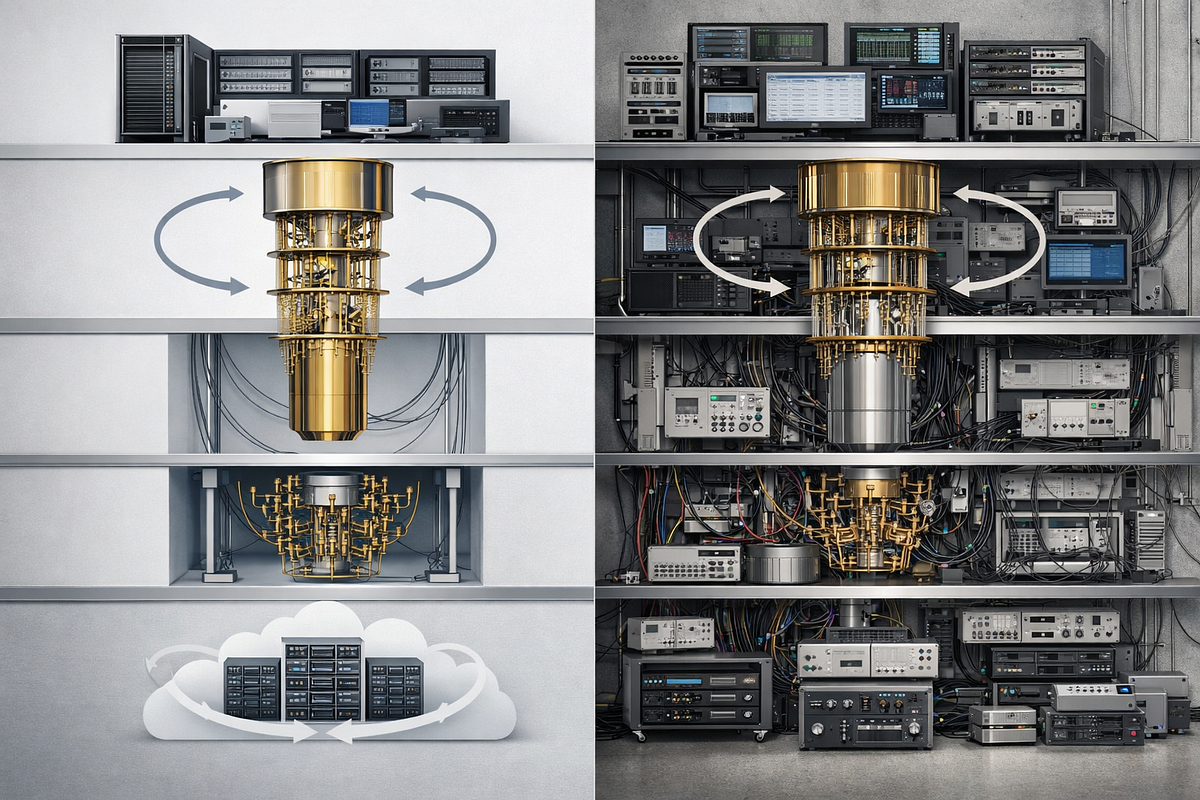
Are NISQ Systems Useful Today?
Yes — but only in narrowly defined, carefully engineered contexts.
NISQ-era systems are not general-purpose accelerators. Their value today comes from:
- Hybrid algorithms tailored to hardware constraints
- Domain-specific applications in chemistry, materials, and optimization subroutines
- Their role as experimental platforms for de-risking future scalable systems
Their limitations — noise, reproducibility challenges, integration overhead — are real. But dismissing them entirely misses their value as system-level learning engines.
The Shift Required for Practical Quantum Computing
The single most important shift required is systems-first thinking.
Progress will not come from chasing the next hardware milestone in isolation. It will come from coordinated optimization across:
- Quantum hardware and control electronics
- Compilers and runtime systems
- Classical orchestration and hybrid workflows
- Operational tooling, observability, and reliability engineering
Practical quantum systems emerge when the entire stack is designed to deliver reliable, repeatable outcomes — not when a single layer achieves a headline-worthy result.
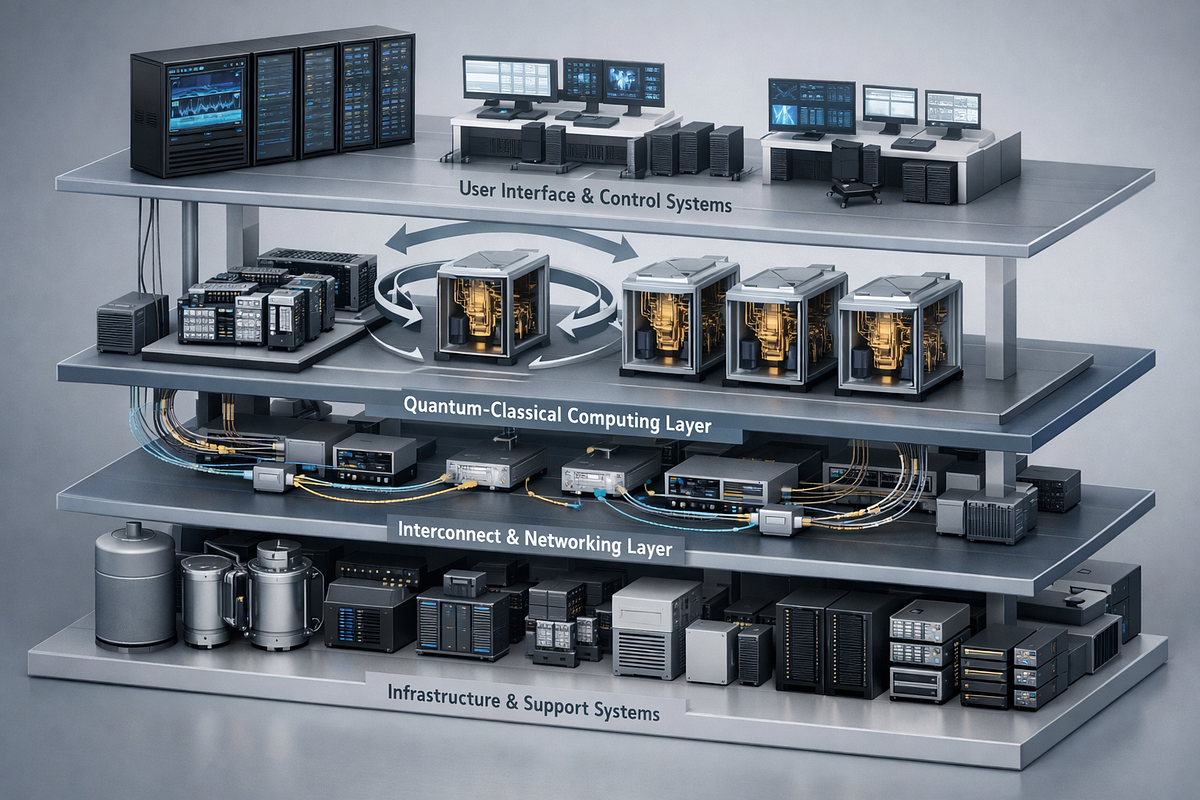
What Practical Quantum Systems Will Look Like in 5–10 Years
Successful quantum systems will look far less like monolithic machines and far more like modular, hybrid ecosystems:
- Smaller quantum modules connected via high-speed interconnects
- Classical orchestration as the dominant performance determinant
- Application-specific optimization rather than generic acceleration
- Continuous calibration, monitoring, and automated error mitigation
- Cloud-based access that abstracts away infrastructure complexity
- Economic viability is measured in cost per useful operation, not peak capability
Most of the value will come from integration, orchestration, and software — not raw qubit scale.

Final Thought: Reframing the Question
The most useful question is no longer “How many qubits do we have?”
It is “What reliable, repeatable value can this system deliver as part of a real workflow?”
When quantum computing is evaluated through that lens, progress becomes clearer — and far more actionable.


Comments
Post a Comment