Next-Generation Quantum Computing Systems Explained
Quantum computing is entering a decisive phase. After years of headline-driven optimism — dominated by qubit counts, “quantum supremacy” claims, and speculative timelines — the field is undergoing a quieter but more consequential shift. The conversation is moving from whether quantum computers can work to how they can be engineered into scalable, reliable, and economically viable systems.
This shift defines what I mean by next-generation quantum computing systems. They are not characterized by a single breakthrough or a dramatic leap in hardware metrics. Instead, they emerge from a convergence of advances across architecture, control, software, error correction, and deployment models — advances that collectively determine whether quantum machines can transition from laboratory curiosities into operational computing platforms.
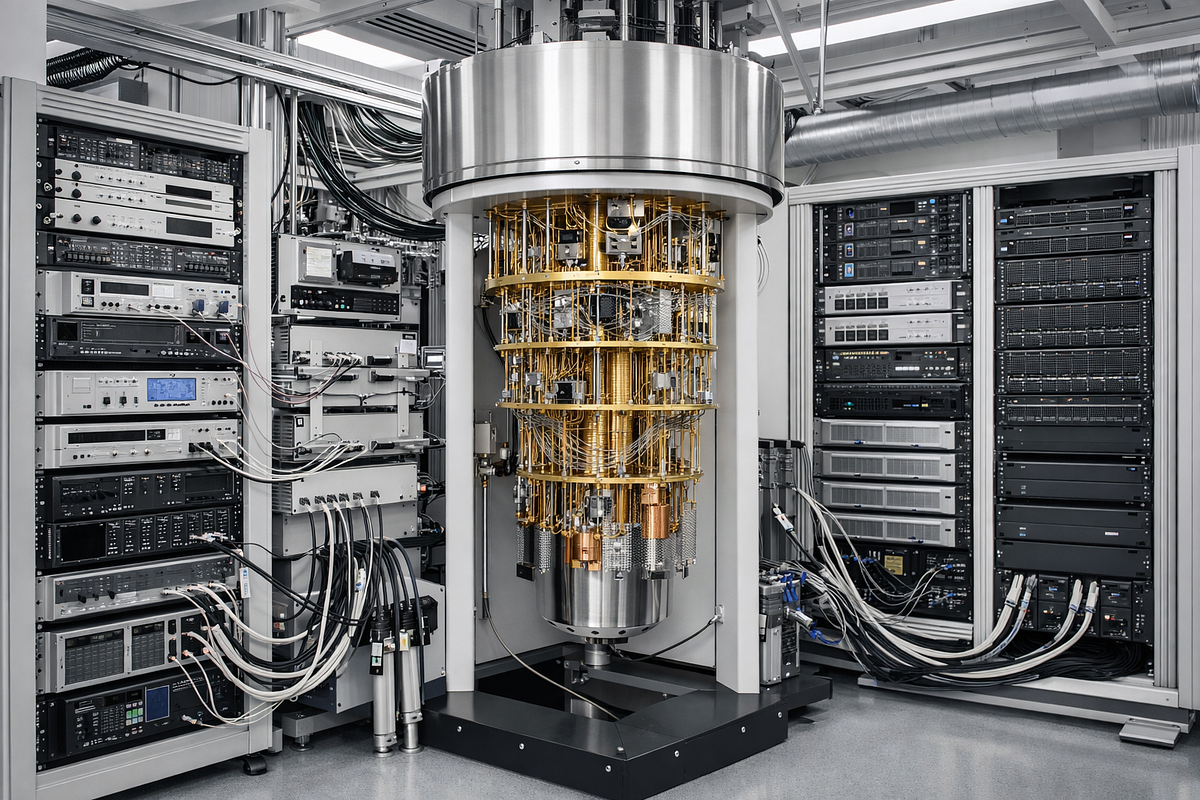
For technology leaders and investors, understanding this distinction is critical. The future of quantum computing will not be decided by who builds the largest chip first, but by who designs systems that scale without collapsing under their own complexity.
From Experimental Devices to Engineered Systems
Most current quantum computers are, at their core, experimental platforms. They are designed to explore feasibility, validate physical principles, and support algorithm research. Their value is measured in demonstrations, benchmarks, and best-case results under tightly controlled conditions.
Next-generation systems represent a fundamentally different design intent.
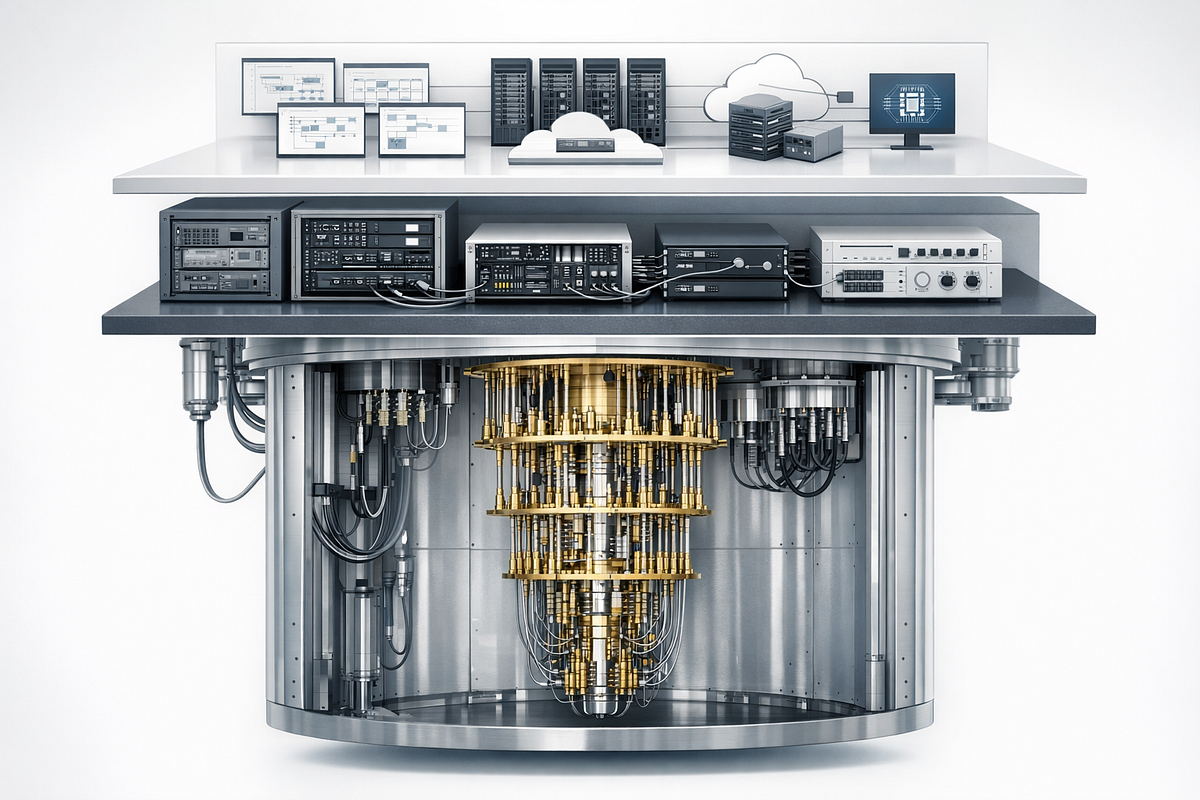
The dividing line is not a specific qubit count or hardware modality. It is crossed when adding more qubits increases useful computational capacity instead of amplifying fragility. At that point, the engineering discipline begins to replace experimentation as the dominant constraint.
This transition brings several defining characteristics:
- Architectures designed for continuous operation rather than episodic experiments
- Native support for error correction, not error mitigation as an afterthought
- Modular or hierarchical designs that anticipate scaling limits
- Software stacks that understand hardware constraints and failure modes
- Clear pathways to cost control, reliability, and operational efficiency
In short, next-generation quantum computers are systems-first, not qubit-first.
Why the Industry Is Still in the NISQ Era — And Why That’s Not a Failure
Despite recent progress, the industry is far closer to high-value NISQ-era advantage than to fully fault-tolerant, general-purpose quantum computing. That reality is often framed as a disappointment. It shouldn’t be.
Fault-tolerant quantum computing requires millions of physical qubits, sustained logical qubit lifetimes, and massive real-time classical control. Even with meaningful advances in error correction, this remains architecturally and economically heavy.
By contrast, selective advantage is already emerging in constrained domains:
- Hybrid quantum–classical workflows in chemistry and materials science
- Optimization problems where approximate solutions carry high value
- Algorithms explicitly designed to embrace noise rather than eliminate it
These systems are not general-purpose, and most will never deliver broad commercial impact. The advantage window is narrow, fragile, and highly dependent on hardware–software co-design. But when executed well, these systems generate real signal — and real learning.
Crucially, well-designed NISQ systems are rehearsal platforms for fault-tolerant architectures. The architectural decisions being made today — around modularity, control stacks, compilers, and orchestration — will determine whether future fault-tolerant systems are viable or permanently constrained.
The Most Underestimated Bottleneck: Control and Orchestration
If there is one constraint the industry consistently underestimates, it is not qubit coherence or gate fidelity. It is control, orchestration, and system coordination at scale.
As systems grow, several challenges dominate:
- Control electronics and wiring density begin to outscale qubit counts, stressing cryogenic I/O, thermal budgets, and physical layout.
- Calibration and drift management become continuous operational problems, not periodic tuning exercises.
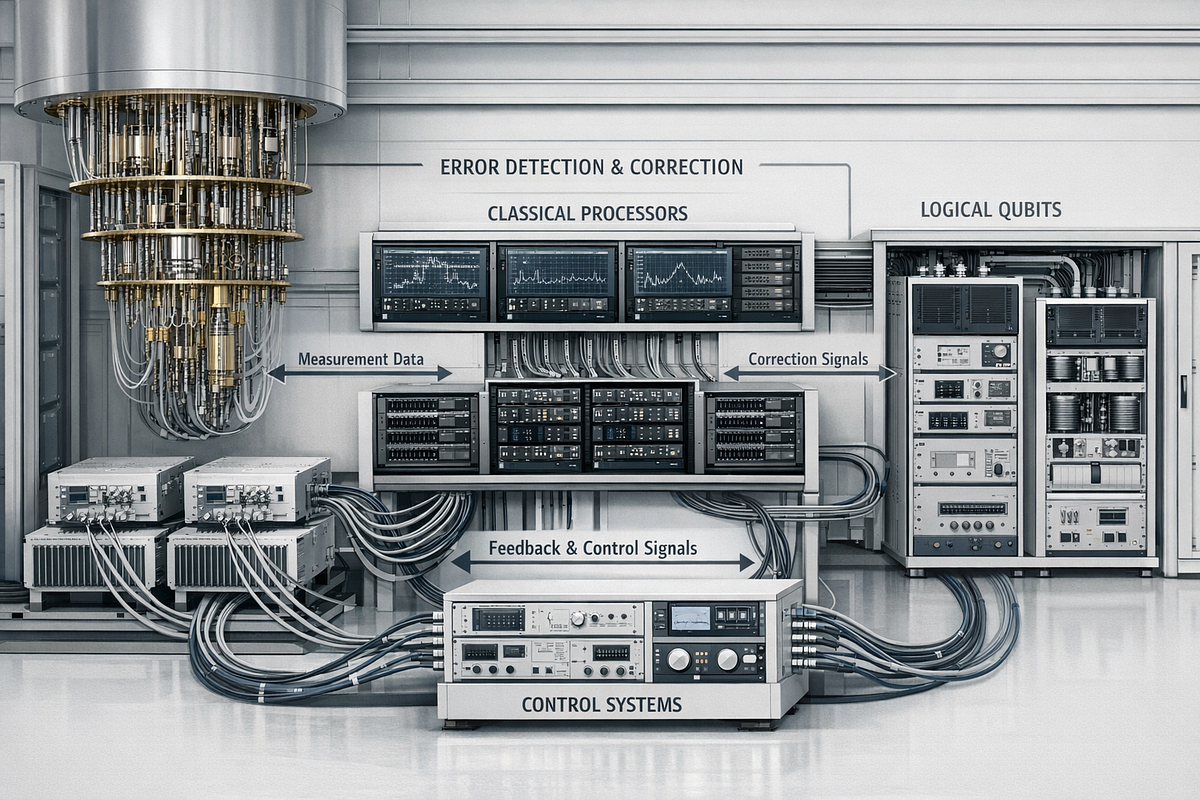
- Real-time feedback latency becomes critical for error correction and adaptive circuits, pushing classical control systems to their limits.
- Software orchestration must coordinate parallel operations across imperfect, failure-prone hardware — something current research stacks are not designed to do.
Historically, in every complex computing system — from supercomputers to distributed cloud platforms — coordination, not components, sets the scaling limit. Quantum computing will be no different.

The winners will not simply build better qubits. They will build better quantum operating systems.
Architecture Will Matter More Than Qubit Modality
Debates about “the best qubit technology” often miss the larger point. No single modality is likely to dominate in isolation.
In the near to mid term, superconducting and trapped-ion platforms are well-positioned due to tooling maturity, control quality, and ecosystem depth. But from a next-generation systems perspective, the strongest long-term potential lies in modular, hybrid architectures, often anchored by photonic interconnects.
The path to millions of physical qubits almost certainly involves:
- Heterogeneous systems where different modalities specialize
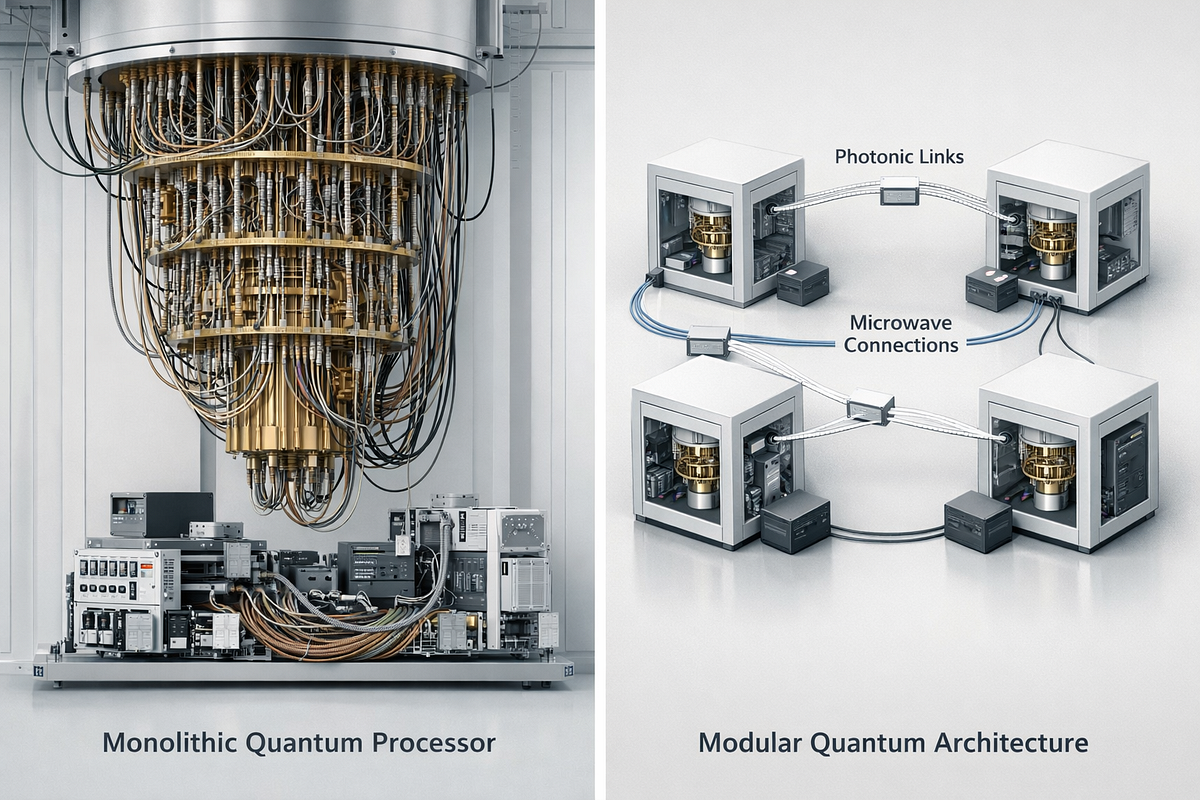
- Modular scaling across cryostats or facilities
- Networked logical qubits rather than monolithic chips
Betting on a single modality without architectural flexibility risks locking systems into hard physical limits. Architecture — not modality — will ultimately determine scalability.
Quantum Computers Will Be Accelerators, Not Replacements
Another persistent misconception is that quantum computers will replace classical systems. They won’t.
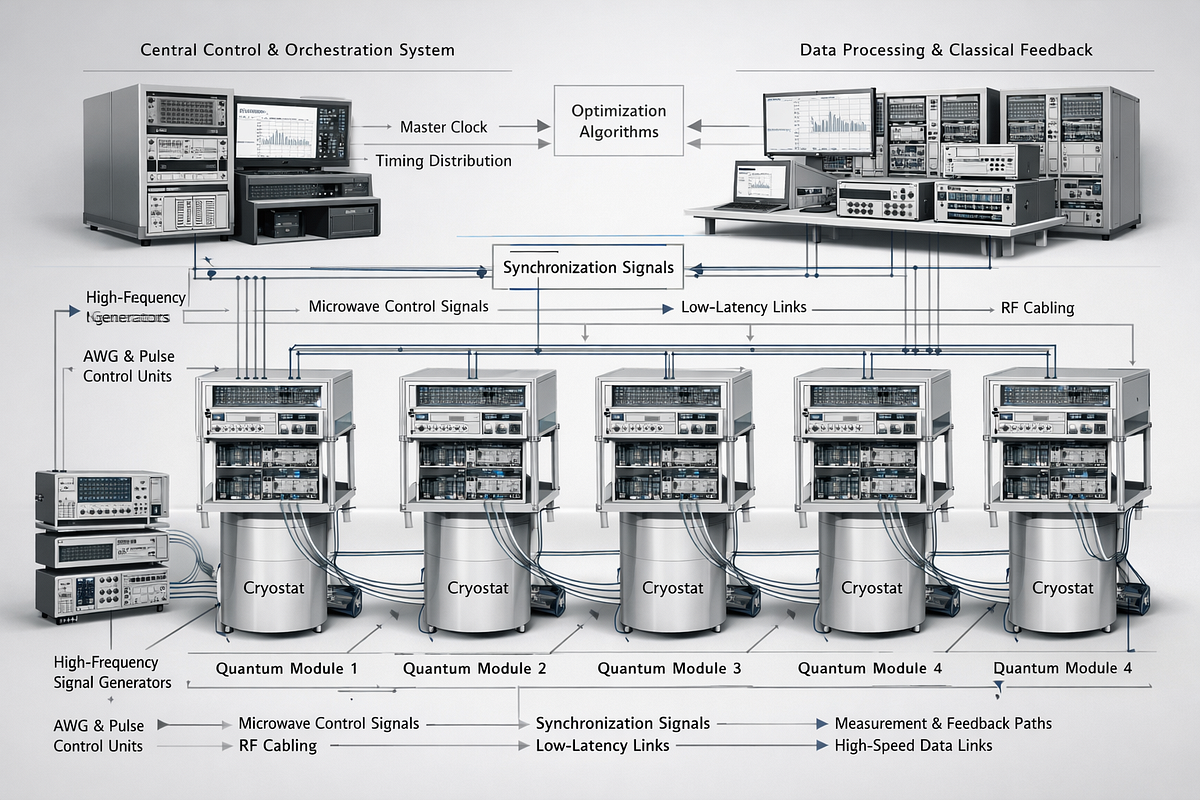
Next-generation quantum systems will evolve into specialized accelerators, tightly integrated with classical infrastructure. Classical processors will remain central, handling:
- Real-time control and orchestration
- Error correction decoding and feedback
- Pre- and post-processing for hybrid algorithms
- Cloud scheduling, resource management, and integration with HPC workflows
In practice, the quantum device is only one component in a much larger classical–quantum ecosystem. Performance emerges from how well these layers are co-designed, not from the quantum hardware alone.
Where Near-Term ROI Is Real — and Where It Isn’t
For executives and investors, the key question is not whether quantum computing will matter, but where it will matter first.
Credible near-term value is concentrated in domains where even an incremental advantage is economically meaningful:
- Chemistry and materials science, where improved molecular simulation accelerates R&D and reduces experimental cost
- Optimization-heavy industries, such as logistics, energy, and finance, where better heuristics can materially improve outcomes
- Financial modeling and risk analysis, where small computational gains translate into outsized impact
- Quantum sensing and metrology, which will likely see practical deployment before large-scale fault-tolerant computation
By contrast, broad claims about general-purpose acceleration, AI transformation, or cryptographic disruption remain ahead of reality.
The Strategic Mistakes Leaders Keep Making
Across the ecosystem, the same errors recur:
- Chasing qubit counts instead of system viability
- Treating quantum computing as plug-and-play infrastructure
- Expecting broad ROI on enterprise timelines
- Ignoring talent, integration, and organizational readiness
- Overcommitting to single vendors or modalities without architectural flexibility
Quantum computing is not a procurement decision. It is a long-term systems strategy.
A Realistic Timeline — Without the Hype
A conservative but defensible outlook looks like this:
- 1–3 years: Repeatable, domain-specific advantage in hybrid workflows
- 3–7 years: Early logical qubits and limited error-corrected systems in production-adjacent environments
- 7–10+ years: Modular, fault-tolerant systems that begin to complement HPC at scale
Progress will be incremental, architectural, and uneven — not explosive.
The One Insight That Matters Most
If there is a single takeaway from the next decade of quantum computing, it is this:
The success of next-generation quantum computing will be determined not by qubit counts or press releases, but by the holistic integration of hardware, control, software, error correction, and classical orchestration that work together as a unified system.
The teams that internalize this early will build systems that scale. Those that don’t may build impressive demos that never escape the lab.
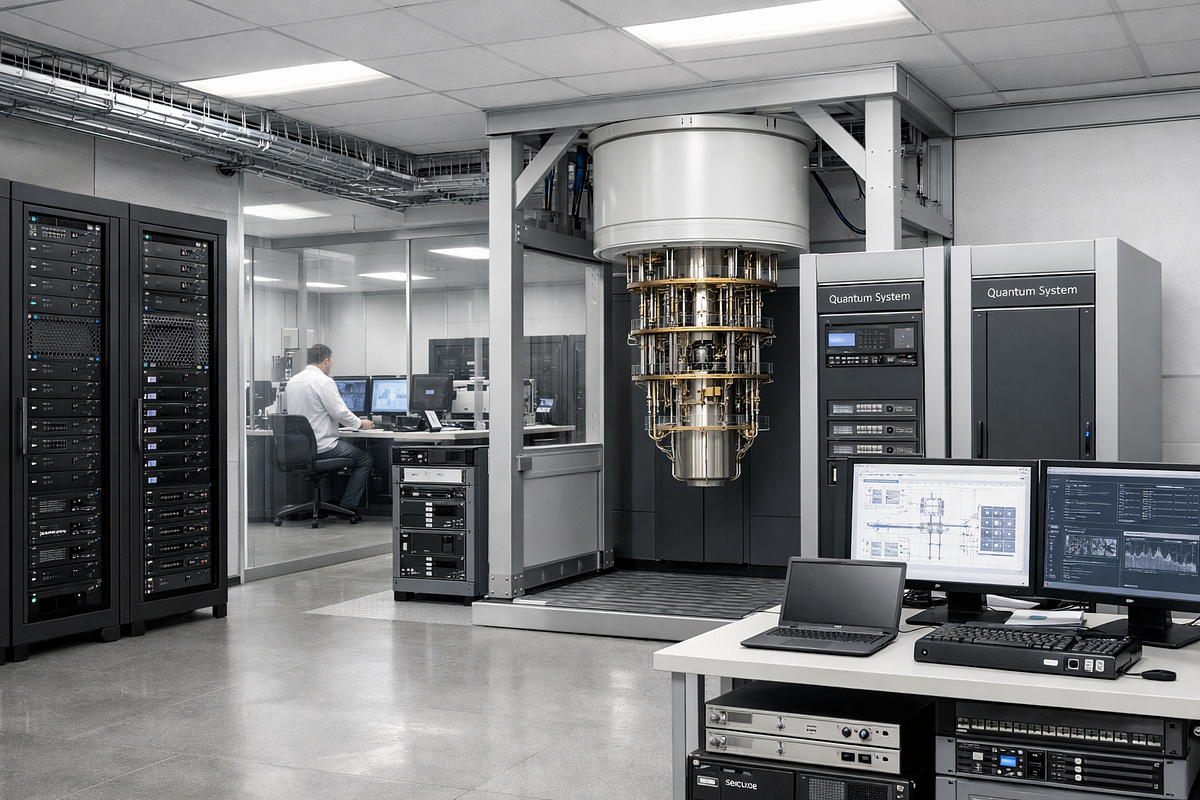
Quantum computing’s future is not about magic machines. It is about disciplined engineering.
And that is precisely why the next generation will look very different from the last.


Comments
Post a Comment