Quantum Computing Systems: Architecture, Components & Operation
A Systems-First Perspective Beyond Qubit Counts
Introduction: From Qubits to Systems
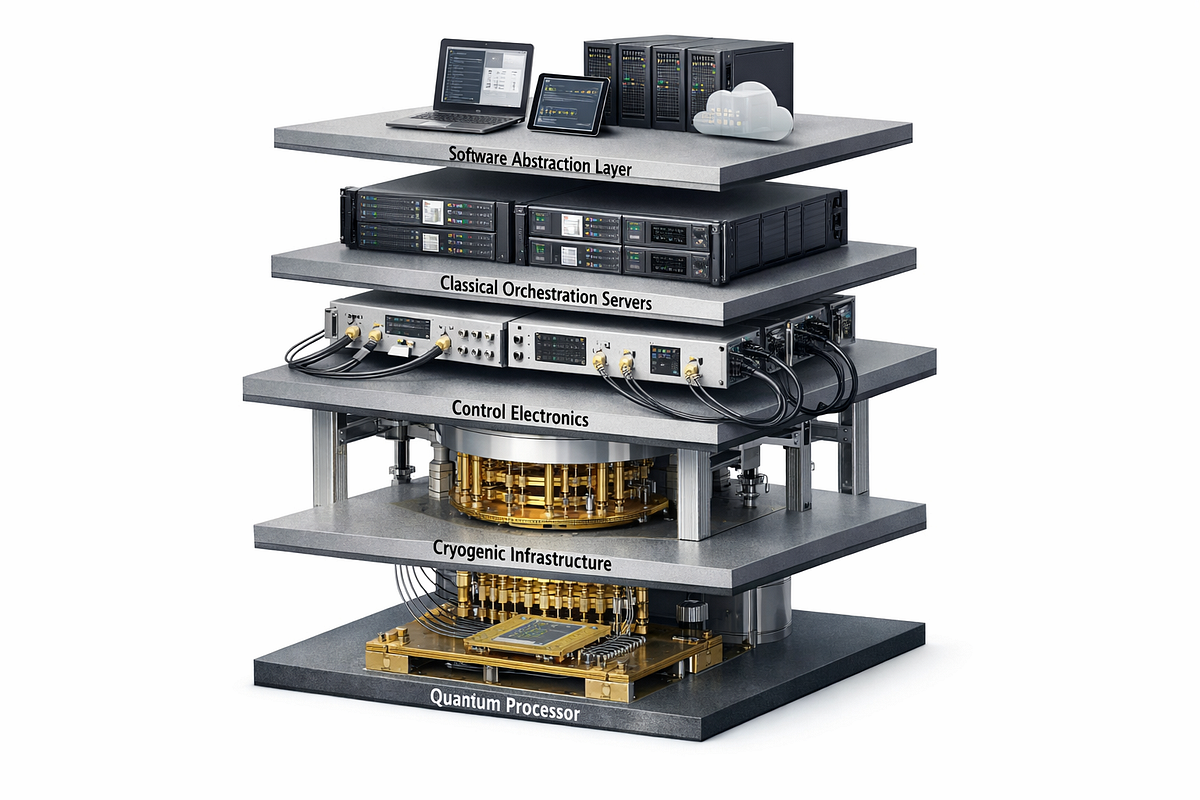
Most discussions of quantum computing still frame progress in terms of qubit counts, algorithmic breakthroughs, or isolated demonstrations of “quantum advantage.” While these elements matter, they obscure a more important reality: quantum computers are complex systems-of-systems, not standalone devices defined by a single metric.
In practice, the usefulness of a quantum computer is determined less by how many qubits it contains and more by how well those qubits are integrated into a broader architectural stack — one that includes control electronics, cryogenic infrastructure, classical co-processors, software orchestration, and operational workflows. Many of the most significant constraints facing quantum computing today emerge not from quantum mechanics itself, but from systems engineering trade-offs.
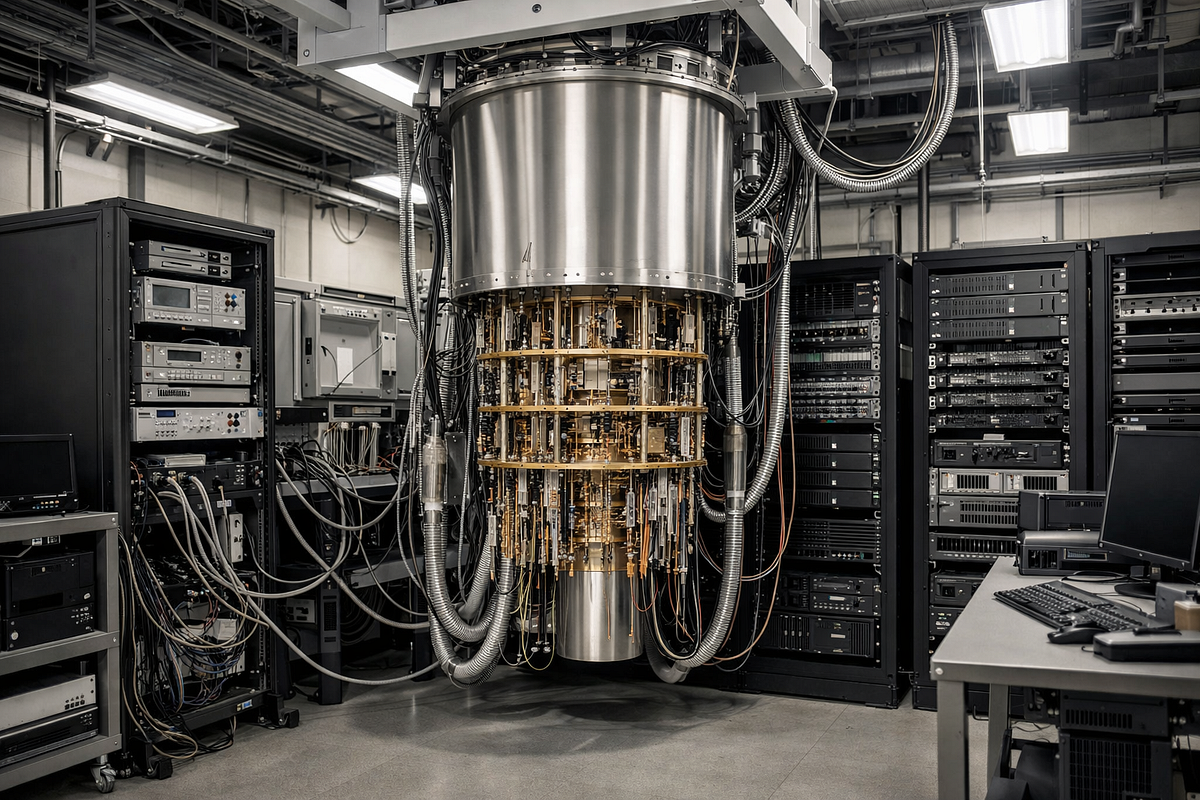
This article examines quantum computing through that system's lens. Rather than focusing on algorithms or physics in isolation, it explores how quantum computing systems are architected, what their core components actually do, and how quantum workloads are executed in real environments — particularly hybrid, cloud-accessible ones. The goal is not to predict imminent disruption, but to provide a clear, practical framework for evaluating quantum technologies as they exist today and how they may realistically evolve.
A Conceptual Overview: What Is a Quantum Computing System?
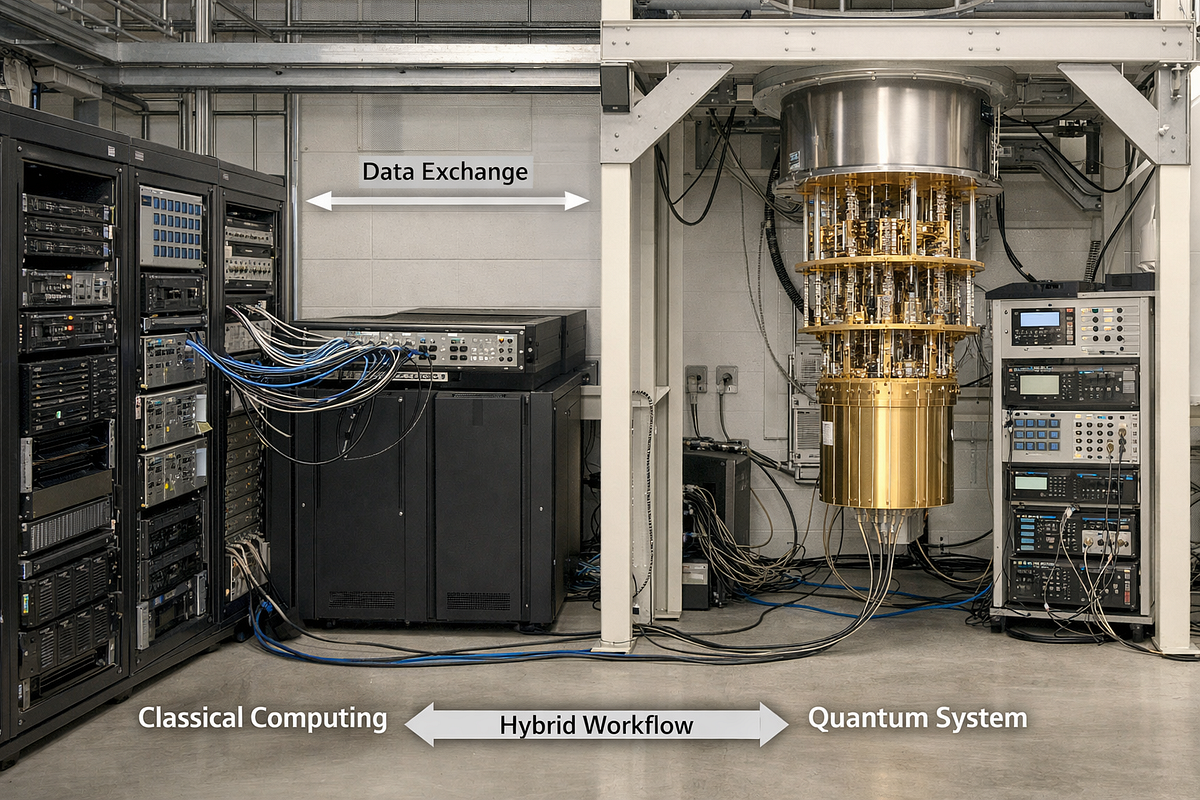
At a high level, a quantum computer is best understood as a specialized accelerator tightly coupled to classical computing infrastructure. It does not replace classical systems; it depends on them.
A complete quantum computing system typically includes:
- A Quantum Processing Unit (QPU) that hosts physical qubits and executes quantum operations
- Control electronics that generate precise signals to manipulate qubit states
- Measurement and readout systems that convert quantum states into classical data
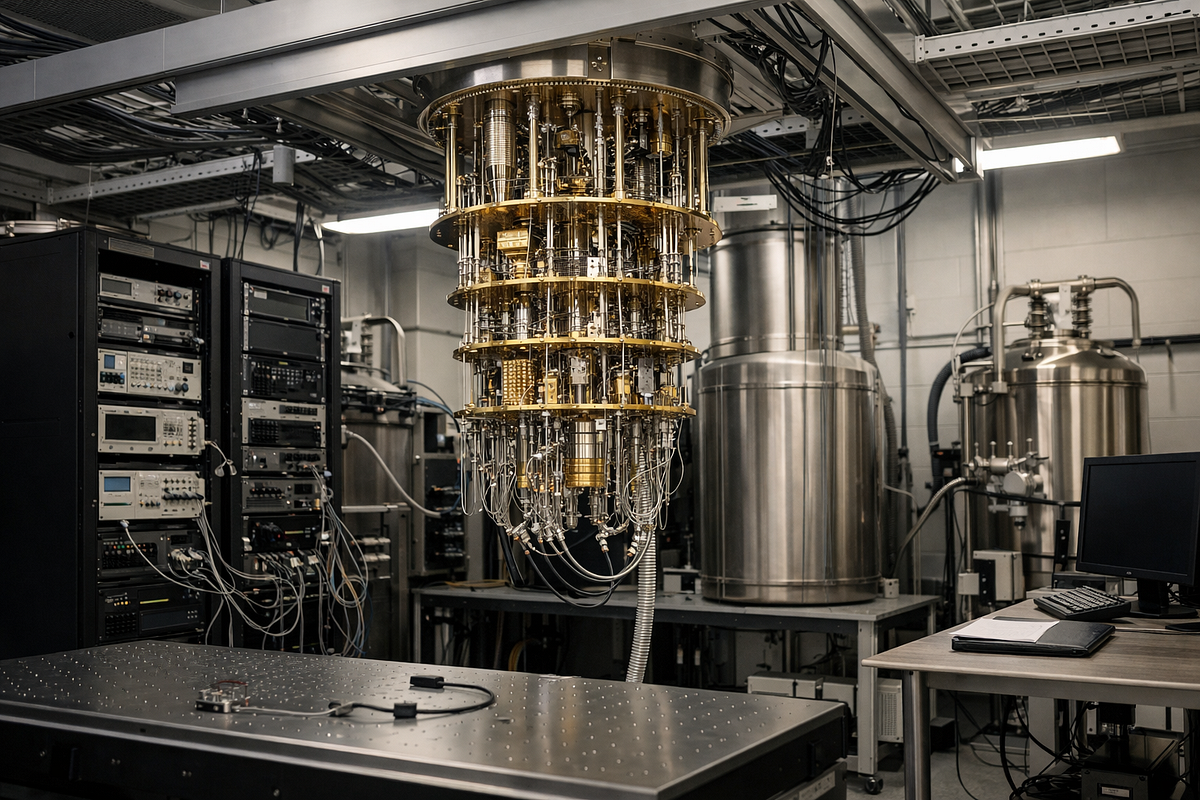
- Cryogenic or environmental infrastructure required to maintain qubit stability
- Classical compute resources for compilation, orchestration, scheduling, and post-processing
- Software layers that translate algorithms into hardware-specific instructions
From an architectural standpoint, the QPU is only one component — and often not the dominant bottleneck. Latency, noise accumulation, calibration drift, and orchestration overhead frequently define system performance more than raw quantum gate speeds.
This is why evaluating quantum computers purely by qubit count is misleading. A small, well-integrated system can outperform a larger but noisier one, depending on workload and operational constraints.
Architecture Layers: How Quantum Systems Are Structured
1. The Quantum Hardware Layer (QPU)
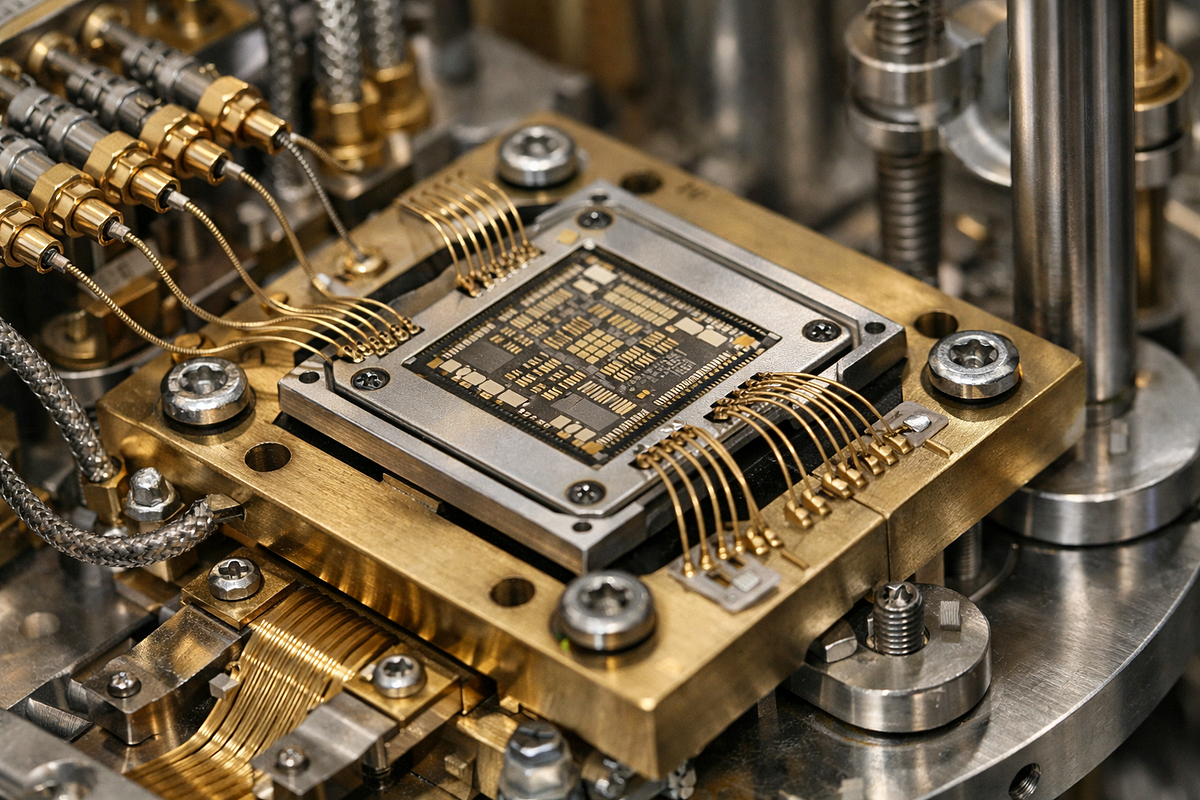
The QPU contains the physical qubits and implements quantum gates. Architectural choices at this level — qubit modality, connectivity, coherence times, and gate fidelity — establish hard limits on what the system can do.
Today’s most relevant paradigms include:
- Superconducting qubits: Fast gate times, mature fabrication techniques, and broad cloud availability, but require complex cryogenics and careful noise management.
- Trapped ions: Excellent coherence and gate fidelity with near-ideal connectivity, but slower gate speeds and scaling challenges due to optical control complexity.
- Photonic and neutral-atom systems: Promising for specific applications, but still emerging as general-purpose platforms.
- Quantum annealers: Architecturally distinct and limited to optimization problems; useful primarily for contrast.
From a systems perspective, superconducting qubits are currently the most viable general-purpose platform — not because they are perfect, but because their ecosystem maturity (fabrication, tooling, cloud access, and software integration) enables real experimentation at scale.
2. Control and Signal Delivery
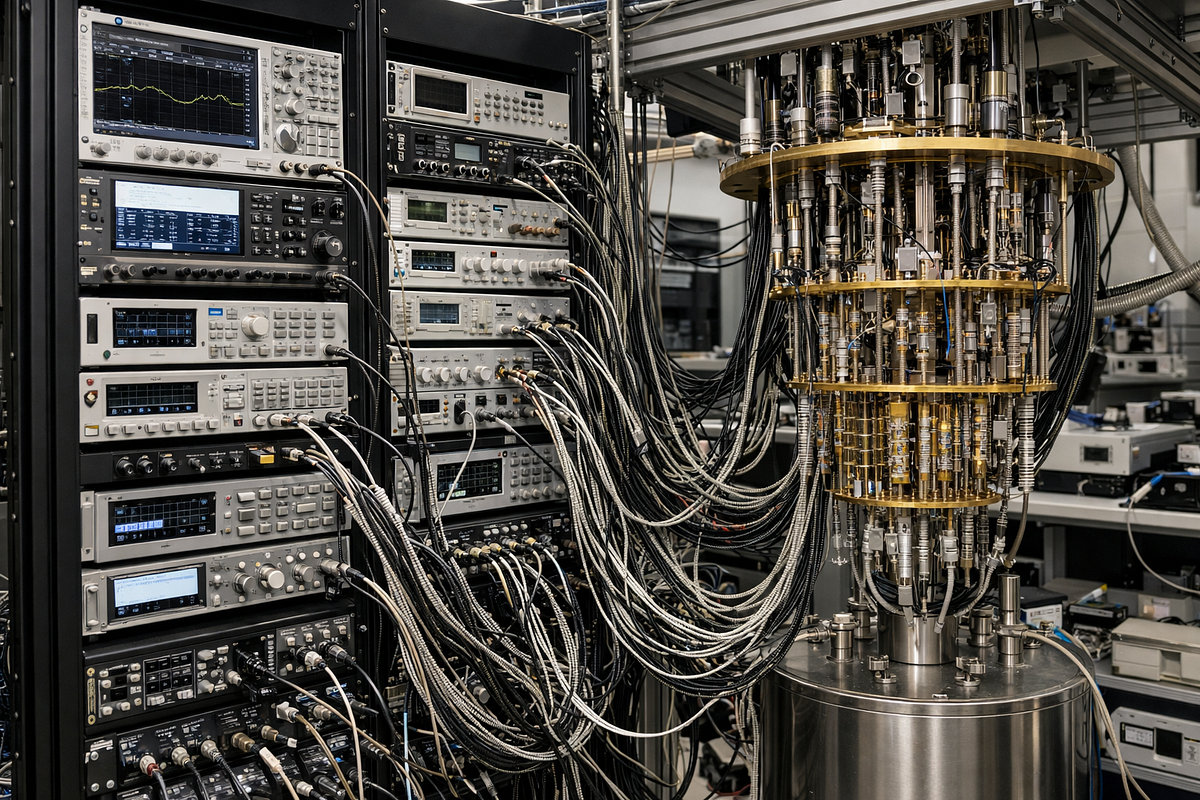
Control electronics translate compiled quantum instructions into physical signals — microwave pulses, laser interactions, or optical operations — that manipulate qubit states.
This layer is often underestimated. In practice:
- Timing precision, signal distortion, and crosstalk can dominate error budgets
- Control complexity grows faster than qubit count
- Small imperfections compound across circuit depth
In real systems, noise is not confined to qubits; it emerges across layers. Control electronics are therefore a first-class architectural constraint, not a peripheral detail.
3. Cryogenics and Physical Infrastructure
For superconducting systems, cryogenic infrastructure is essential. Maintaining millikelvin temperatures introduces constraints on:
- Physical scalability and footprint
- Power consumption and operational cost
- Signal routing and system reliability
Cryogenics is not just an engineering requirement — it shapes architectural decisions and long-term deployment feasibility. Ignoring it leads to unrealistic scaling assumptions.
4. Classical–Quantum Orchestration
Every practical quantum workload is hybrid. Classical systems handle:
- Algorithm decomposition
- Compilation and optimization
- Job scheduling and queuing
- Measurement aggregation and post-processing
In cloud environments, especially, classical orchestration latency often dominates total runtime, dwarfing the actual quantum execution time. This is one of the most persistent gaps between theoretical performance and real-world behavior.
Core Components That Matter More Than You Think
Several system components are routinely underappreciated despite their outsized impact on usability:
Classical–Quantum Integration
Hybrid orchestration defines whether quantum speedups are meaningful. Even highly optimized quantum circuits offer little value if classical coordination introduces excessive latency or variability.
Observability and Tooling
Compared to classical systems, quantum platforms offer limited diagnostics:
- Sparse telemetry
- Minimal logging
- Little insight into cross-layer interactions
This makes debugging and performance tuning difficult and slows practical progress more than many hardware limitations.
Error Correction Overhead
Fault-tolerant quantum computing remains a long-term goal. The architectural reality is that error correction multiplies resource requirements by orders of magnitude, reshaping system design, cost, and feasibility. Most near-term systems operate without full fault tolerance, relying instead on error mitigation techniques with limited scope.
How Quantum Systems Operate: An End-to-End View
Understanding operation clarifies why system-level constraints matter.
- Algorithm Mapping
Problems must be reformulated to fit quantum primitives, often increasing circuit depth and sensitivity to noise. - Compilation
High-level descriptions are transformed into hardware-specific gate sequences, constrained by qubit connectivity and timing. - Pulse-Level Control
Gates are converted into physical control signals, where precision and interference directly affect fidelity. - Execution and Measurement
Qubits evolve, decohere, and are measured — introducing stochastic error that must be statistically managed. - Post-Processing and Feedback
Classical systems aggregate results, apply error mitigation, and often drive iterative workflows.
In practice, this pipeline behaves less like deterministic computation and more like experimental instrumentation, with variability across runs and over time.
Operational Realities from Cloud-Based Systems
Hands-on experience with cloud-accessible quantum platforms highlights several recurring issues:
- Latency dominates hybrid workflows, limiting iterative algorithms
- Calibration drift affects reproducibility and benchmarking
- Noise accumulates across layers, not just at qubits
- Tooling gaps obscure root causes of underperformance
These realities explain why many promising algorithms fail to deliver expected results on real hardware.
Cloud vs. On-Prem Quantum Systems
From an architectural standpoint:
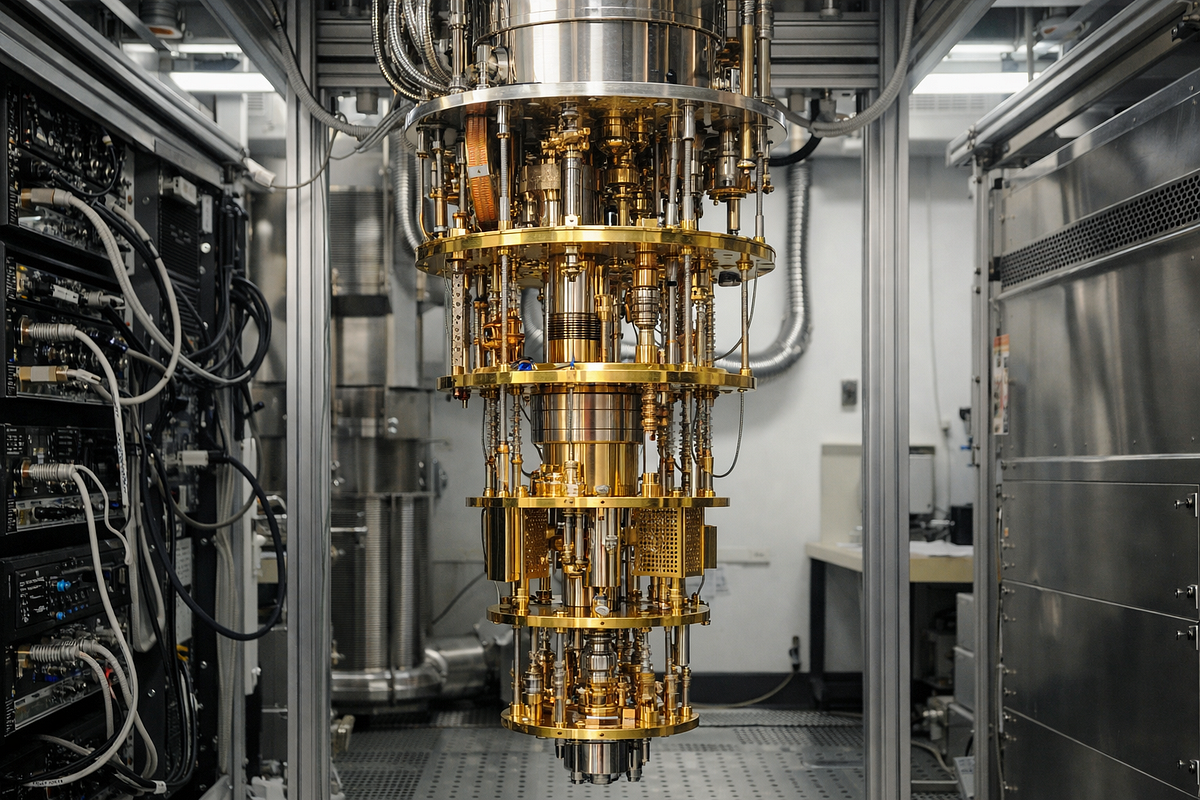
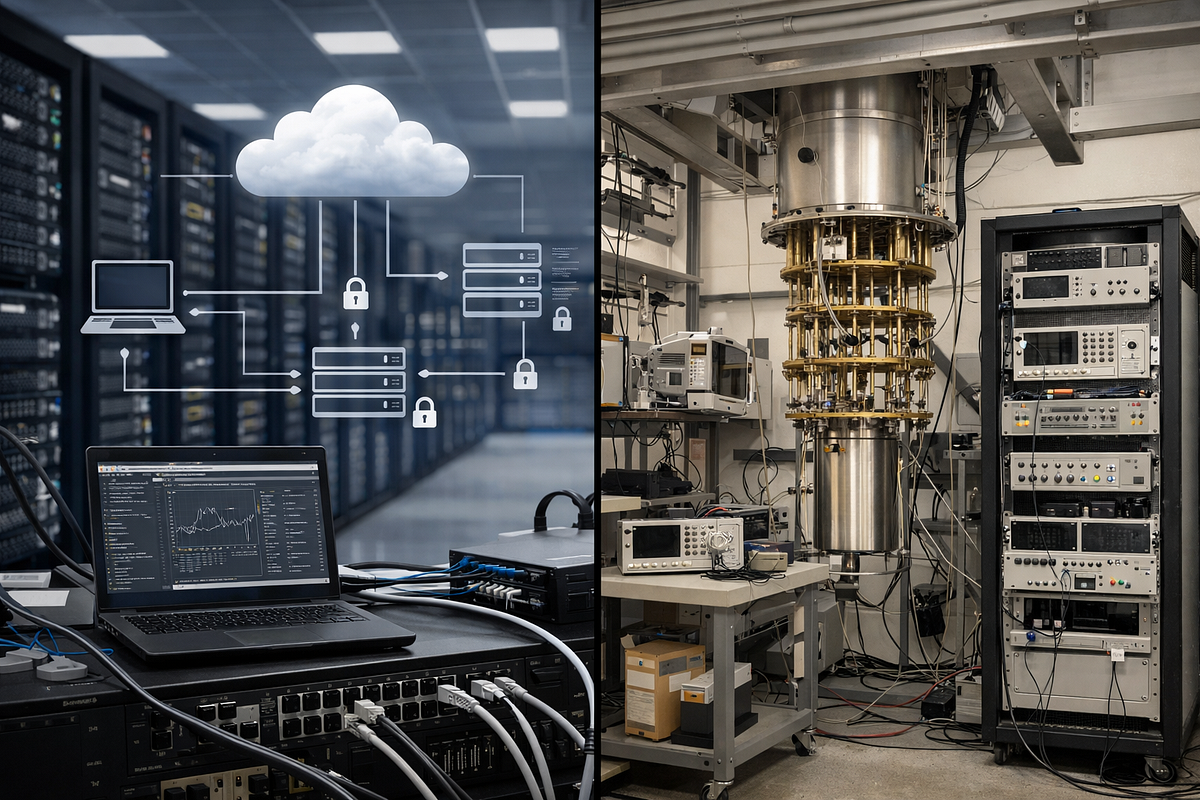
- Cloud platforms offer accessibility, rapid experimentation, and exposure to multiple paradigms — but introduce queuing delays and limited observability.
- On-prem systems provide control and low-latency integration but require enormous capital investment and specialized expertise.
For most organizations today, cloud access is the only practical entry point. On-prem deployment makes sense only for highly specialized research or proprietary workflows.
Key Trade-Offs That Define System Viability
Several architectural trade-offs recur across platforms:
- Scalability vs. fidelity: More qubits often mean more noise
- Connectivity vs. control complexity
- Error correction vs. practical usability
- Manufacturability vs. precision
In practice, architecture choices define usefulness more than headline metrics. Systems succeed or fail based on how well these trade-offs are balanced.
A Realistic View of Quantum Computing Today
Quantum computing is neither overhyped nor underfunded — it is widely misunderstood.
- Near-term systems are experimental, not transformative
- Quantum advantage is domain-specific and limited today
- Classical HPC remains dominant for most workloads
The most credible near-term value lies in chemistry, materials science, and specialized sensing, where problem structure aligns with current system capabilities.

Conclusion: Think Systems, Not Qubits
Quantum computing will not progress through qubit counts alone. Its future depends on system integration, operational maturity, and architectural discipline.
For engineers, architects, and decision-makers, the right question is not “How many qubits does this system have?” but:
- How is the system architected end-to-end?
- Where do errors and latency accumulate?
- How tightly is it integrated with classical infrastructure?
- What workloads are realistically feasible today?
Quantum computers are not magical devices waiting to be unlocked. They are complex, evolving systems — and understanding them as such is the difference between informed evaluation and misplaced optimism.


Comments
Post a Comment