Scalable Quantum Computing: A System-Level Framework
Quantum computing is often discussed as a race: more qubits, higher fidelities, larger processors. Yet after more than a decade working across quantum research, system architecture, and industry analysis, one pattern is clear — most scalability failures have little to do with qubits themselves.
They emerge instead from control complexity, calibration overhead, software fragility, and operational entropy that compound long before fault tolerance arrives.
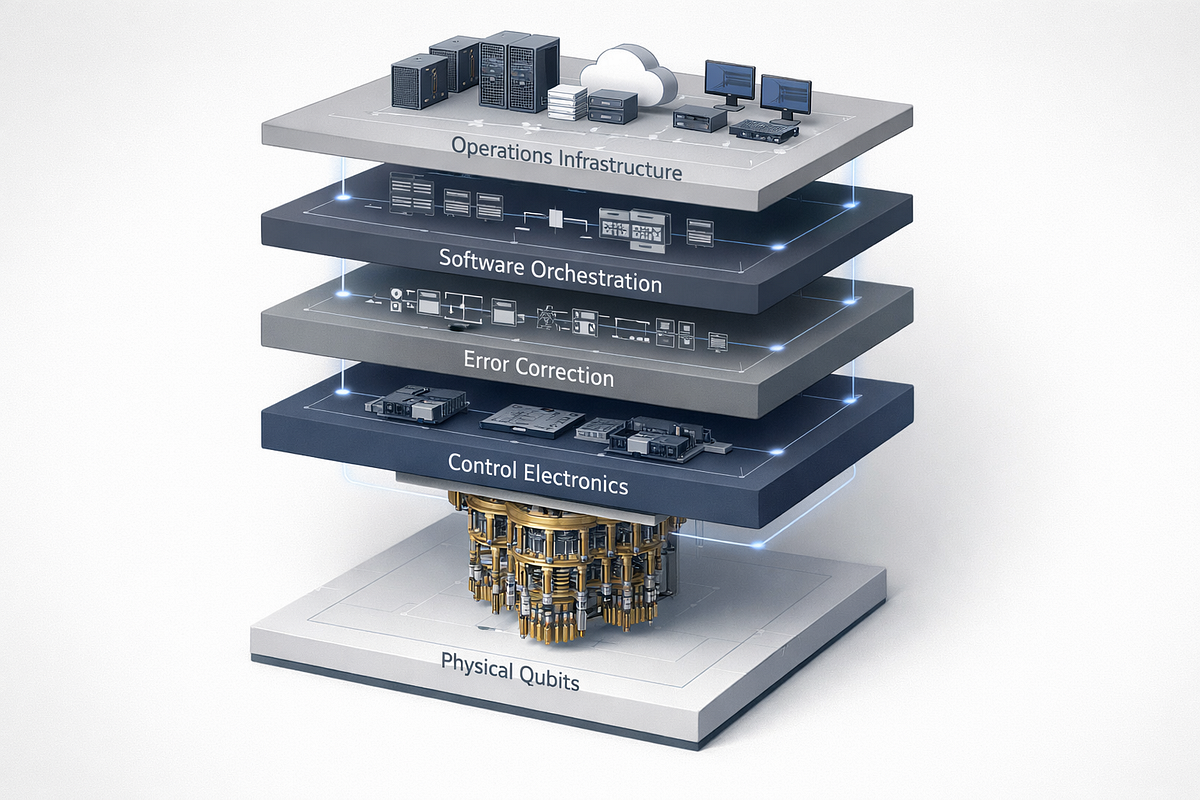
This article is written for systems architects and engineers who already understand quantum computing fundamentals and want a practical framework for evaluating and designing scalable, production-grade quantum systems. The core argument is simple but frequently overlooked:
Scalable quantum computing is not a hardware milestone — it is a system property.
What “Scalable” Really Means in Quantum Computing
True scalability is not the ability to add qubits. It is the ability to increase useful, reliable computational capacity without exponential growth in complexity, cost, or fragility.
In practice, that requires scalability across five dimensions:
- Operational scalability
Calibration, validation, and recovery must not scale linearly — or worse — with qubit count. A system that requires 10× the human intervention to run at 10× scale is not scalable. - Error-management scalability
Errors must be suppressed, modeled, and corrected in ways that software and compilers can reliably exploit. Adding qubits faster than you can manage errors accumulates technical debt, not capability. - Control and orchestration scalability
Timing, synchronization, feedback, and routing must scale hierarchically. Flat control stacks collapse under real-time load. - Software and abstraction scalability
Hardware evolution should not require rewriting the entire software stack. Stable abstractions are what allow progress to compound. - Economic and energy scalability
Cost per logical operation, power consumption, cooling, yield, and manufacturability all matter. A system that “works” once but cannot be reproduced is not scalable.
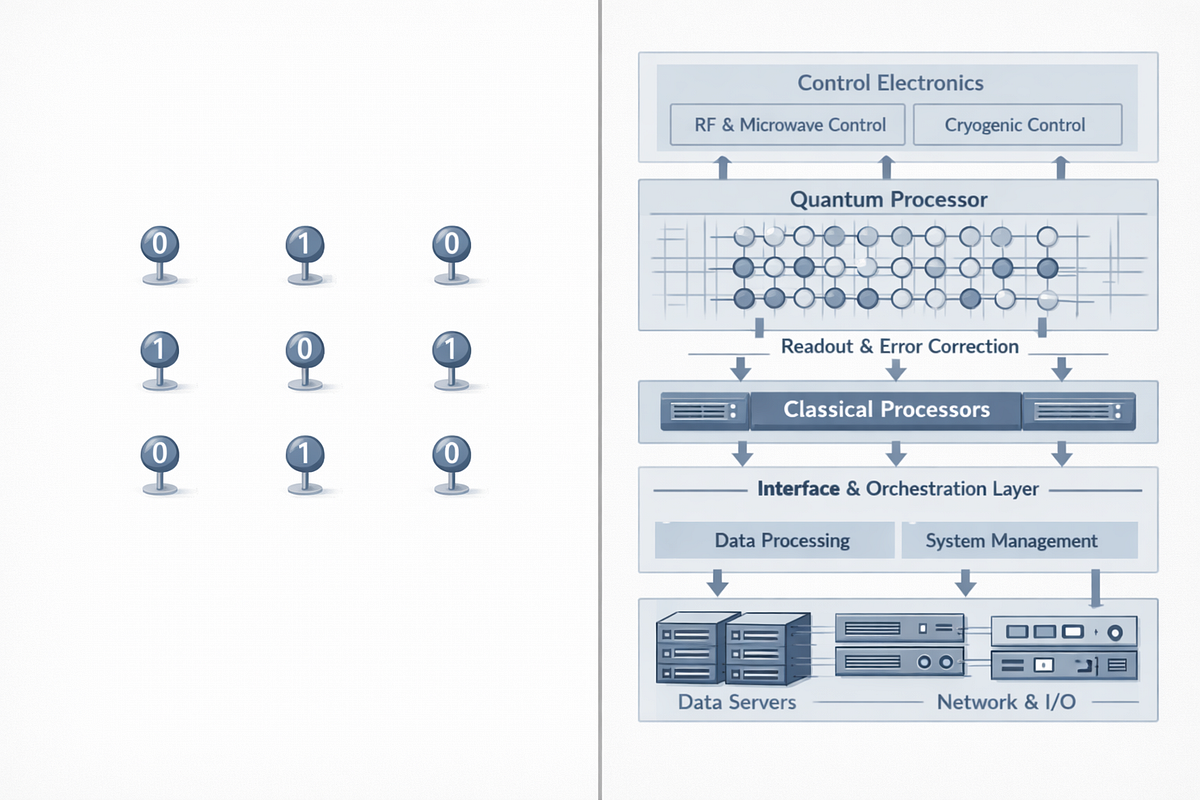
A concise definition that captures all of this:
True scalability in quantum computing is the ability to grow logical computational power while keeping errors, control complexity, operational overhead, and cost on predictable — preferably sublinear — trajectories.
The Most Underestimated Bottlenecks (And Why They Appear Early)
The most serious scaling limits rarely appear in benchmark demos or press releases. They surface when systems move from isolated prototypes to integrated operation.
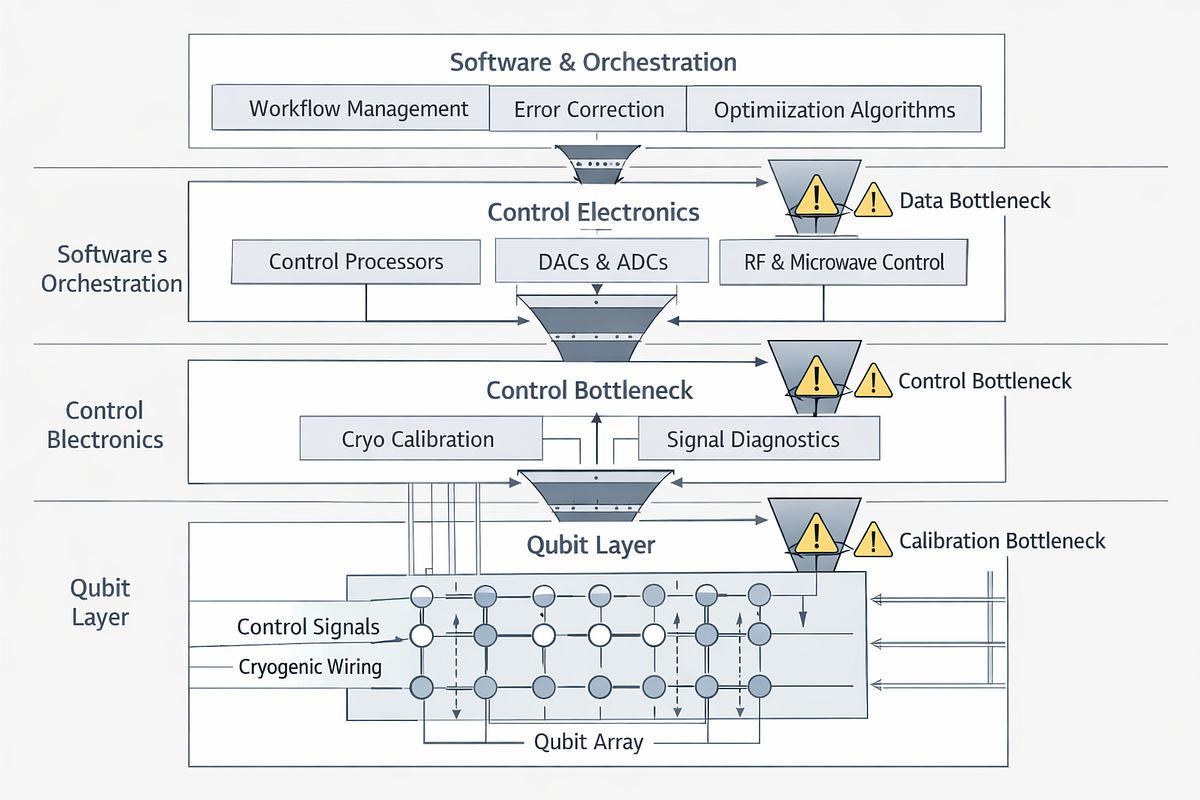
1. Calibration and Characterization Explosion
Each additional qubit increases crosstalk, drift vectors, and parameter dependencies. At scale, calibration time can exceed useful uptime unless automation and hierarchy are designed in from day one.
2. Classical Control and Real-Time Feedback
Control electronics are often treated as solved engineering problems. They are not. Timing precision, bandwidth, and latency requirements scale aggressively, especially once error correction enters the loop.
3. Error-Correction Overhead Realism
Logical qubit overhead, decoder latency, and control cost are routinely underestimated. Fault tolerance is not just a qubit problem — it is a classical systems problem.
4. System-Level Noise and Crosstalk
Noise becomes global, dynamic, and configuration-dependent at scale. Unstable noise models invalidate compiler assumptions and undermine reproducibility.
5. Software Fragility
If every hardware revision breaks the compiler, scheduler, or orchestration layer, progress does not accumulate — it resets.
6. Human-in-the-Loop Dependence
Systems that require expert intuition to operate cannot scale. Automation is not optional; it is a prerequisite.
The common thread: scaling fails first at the intersection of control, software, and operations — not physics.
When Does Meaningful Quantum Advantage Become Realistic?
Not at a specific qubit count.
Meaningful quantum advantage emerges when logical, error-managed computation can be sustained long enough to outperform classical alternatives on a well-defined task.
Credibly, that likely begins with:
- Hundreds of logical qubits
- Backed by tens to hundreds of thousands of physical qubits
- Running within mature hybrid classical–quantum workflows
Early advantage will appear in narrow, structured domains — chemistry, materials, constrained optimization — where approximate answers are acceptable and classical heuristics plateau.
Waiting for “millions of qubits” as a prerequisite for value misses the point. Systems maturity, not raw size, is the gating factor.
A Layered Framework for Scalable Quantum Systems
Scalability emerges from how layers co-evolve, not from any single breakthrough.
1. Physical Hardware Layer
Qubits, connectivity, coherence, yield, and uniformity. Necessary — but never sufficient.
2. Control & Orchestration Layer (Most Undervalued)
Pulse control, timing, synchronization, cryogenic interfaces, and real-time feedback. This is where most frameworks quietly break.
3. Error Mitigation & Fault-Tolerance Layer
Logical mapping, syndrome extraction, decoding, and noise-aware compilation. Error management dominates resource cost at scale.
4. Software & Compiler Layer
Hardware-agnostic IRs, schedulers, APIs, and tooling. Without stable abstractions, scalability is impossible.
5. Application & Algorithm Layer
Domain-specific algorithms, hybrid workflows, benchmarking, and verification.
6. Operations & Infrastructure Layer
Telemetry, monitoring, automated calibration, failure recovery, and scheduling. This layer determines whether a system is usable or merely impressive.
Most existing frameworks overweight layers 1 and 5 and dangerously underweight layers 2 and 6.
Why Modular (Hybrid-Modular) Architectures Win
Purely monolithic quantum systems scale poorly beyond a few hundred qubits. Control complexity, calibration burden, and fragility rise too quickly.
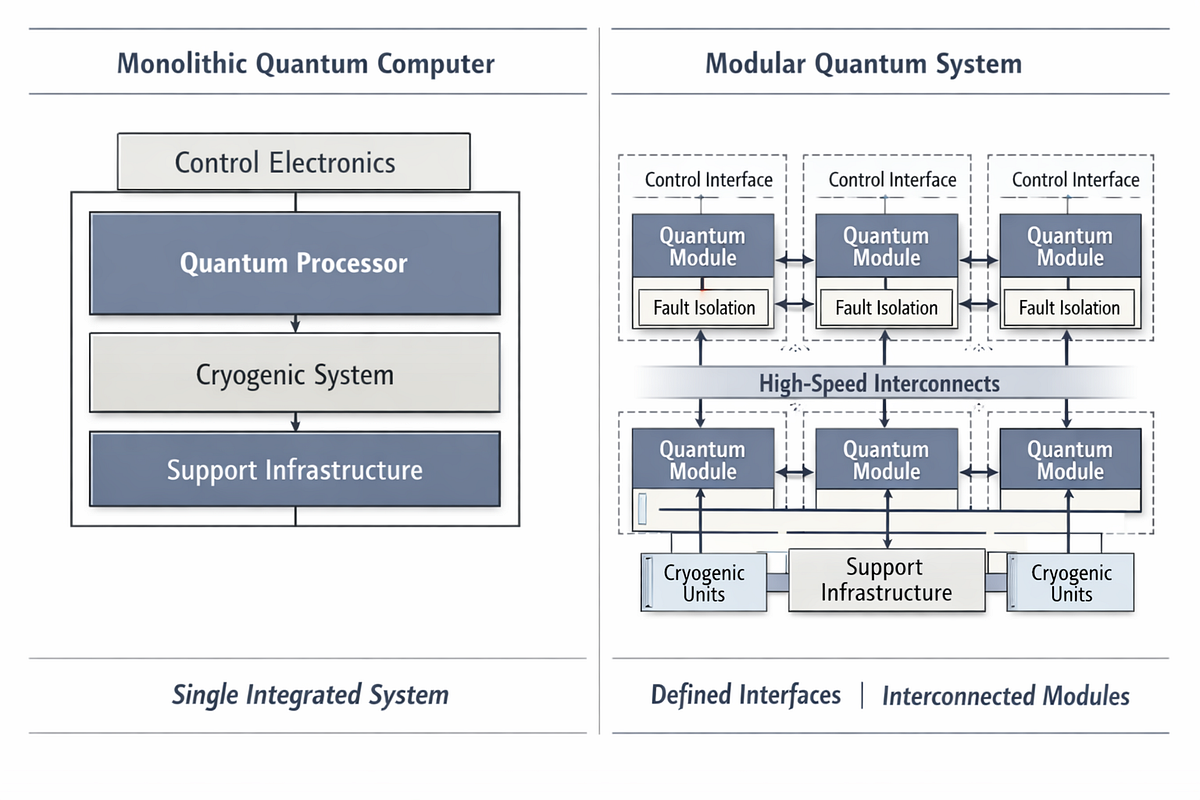
Modular architectures — especially hybrid-modular designs — offer:
- Incremental scaling
- Fault isolation
- Manageable control hierarchies
- Hardware heterogeneity (e.g., superconducting cores with photonic links)
Modularity does introduce interconnect challenges, but those challenges scale better than monolithic control collapse.
Scalability is about managing complexity, not maximizing connectivity.
Real-World Lessons from Systems That Nearly Failed
Across superconducting, trapped-ion, and hybrid prototypes, the failure modes were consistent:
- Multi-module systems collapsed due to timing drift and control stack overload.
- Calibration grew combinatorially, overwhelming manual processes.
- Software proved fragile under minor hardware or noise changes.
- Human intervention became the dominant operational cost.
The most impactful corrective action was not better qubits — it was hierarchical control combined with automated calibration and telemetry, treating operations as a first-class design layer.
Fault Tolerance: Necessary, but Not Sufficient
Current fault-tolerant roadmaps are directionally correct but often systematically optimistic. They under-account for:
- Control and decoding latency
- Classical compute overhead
- Calibration stability
- Operational automation
Surface codes dominate discourse, but their control and decoding costs are frequently underestimated. Subsystem codes and bosonic encodings, while less hyped, often integrate more naturally with modular, software-aware architectures.
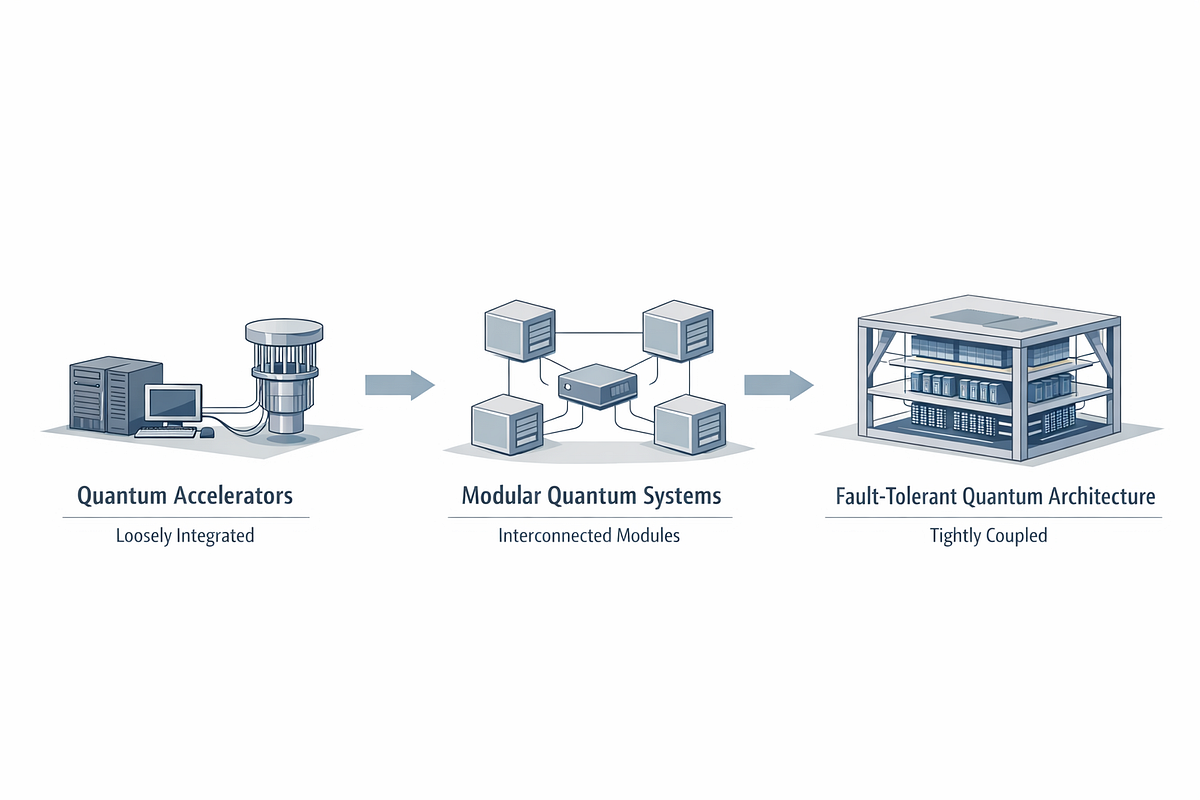
A key point often missed:
Fault tolerance is the ultimate test — but it is rarely the first bottleneck.
Classical–Quantum Integration: Accelerators First, Tight Coupling Later
Near-term systems will succeed as loosely integrated quantum accelerators embedded in classical HPC and cloud workflows. This minimizes latency sensitivity and operational risk.
As systems mature and fault tolerance becomes viable, architectures will evolve toward tightly coupled classical–quantum stacks with low-latency, hierarchical orchestration.
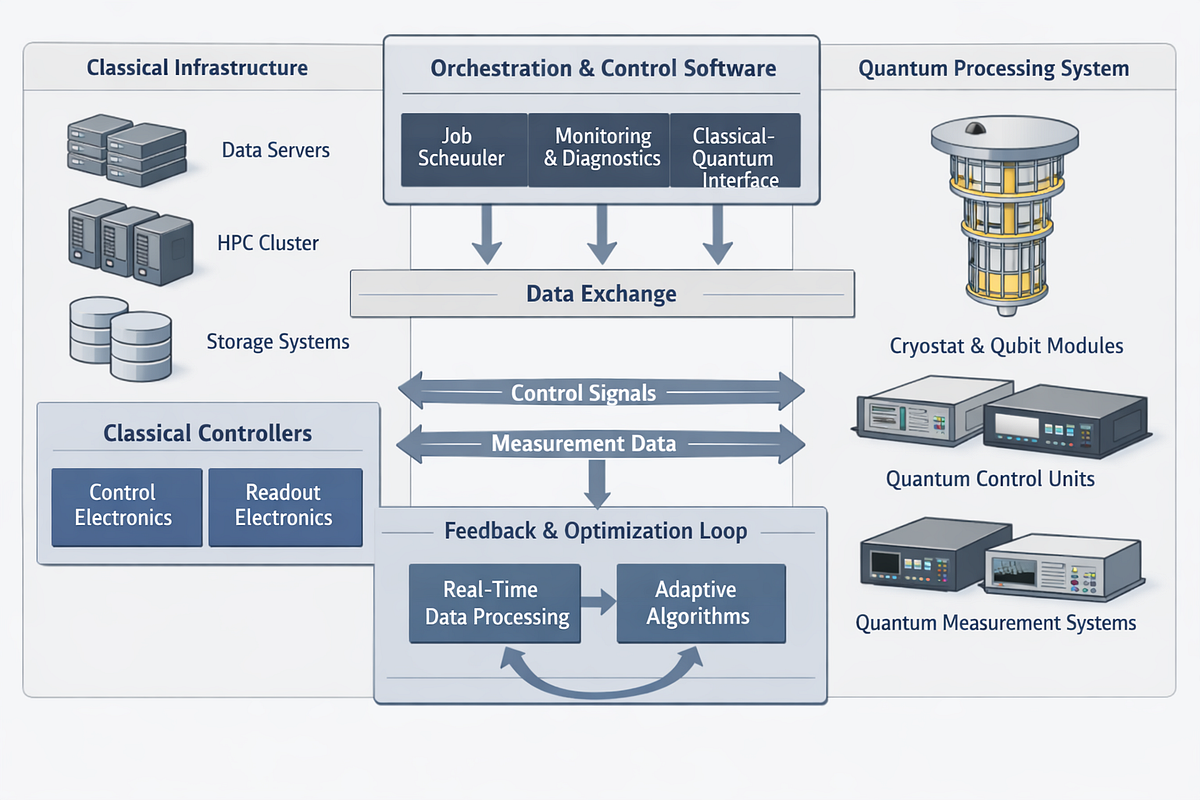
Tight coupling is not an early-stage requirement — it is a late-stage scalability enabler.
A Contrarian View Worth Stating Explicitly
Scaling quantum computers is not primarily about adding more qubits.
The industry today over-optimizes for:
- Physical qubit counts
- Headline gate fidelities
- Platform “wars”
In 5–10 years, what will matter far more are:
- Logical qubits sustained reliably
- Effective circuit depth
- Operational uptime under real workloads
- End-to-end system reliability
A Prescriptive Framework for Building Scalable Quantum Systems
To conclude, here is a practical, system-level framework architects can actually use:
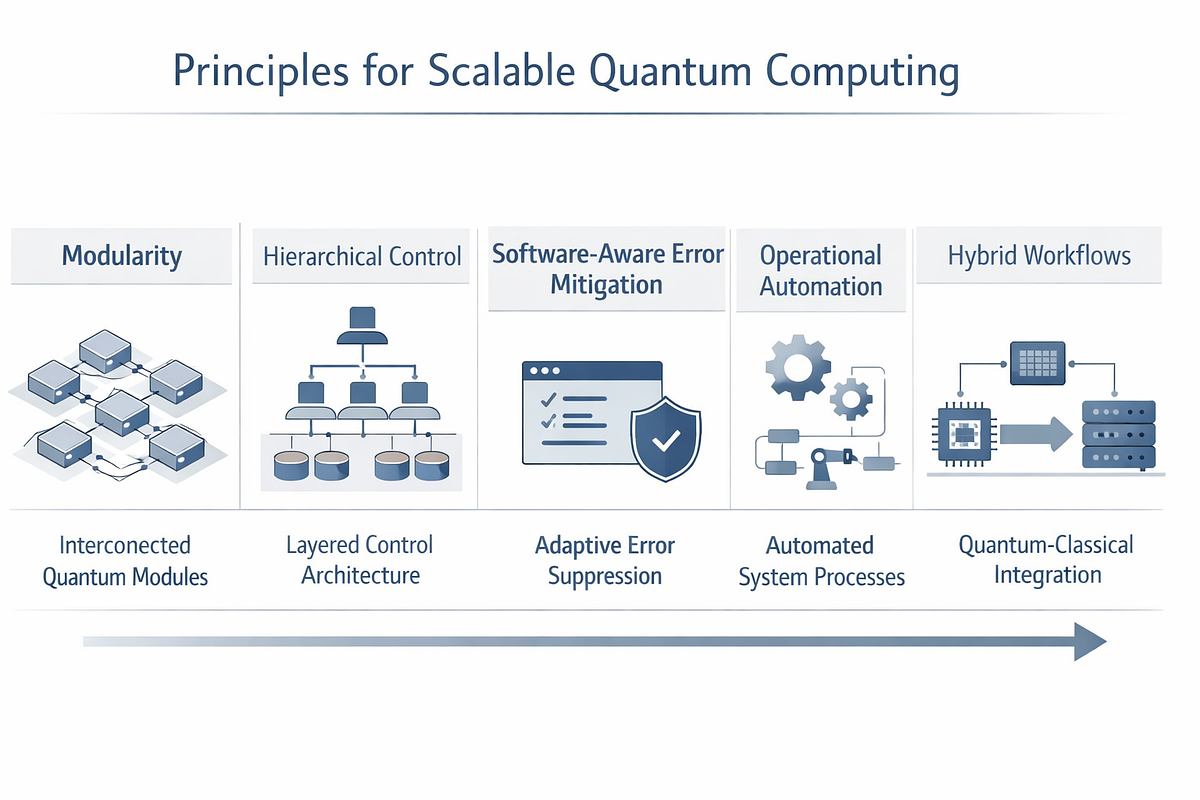
1. Design for Modularity from Day One
Build small, well-behaved modules with clear interfaces.
2. Treat Control and Orchestration as Core Architecture
Hierarchical control is not optional — it is foundational.
3. Invest Early in Software-Aware Error Mitigation
Software and hardware must co-evolve; waiting is costly.
4. Automate Operations Aggressively
Calibration, monitoring, and recovery must scale without humans.
5. Build for Hybrid Classical–Quantum Workflows
Most real value emerges from integration, not isolation.
6. Measure What Reflects Usable Computation
Track logical qubits, uptime, and effective depth — not headlines.
Final Thought
Quantum computing will not scale because we finally built “enough” qubits. It will scale when we design systems — hardware, control, software, and operations — that grow together without collapsing under their own complexity.
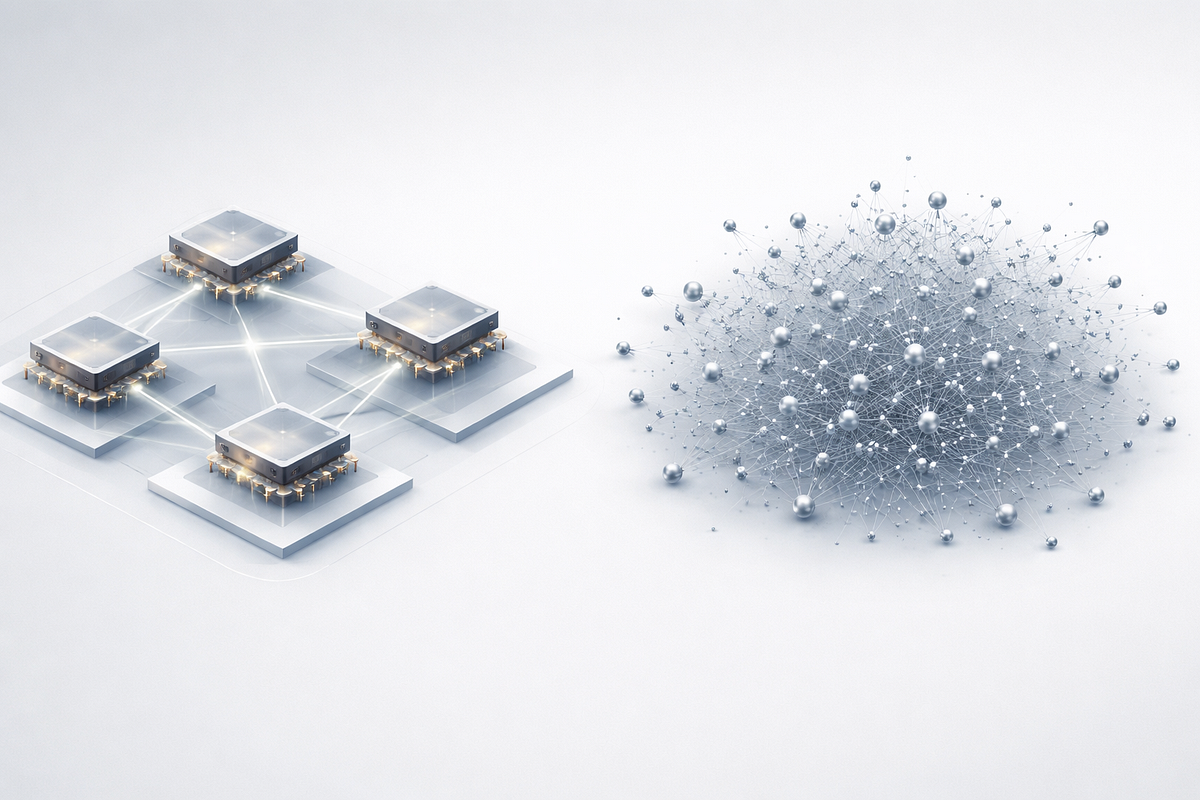
That shift — from qubits to systems — is where real progress begins.


Comments
Post a Comment