🔥 Quantum Computing Systems Explained: How They’re Transforming Tech (2026)
Quantum computing is often discussed as either an imminent revolution or a distant science experiment. Both narratives miss the reality. Today, quantum computing systems are already influencing how modern technology stacks are designed, how complex problems are approached, and how organizations plan for long-term computational advantage — even though large-scale, fault-tolerant quantum computers do not yet exist.
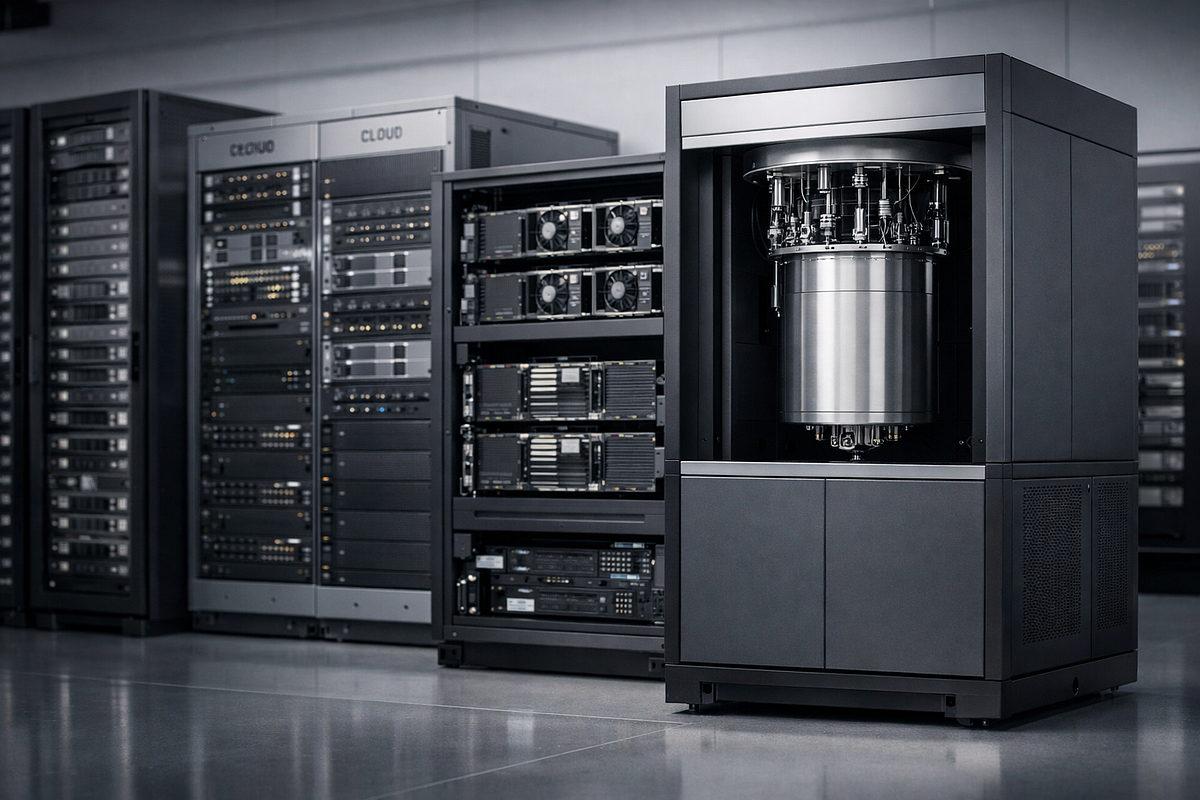
The real transformation is not about replacing classical computing. It is about introducing a new computational paradigm that will reshape software architectures, scientific discovery, cybersecurity, and enterprise decision-making over the next decade and beyond.
From Curiosity to System-Level Technology
Quantum computing has matured beyond isolated laboratory demonstrations. Modern quantum computing systems now include:
- Specialized quantum hardware (superconducting, trapped-ion, photonic, neutral-atom, and annealing-based systems)
- Cloud-accessible platforms that abstract hardware complexity
- Developer-facing SDKs such as IBM Qiskit, Google Cirq, and D-Wave’s tooling
- Hybrid quantum–classical workflows that integrate with existing HPC and cloud environments
This evolution matters because transformation rarely begins with raw hardware. It begins when a technology integrates into existing systems, workflows, and organizational decision-making. Quantum computing is now firmly in that phase.
The NISQ Reality: Power with Constraints
Most quantum computers available today fall into the category of Noisy Intermediate-Scale Quantum (NISQ) systems. These devices are characterized by:
- Limited qubit counts
- High error rates and short coherence times
- Constraints on circuit depth and reliability
As a result, quantum computing is not yet suitable for large-scale, production-grade workloads. However, dismissing NISQ systems as “not useful” would be a mistake. Their value lies in experimentation, learning, and early hybrid advantage.
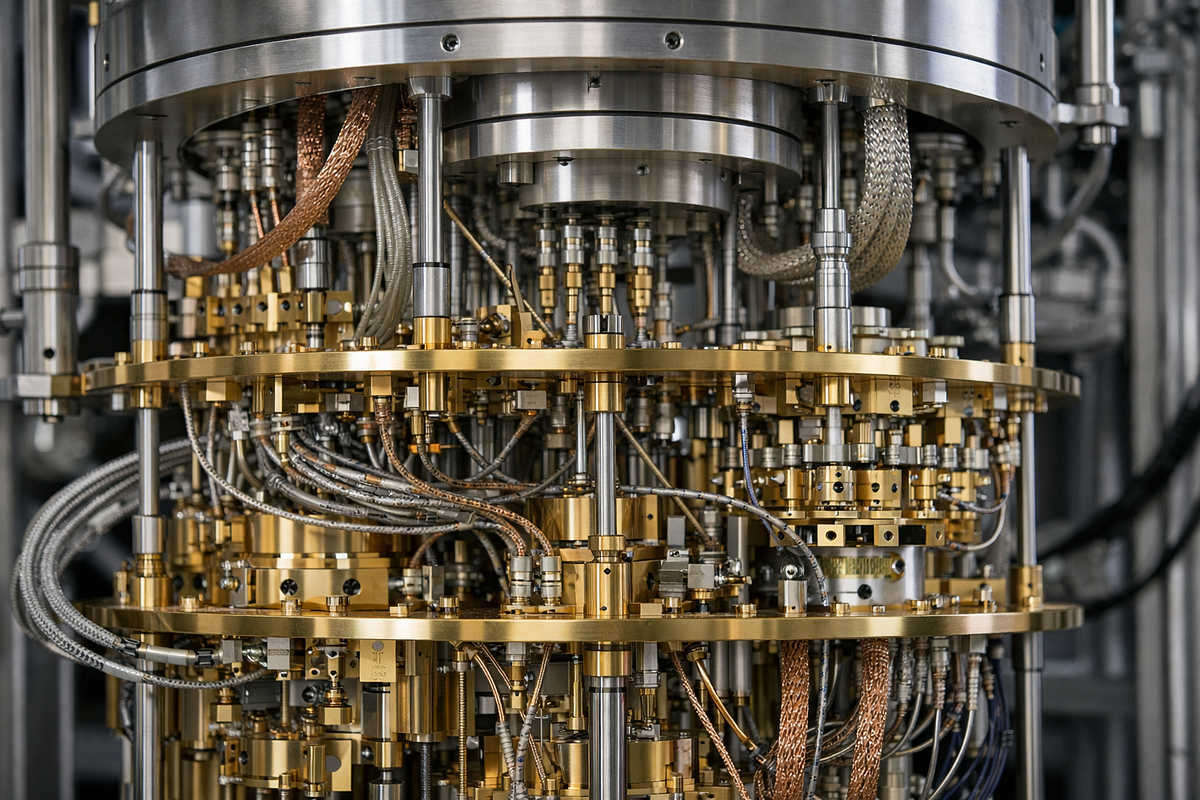
Organizations using NISQ devices effectively treat quantum processors as accelerators — offloading narrowly defined subproblems while relying on classical systems for orchestration, optimization, and validation. This mirrors how GPUs were initially adopted for graphics and later transformed into AI.
Hybrid Quantum–Classical Architectures Are the Real Story
One of the most persistent misconceptions is that quantum computers will replace classical systems. In reality, quantum computing depends on classical computing at every level: control, compilation, error mitigation, data preparation, and post-processing.
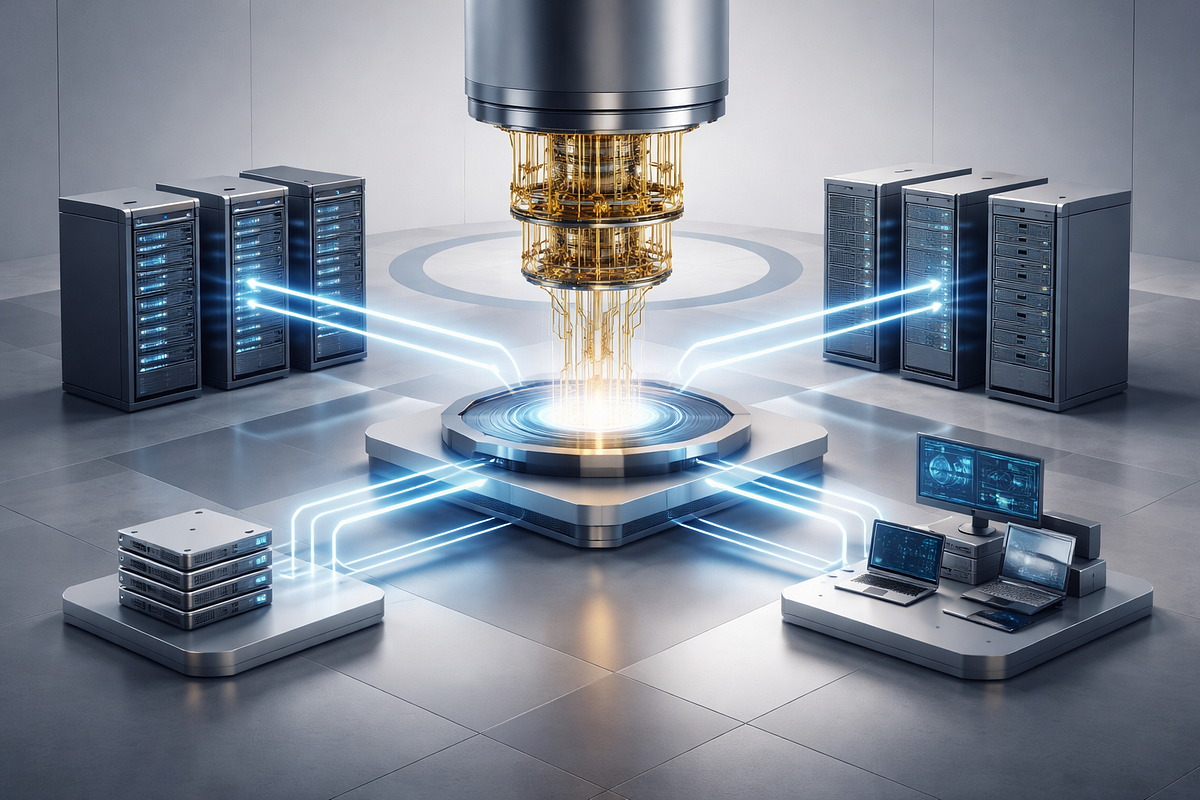
The future belongs to hybrid architectures, where:
- Classical CPUs and GPUs handle large-scale computation, data pipelines, and AI workloads
- Quantum processors address specific problem classes such as optimization, sampling, and quantum-native simulation
- Software layers coordinate workloads across heterogeneous compute resources
This hybrid model is already shaping modern technology stacks. It forces organizations to rethink system architecture, algorithm design, and even how problems are mathematically formulated.
Real-World Impact: Where Transformation Is Already Visible
While quantum advantage remains limited, several domains are already seeing measurable influence from quantum computing systems.

Finance and Optimization
In portfolio optimization and risk analysis, early adopters have explored quantum annealing and hybrid algorithms to tackle NP-hard combinatorial problems. In pilot programs, quantum-assisted approaches have shown modest but meaningful improvements for small-to-medium problem sizes — alongside valuable insights into alternative optimization strategies.
The most important outcome has not been raw performance, but organizational readiness: teams learning how to reformulate financial problems into quantum-native representations such as QUBO models.
Pharmaceuticals and Materials Science
Quantum simulation is inherently aligned with quantum hardware. Early experiments using variational algorithms have demonstrated potential advantages in modeling molecular interactions that strain classical HPC resources.
Although these results remain experimental, they signal a long-term shift in how drug discovery, materials design, and energy research will be conducted.

Logistics and Supply Chain
Route planning, scheduling, and resource allocation problems are increasingly explored through hybrid quantum–classical workflows. Even when quantum systems do not outperform classical solvers outright, they provide alternative solution spaces and heuristics that improve decision quality under complex constraints.
Cybersecurity and Cryptography
Quantum computing’s most certain impact is its threat to classical public-key cryptography. This is not speculative. Organizations are already preparing for post-quantum cryptography, recognizing that encrypted data harvested today could be decrypted in the future once large-scale quantum systems emerge.

The Deeper Transformation: How Problems Are Defined
Most discussions frame quantum computing as “faster computing.” This is misleading. The real transformation is epistemic, not just computational.
Quantum algorithms often require problems to be reformulated entirely — into Hamiltonians, variational objectives, or probabilistic sampling tasks. This changes:
- Software design patterns
- Data representations
- Skill requirements for developers and architects
- How organizations think about solvable versus intractable problems
The first organizations to benefit from quantum computing will not be those with the most qubits, but those that learn how to think quantum-natively long before fault-tolerant systems arrive.
Timelines That Matter to Technology Leaders
A realistic view of impact timelines helps separate strategy from speculation:
- Scientific research: Meaningful breakthroughs are likely within 3–7 years, particularly in chemistry and materials science.
- Enterprise software: Niche optimization and simulation applications may emerge in 5–10 years, with broader adoption over 10–20 years.
- Consumer-facing technology: Direct impact is unlikely before 10–20+ years and will be mostly indirect.
In the near term (2–5 years), the focus should be on pilots, hybrid experimentation, and workforce development — not large-scale deployment.
Risks That Cannot Be Ignored
Quantum computing introduces systemic risks alongside opportunity:
- Cryptographic disruption and long-term data exposure
- Concentration of power among a small number of vendors or nations
- Technological inequality driven by access and expertise
- Strategic missteps caused by hype-driven investment
Addressing these risks requires informed leadership, standards development, and early engagement with post-quantum security and governance frameworks.
What Executives and CTOs Should Do Now
The correct response to quantum computing is neither urgency nor indifference — it is strategic hedging.
Organizations should:
- Experiment with cloud-based quantum platforms
- Identify optimization or simulation problems that may benefit long-term
- Upskill select teams in quantum concepts and hybrid workflows
- Monitor government initiatives, standards, and regulatory developments
- Avoid heavy capital investment until fault-tolerant systems mature
This approach builds readiness without overexposure.
A Structural Shift, Not a Silver Bullet
Quantum computing systems are transforming modern technology quietly but fundamentally. Not by replacing classical computing, but by expanding what computation means and what problems are addressable.

The organizations that succeed will be those that prepare early — rethinking architecture, skills, and problem formulation — while maintaining realistic expectations about timelines and returns.
Quantum computing is not tomorrow’s production system. It is tomorrow’s competitive advantage, being shaped today.


Comments
Post a Comment