Quantum Computing Systems: Design, Capabilities, and Challenges
Why Quantum Computing Must Be Understood as a System, Not a Device
Much of the public conversation around quantum computing still revolves around qubit counts, coherence times, and headline milestones. While these metrics matter, they obscure a more important truth: quantum computing is not a single technology, but a tightly coupled system — one that spans hardware, control electronics, classical orchestration, software stacks, and organizational workflows.
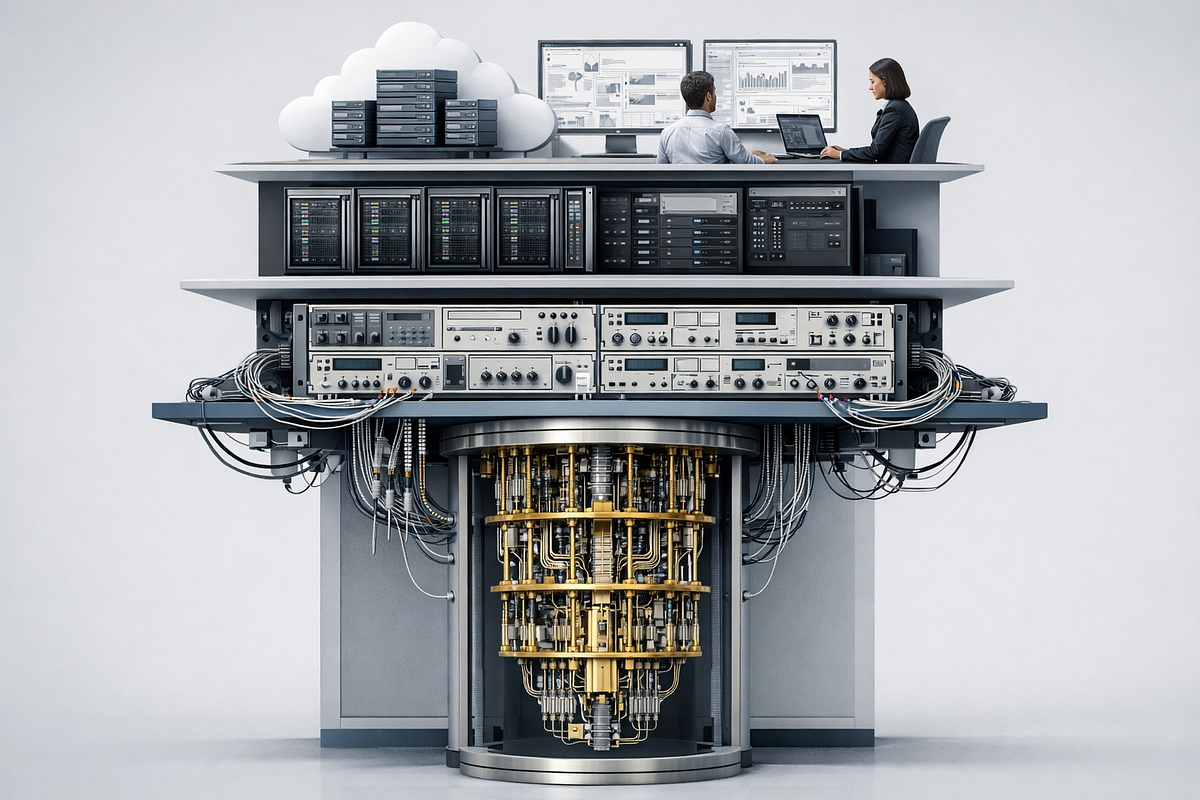
From a system-level perspective, the central question is no longer “How many qubits can we build?” but rather “How much usable computation can an end-to-end quantum system reliably deliver?” The gap between those two questions explains both the rapid progress and the persistent frustration that define the field today.
This article examines quantum computing systems through that lens: how they are designed, what they can realistically do today, and where the true challenges lie — not in theory, but in practice.
System Design: Why Superconducting Platforms Lead (For Now)
Over the next five to ten years, superconducting quantum systems remain the most systemically viable architecture, not because they are theoretically superior, but because they are the most operationally complete.
Their advantage is not a single breakthrough, but a convergence of engineering maturity across the stack:
- Tight hardware–software co-design: Control electronics, compilers, calibration pipelines, and cloud orchestration layers are already operating at meaningful scale.
- Fast gate times: These allow higher effective circuit depth within limited coherence windows, which matters more than raw coherence alone.
- Manufacturing alignment: Partial compatibility with semiconductor fabrication enables faster iteration and learning cycles.
- Operational learning: Years of real-world operation have surfaced failure modes in cryogenics, control, scheduling, and drift — knowledge that is impossible to shortcut.
- Ecosystem depth: Tooling, benchmarks, developer communities, and cloud platforms reduce integration risk for enterprises.
Crucially, superconducting systems have exposed their own limits early. Wiring density, cryogenic power constraints, and error-correction overhead are serious challenges — but they are engineering-dominated problems, not physics unknowns. That distinction matters when evaluating near-term viability.
The Most Credible Challenger: Neutral Atoms
Neutral atom platforms are emerging as the strongest architectural challenger. Their appeal lies in structural simplicity and scaling potential:
- Natural scalability through optical trapping arrays
- High connectivity via Rydberg interactions
- Cleaner physical layouts with fewer wiring bottlenecks
The uncertainty is not physics, but system maturity. Toolchains, error correction integration, and cloud-scale operational experience lag behind superconducting platforms. If these gaps close faster than expected, neutral atoms could overtake superconducting systems later in the decade.
Other modalities — trapped ions, photonics, and hybrids — each offer compelling strengths, but face trade-offs in throughput, determinism, or integration complexity that push large-scale impact further out.
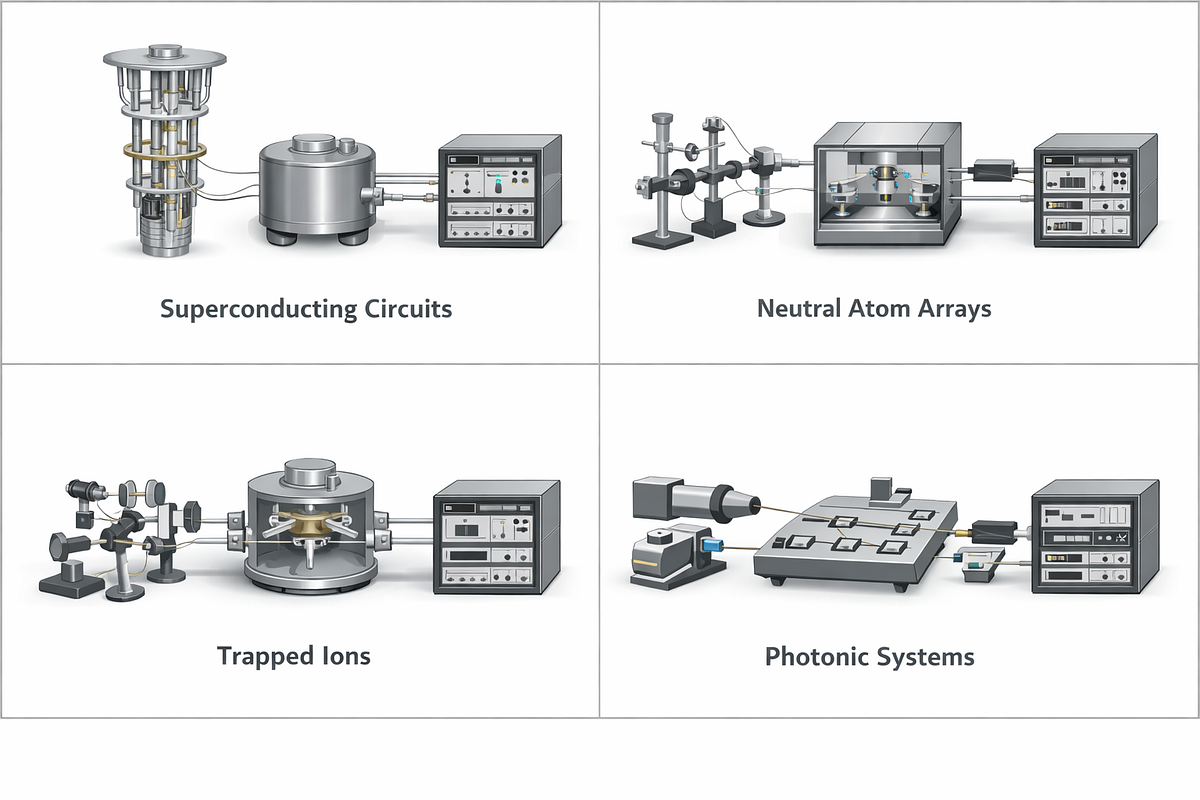
The takeaway: Superconducting systems lead today because they are operationally complete. Neutral atoms are the most credible architectural wildcard.
The Most Misunderstood Design Decision: Qubit Count Is Not Capability
The most persistent misconception in quantum computing is the belief that qubit count is the primary driver of capability.
In practice, usable performance is better approximated as:
Effective capability ≈ fidelity × connectivity × control quality × classical throughput
A system with fewer qubits — but high fidelity, predictable calibration, efficient mapping, and robust classical orchestration — will outperform a larger but poorly controlled device for nearly all realistic workloads.
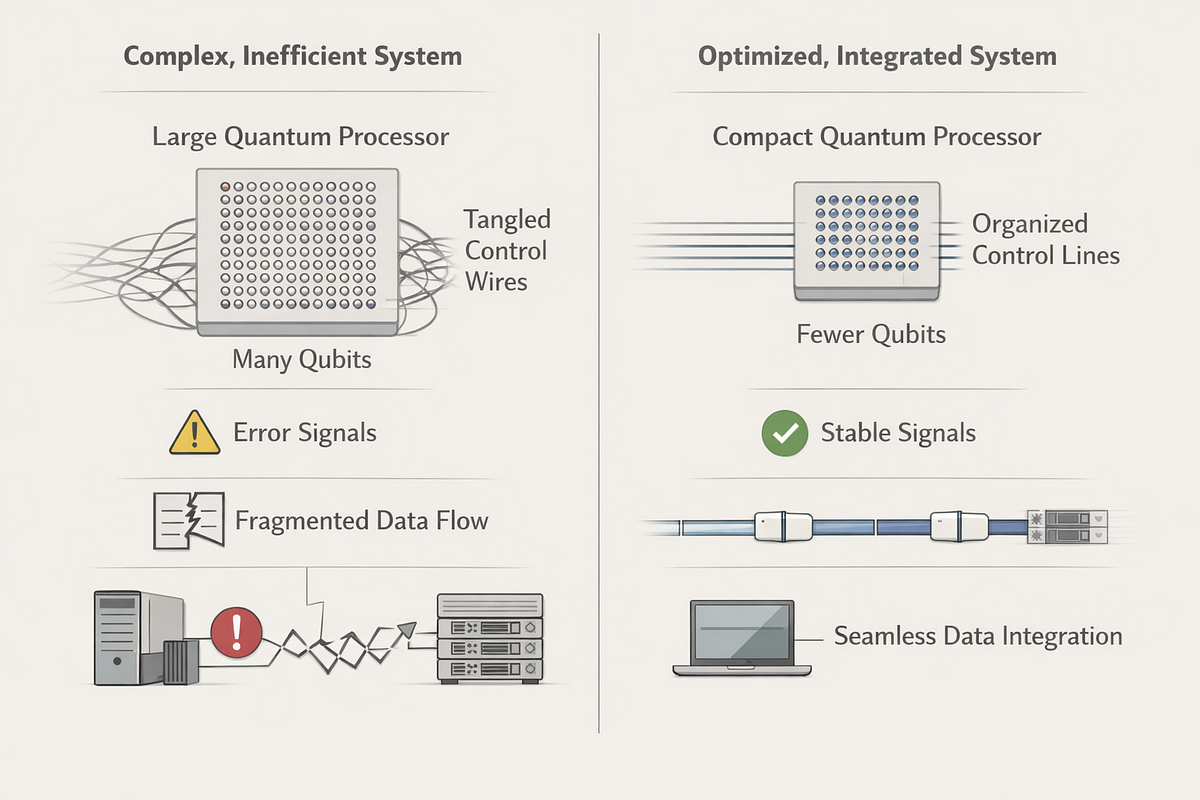
Three system-level realities are routinely underestimated:
1. Connectivity vs. Fidelity Trade-offs
Higher connectivity is often marketed as universally beneficial. In reality, increased connectivity raises crosstalk and calibration complexity. If not managed carefully, it reduces overall system fidelity and limits usable circuit depth.
2. Control-Stack Complexity Scales Superlinearly
Pulse generation, timing, calibration, feedback, and drift management scale faster than qubit count. At a moderate scale, the control stack becomes the dominant failure surface and latency bottleneck.
3. Classical Overhead Dominates Hybrid Workloads
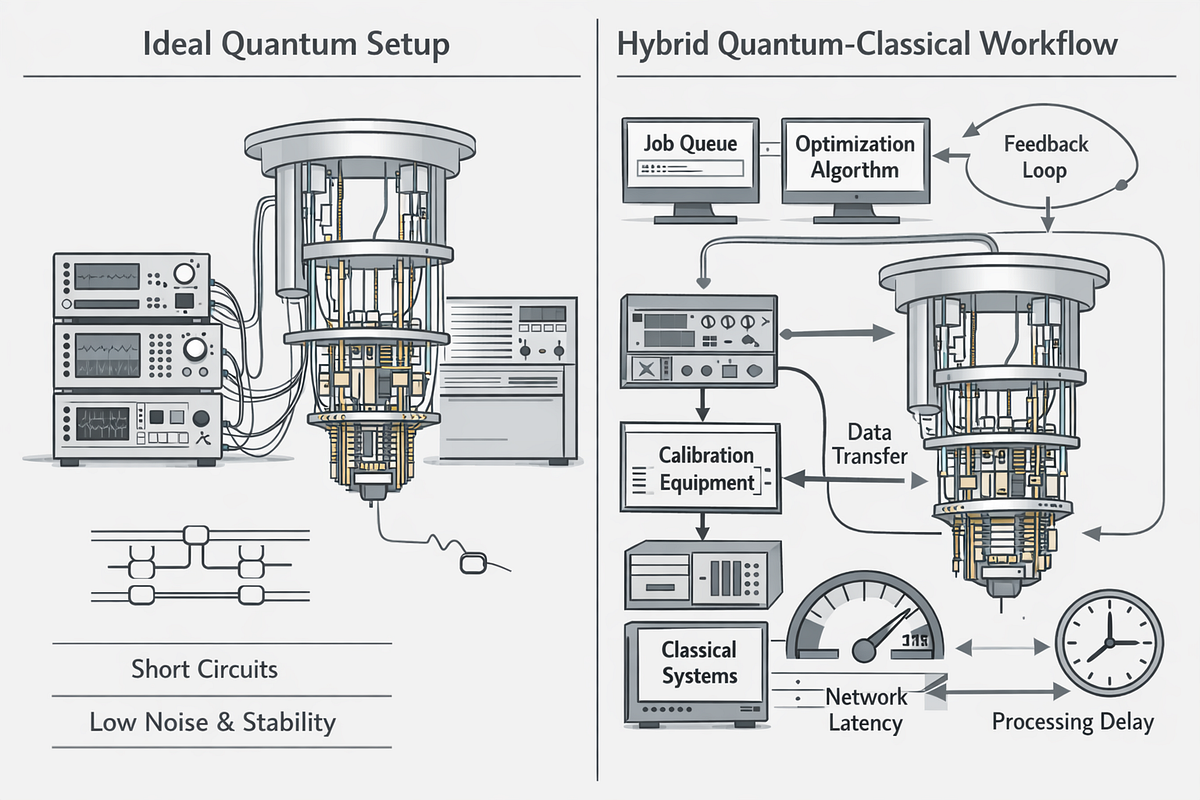
Nearly all near-term quantum algorithms are hybrid. Variational loops, error mitigation, decoding, scheduling, and queueing consume substantial classical resources. Ignoring this leads to wildly optimistic performance expectations.
Benchmarks vs. Reality: Why Systems Are Optimized for Demonstrability
Yes — most current quantum architectures are optimized for benchmarks and roadmap milestones rather than realistic, integrated workloads. This is not bad faith; it is structural.
Benchmarks are:
- Comparable across vendors
- Easy to communicate with non-specialists
- Aligned with funding and press incentives
What they rarely capture is how systems behave under sustained operation:
- Long-running hybrid jobs
- Calibration drift across days or weeks
- Latency-sensitive feedback loops
- Queueing, failure recovery, and orchestration overhead
Real workloads stress the entire system, not isolated components. As a result, control stacks are often under-designed relative to qubit growth, error correction is discussed more than exercised, and software abstractions leak hardware complexity back to users.
Benchmarks accelerated early progress and created a shared language. The problem is treating them as proxies for readiness.
Current systems look impressive on paper. Deployability is a different bar.
What Quantum Systems Can Actually Do Today
Quantum computing delivers genuine — but highly constrained — value today in exploratory and learning-oriented contexts.
Algorithm Research
Real hardware exposes noise sensitivity, mapping constraints, and circuit depth limits that simulations cannot. This feedback is shaping practical algorithm design in chemistry, optimization, and simulation — even when results are not classically competitive.
Hybrid Workflow Experimentation
Cloud-accessible platforms allow organizations to test orchestration, scheduling, and latency constraints in realistic environments. This is where many enterprises extract the most value today.
Organizational Capability Building
Hands-on exposure develops talent, informs strategy, and grounds investment decisions. This is not ancillary value — it is the primary return on NISQ-era engagement.
What quantum systems do not deliver today is a consistent commercial advantage over classical computing. That distinction matters.
Overstated Capabilities and Misframed Milestones
Several narratives deserve recalibration:
- Raw qubit count as power: Meaningless without fidelity and orchestration.
- Quantum supremacy claims: Scientifically important, operationally narrow.
- Near-term NISQ advantage: Almost always overstated for real workloads.
- Linear roadmaps to fault tolerance: Scaling is non-linear and integration-bound.
- Logical qubits are imminent: Error correction overhead is still enormous.
These milestones are not irrelevant — but they are frequently misinterpreted.
The Real Bottleneck: Classical–Quantum Integration
From a system-level perspective, the primary bottleneck today is classical–quantum integration.
Quantum systems are hybrid by necessity. Latency-sensitive feedback loops, calibration pipelines, scheduling, and decoding all depend on classical infrastructure. Scaling qubits without scalable orchestration is like building a stadium with no roads: capacity exists, but it cannot be used.
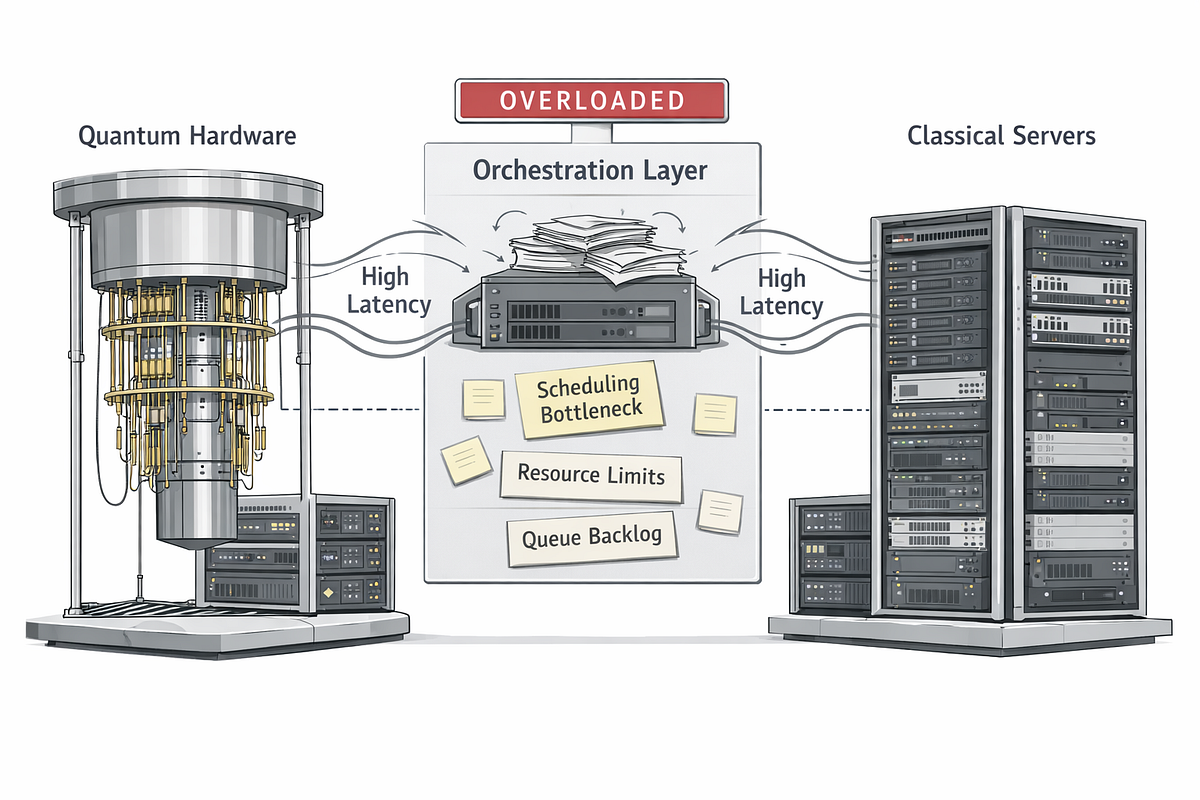
Hardware fidelity and error correction matter — but integration determines whether improvements translate into usable computation.
A Case Study: When Connectivity Breaks the System
In one cloud-based superconducting experiment, a team attempted a medium-scale optimization workload, assuming available connectivity would suffice. On mapping the algorithm, limited physical connectivity forced extensive SWAP operations. The resulting error accumulation rendered the computation unusable.
Headline metrics looked strong. End-to-end capability was not.
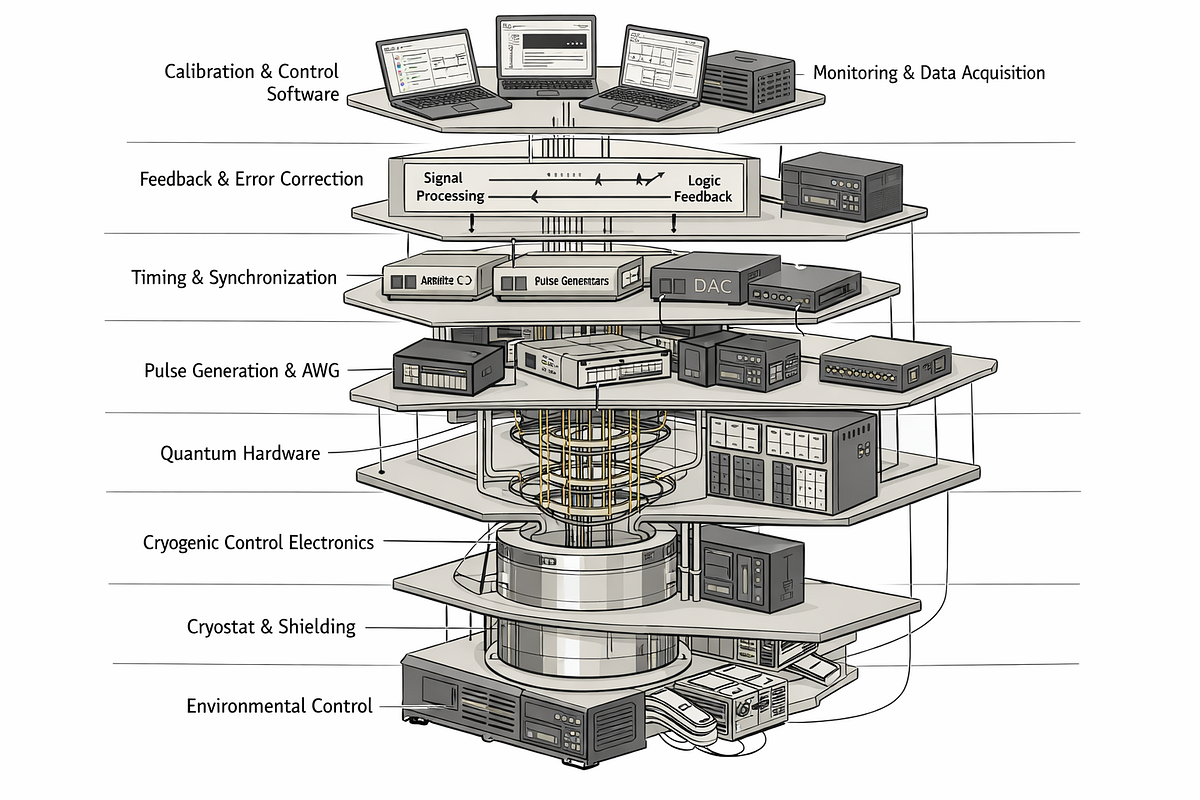
Lesson: System-level analysis beats specifications. Connectivity, mapping, and orchestration often dominate outcomes.
NISQ vs. Fault Tolerance: The Right Executive Frame
NISQ systems are not stepping stones to revenue. They are strategic learning platforms.
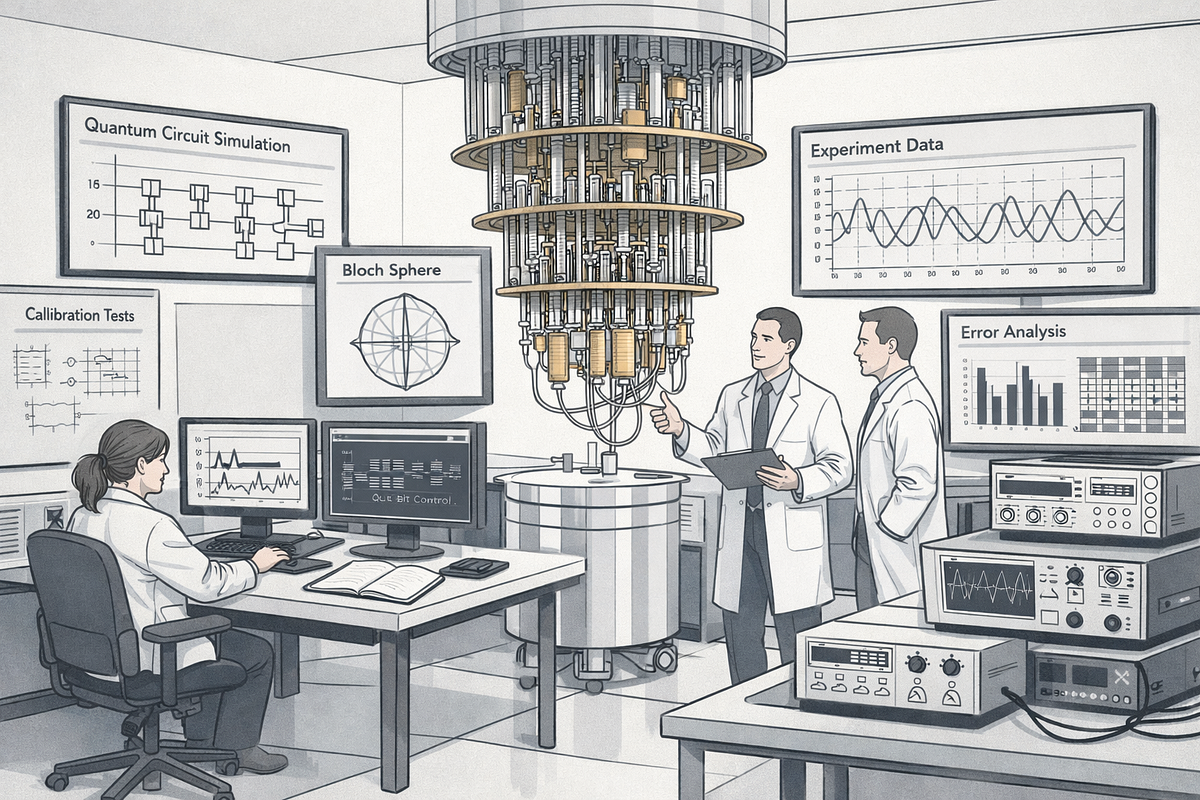
They function like flight simulators — training teams, refining workflows, and exposing constraints before fault-tolerant machines exist. Fault-tolerant quantum computing defines the long-term threshold of utility, but it remains a decade-scale challenge.
NISQ’s value is readiness, not advantage.
What Will Define a Credible Quantum System in Five Years
Five years from now, credibility will be defined by:
- Usable, repeatable computation — not raw qubits
- Seamless hybrid workflow integration
- Operational stability over time
- Mature software and orchestration layers
- Flexibility across hardware modalities
- Demonstrable value in real research or enterprise workflows
Trust will follow systems that behave predictably, not those that merely scale.
The Breakthrough That Matters Most
The single most impactful breakthrough would be a scalable, low-latency classical–quantum orchestration framework.
Such a system would unlock existing qubits, reduce effective error rates, accelerate algorithm development, and provide the backbone for fault-tolerant scaling. It is also the least visible — and most underestimated — piece of the stack.
Strategic Guidance for CTOs
Avoid chasing qubit milestones or speculative fault-tolerant hardware. Do not bet exclusively on a single modality. Treat NISQ as a learning platform, not a production engine.
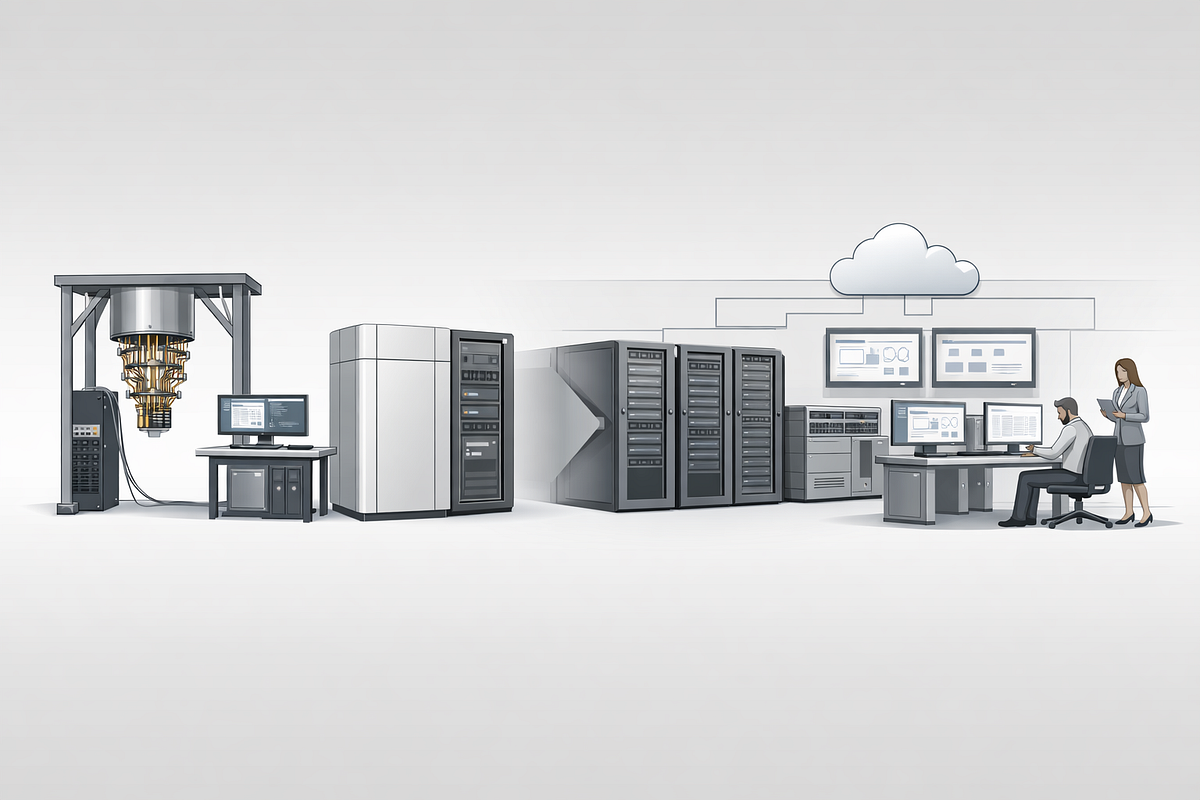
Instead, invest in:
- Cloud-based experimentation
- Hybrid workflow orchestration
- Algorithmic literacy
- Transferable system-level expertise
Quantum advantage will not arrive as a single breakthrough. It will emerge when systems — not devices — become operationally coherent.
The future of quantum computing belongs to those who design for usability, not headlines.


Comments
Post a Comment