What Is a Quantum Computing System?
When people ask “What is a quantum computer?”, the answer they usually expect is something about qubits, superposition, and exotic physics. That answer is not wrong — but it is incomplete to the point of being misleading.
In practice, a quantum computing system is not just a collection of qubits performing strange quantum tricks. It is a highly coordinated, hybrid machine in which fragile quantum behavior is continuously stabilized, controlled, and translated into usable computation by classical systems. The quantum processor itself is only the tip of the iceberg.
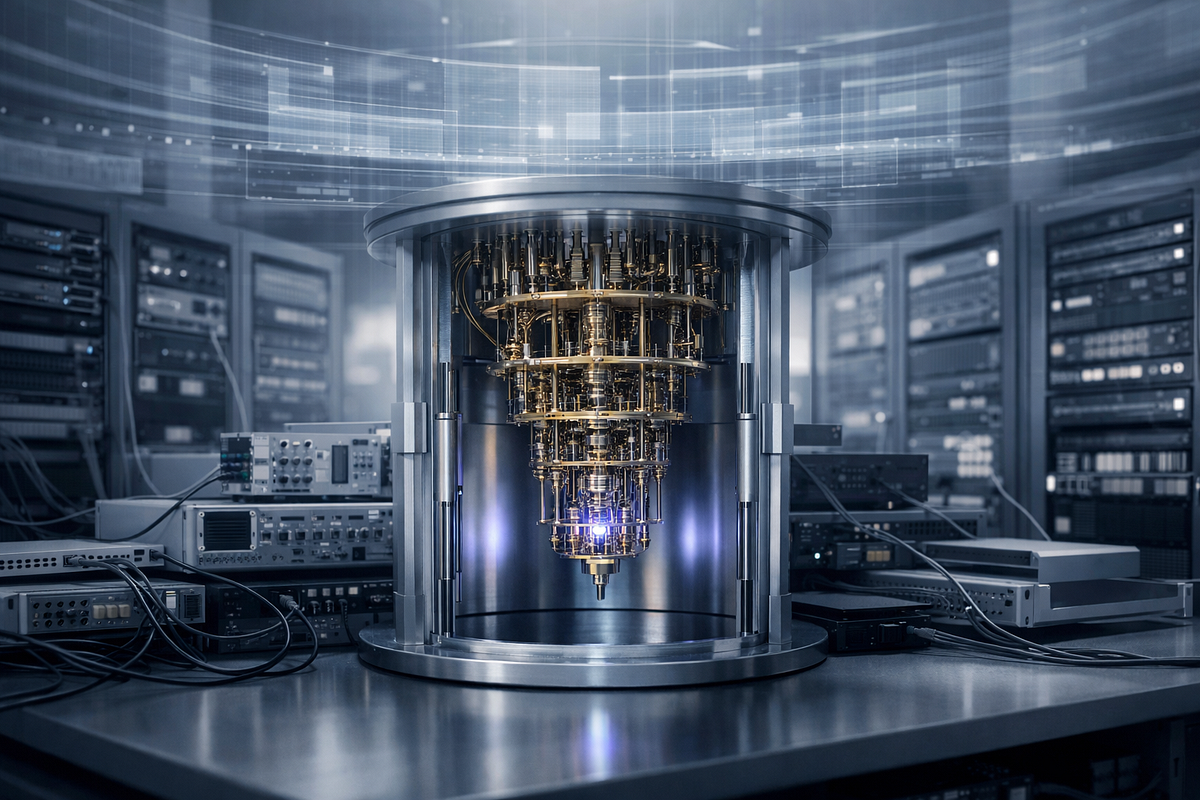
If you want to understand what quantum computing actually is today — and what it is realistically becoming — you have to look at the entire system, not just the physics.
A System, Not a Science Experiment
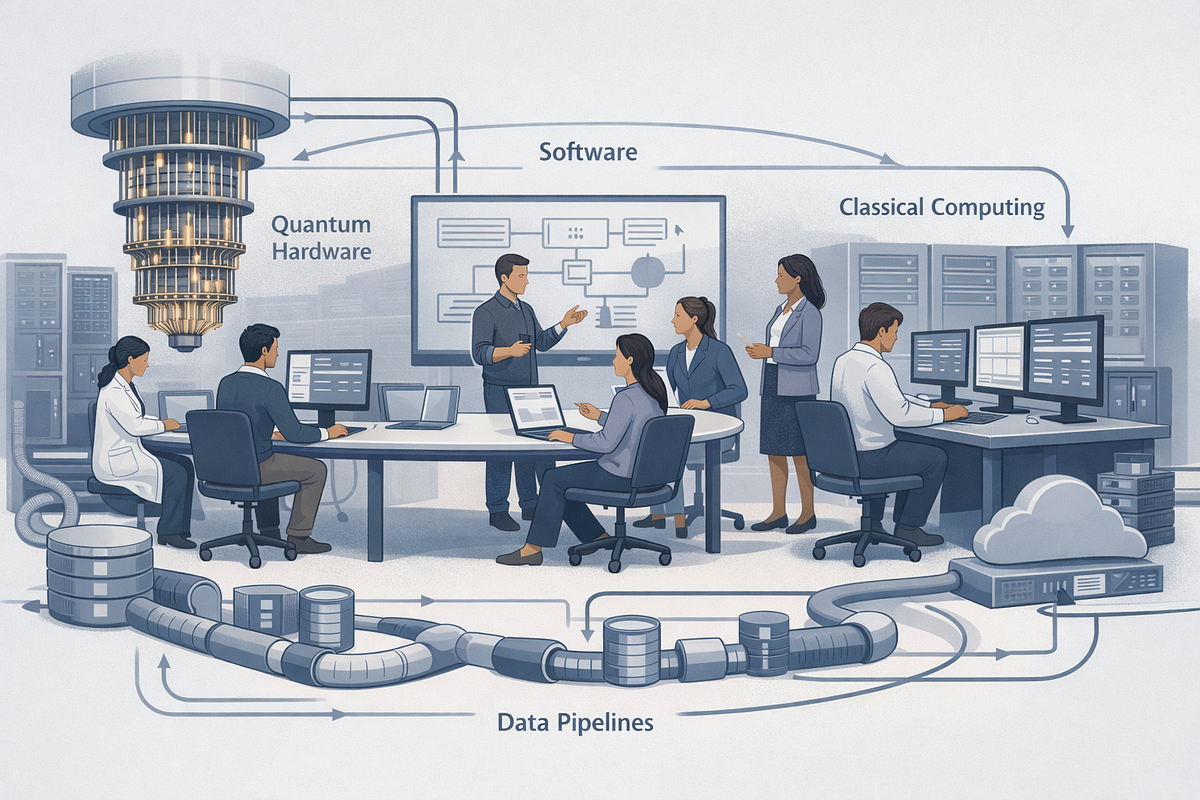
From a system-level perspective, a quantum computing system is best understood as an orchestrated stack composed of:
- A quantum processing unit (QPU) where qubits are created and manipulated
- Classical control and readout electronics that generate precisely timed signals and extract measurement data
- Environmental infrastructure, such as cryogenics, vacuum systems, shielding, and vibration isolation
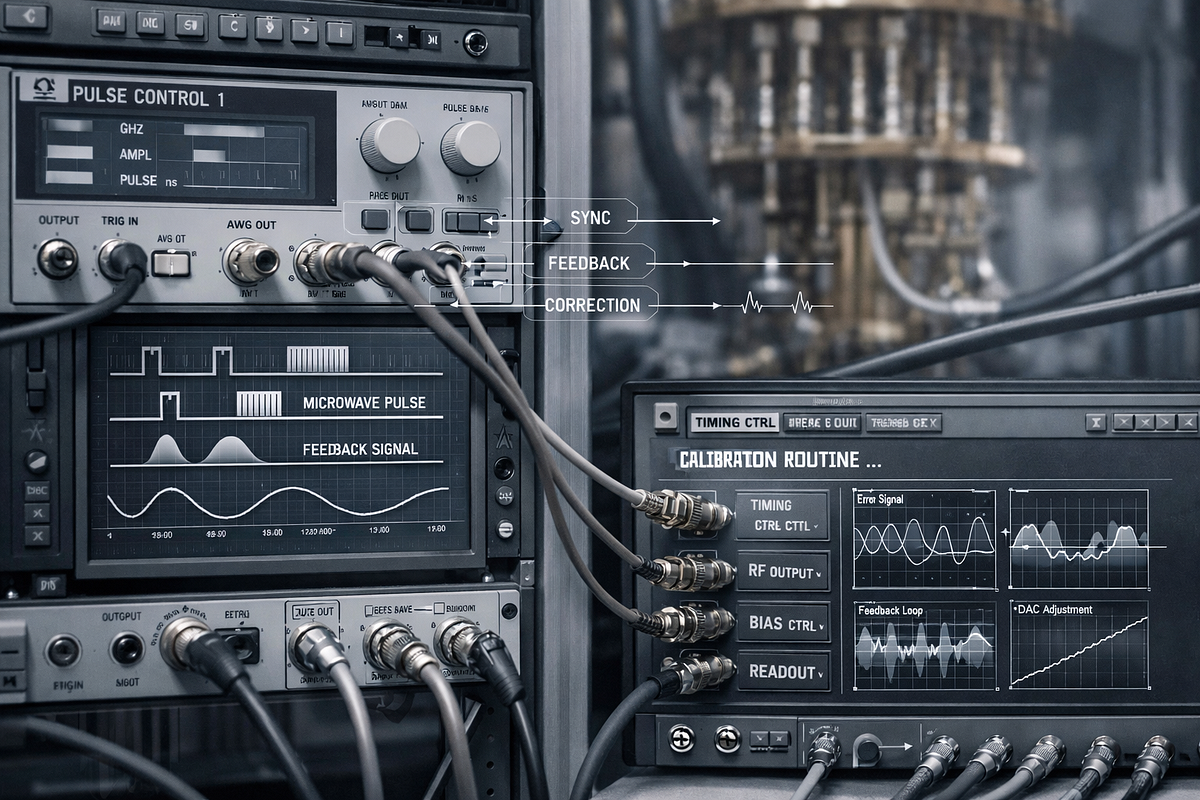
- Calibration, error mitigation, and feedback software that continuously compensates for drift and noise
- A quantum software stack — compilers, runtimes, SDKs, and toolchains
- A classical compute layer that schedules jobs, optimizes circuits, runs hybrid algorithms, and post-processes results
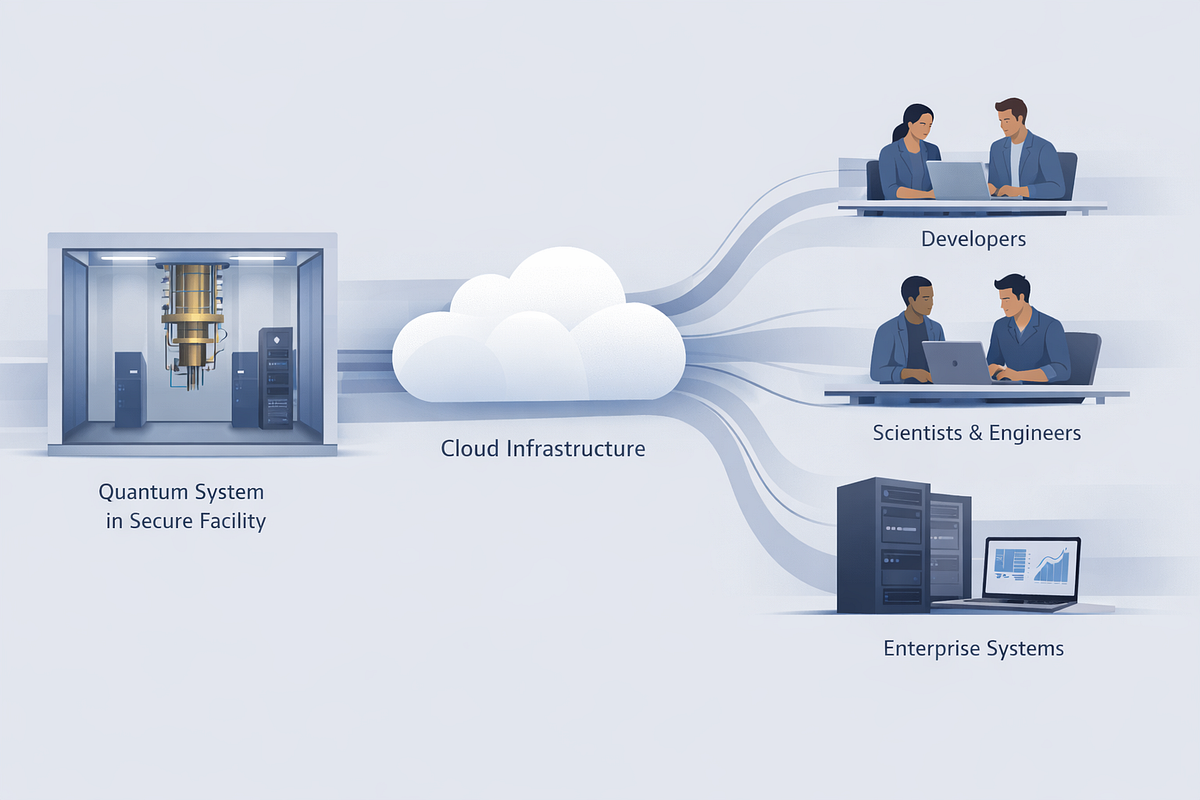
- Cloud platforms and APIs that make the system accessible and usable
The critical insight — and one that is consistently underemphasized — is that most of a quantum computing system is classical. The quantum component is the most delicate and smallest part of the machine, and the rest of the system exists to keep it alive long enough to do something useful.

This is why I often say: qubits are the tip of the iceberg.
Why Qubits Alone Are Not the System
Much of the public conversation treats qubits as if they were the quantum computer. By that logic, progress becomes a simple numbers game: more qubits equals more power.
That framing breaks down almost immediately in practice.
Qubits are fragile. They decohere. They drift. They interact with their environment in ways that are difficult to predict and even harder to eliminate. As a result, a functioning quantum system requires:
- Constant calibration
- Active noise mitigation
- Tight timing coordination across control electronics
- Feedback loops between measurement and control
- Classical post-processing to extract statistically meaningful results
Scaling a quantum computer is therefore not just about adding qubits. It is about scaling control, calibration, orchestration, and error management at the same time. In many current systems, those classical layers — not the qubits themselves — are the real bottleneck.
This is also why headline qubit counts, taken in isolation, are a poor indicator of system capability.
The Hybrid Reality: Quantum as an Accelerator
One of the most important mental models I try to reinforce is this:
Quantum computers are accelerators, not replacements.
They function much more like GPUs than like CPUs. A classical system handles orchestration, preprocessing, and post-processing, while the quantum processor is invoked selectively for parts of a workload where quantum effects may offer an advantage.
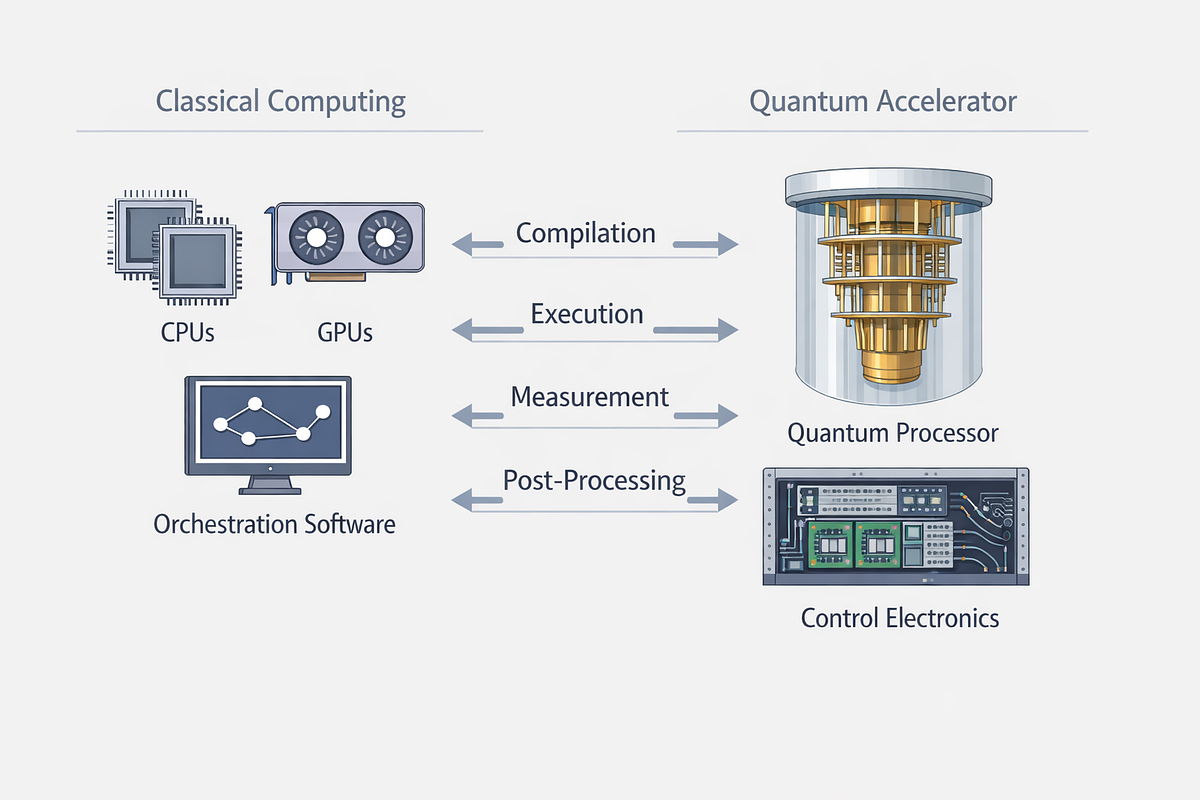
Every quantum workflow today is hybrid by necessity:
- Classical machines compile and optimize circuits
- Classical controllers execute and monitor quantum operations
- Classical algorithms guide iterative quantum execution
- Classical systems interpret probabilistic measurement results
Without this classical–quantum partnership, the quantum processor is unusable.
This hybrid framing also helps explain why most quantum systems are delivered via the cloud. The infrastructure required to operate them — cryogenics, control electronics, continuous calibration — is far closer to a scientific instrument than a rack-mount server.
From Theory to Reality: What Changes in Practice
On paper, quantum algorithms are elegant and powerful. In practice, running them on real hardware is a very different experience.
When moving from theory to real systems, several realities become unavoidable:
- Hardware is noisy and variable
- Gate fidelity matters as much as algorithm design
- Results are probabilistic, not deterministic
- Repeatability requires careful system management
- Error mitigation is as important as computation
I have seen teams dismiss quantum approaches as “not working” when the real issue was not the algorithm, but the lack of system-level design: no accounting for calibration drift, no hybrid orchestration, no error mitigation strategy.
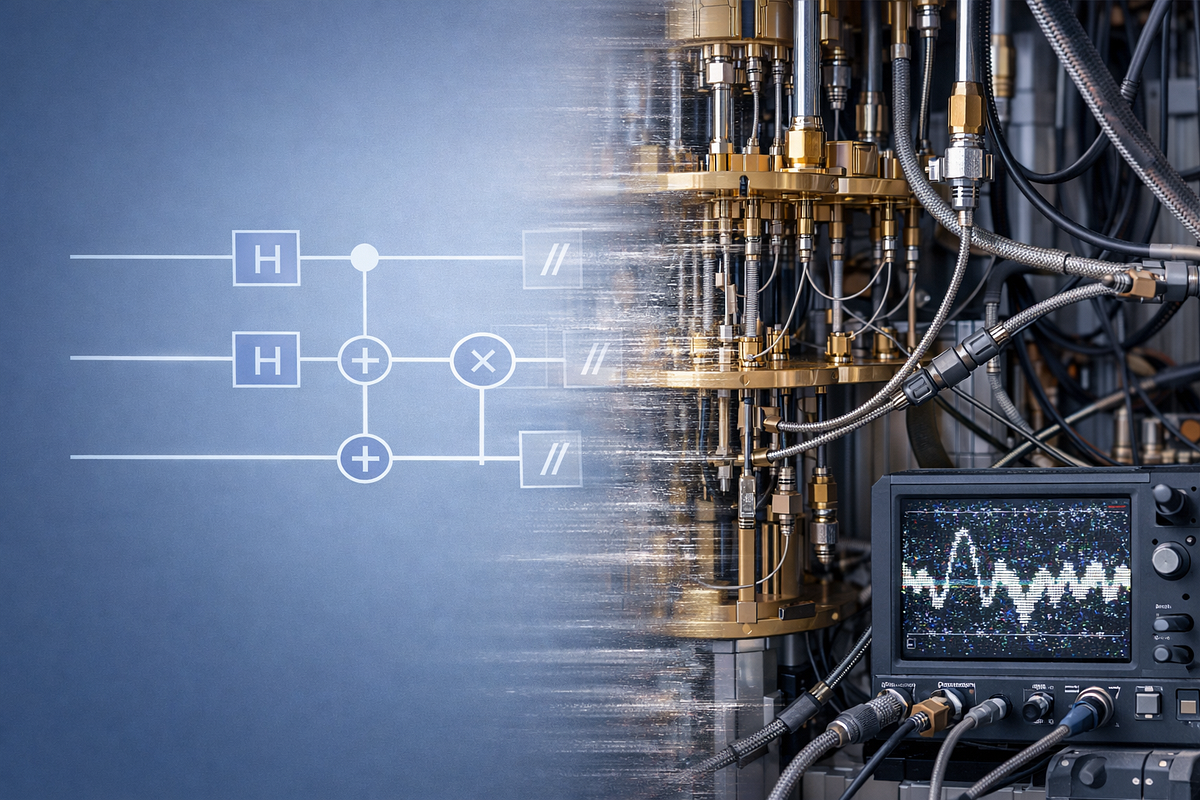
The lesson is simple but critical: quantum computation only works when the entire system is engineered together.
Where Quantum Systems Actually Make Sense Today
Despite the hype, there are areas where quantum computing systems show legitimate promise — when applied carefully and with realistic expectations.
The most credible near-term opportunities tend to share three characteristics:
- They are narrow and well-defined
- They are hard for classical heuristics
- They tolerate probabilistic, approximate answers
Examples include:
- Optimization and logistics, where hybrid quantum–classical solvers can explore complex combinatorial spaces
- Chemistry and materials science, where quantum systems can model molecular behavior that is expensive to simulate classically
- Specialized sampling and risk modeling, particularly in research and exploratory contexts
In every successful case I have seen, the quantum system did not replace classical software — it augmented it.
Common Misconceptions Worth Abandoning
If readers take only one thing away from this article, it should be the willingness to let go of a few persistent myths:
- More qubits do not automatically mean more computational power
- Quantum computers will not replace classical computers
- Quantum advantage is not universal or immediate
- Quantum algorithms do not magically try all solutions at once
- Scaling is an ecosystem problem, not a physics trick
Quantum computing is not mystical. It is difficult engineering under extreme constraints.
So What Is a Quantum Computing System?
In my view, a quantum computing system is best defined as:
A tightly integrated, hybrid computing platform in which classical infrastructure continuously stabilizes, controls, and interprets fragile quantum processes to explore problem spaces that are impractical for classical systems alone.
It is part physics experiment, part high-performance computer, and part evolving software ecosystem.
And it is still very much a system in transition.
How Organizations Should Prepare — Without Wasting Money
Preparation does not mean buying hardware or expecting immediate ROI. It means building literacy and judgment.
Practical steps include:
- Educating technical leaders and engineers on system-level realities
- Identifying problem domains where quantum acceleration is plausible
- Running small pilots on cloud platforms and simulators
- Evaluating vendors beyond qubit counts and marketing claims
- Planning how quantum accelerators would integrate into existing workflows
The goal is not early deployment. It is informed readiness.
Final Thought: Engineering the Ecosystem
The future of quantum computing will not be determined by qubits alone. It will be determined by how well we engineer the entire ecosystem — hardware, control, software, and integration — into something reliable, scalable, and usable.
Quantum computing is not a sudden revolution. It is a gradual transition from theory to engineered systems.
Understanding that difference is what separates hype from insight — and curiosity from real strategic advantage.


Comments
Post a Comment