Quantum Computing Systems: The Real Future of Computation
Beyond the Qubit Count
Quantum computing is often presented as a race for more qubits and headline-grabbing claims of “quantum supremacy.” That framing is not only misleading — it obscures the real work that will determine whether quantum computing delivers meaningful value.
From a systems perspective, quantum computing is not a single technology but an intricate stack: fragile hardware, complex control electronics, cryogenics, compilers, algorithms, and classical orchestration working in tight coordination. The future of quantum computing will be decided less by isolated hardware breakthroughs and more by how effectively these layers are integrated into reliable, scalable systems.
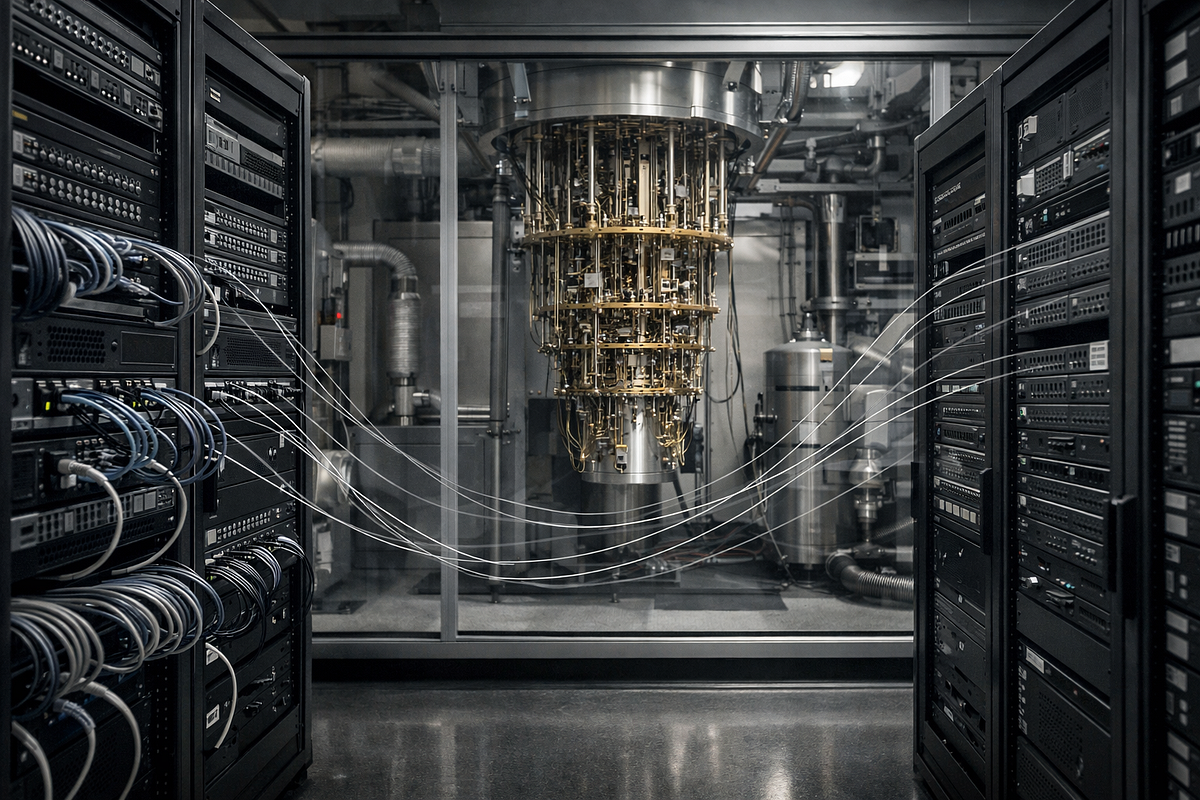
Having spent over eight years working in quantum-adjacent fields — high-performance computing, cryptography, and advanced computing architectures — I have observed a familiar pattern. Like GPUs in their early days, quantum computers are being misunderstood as replacements for classical systems rather than as specialized accelerators whose real power emerges only when embedded within hybrid architectures.
Quantum Computing Is a Systems Engineering Problem
The most persistent misconception in quantum computing is that progress is primarily about increasing qubit counts. In practice, raw qubits are the least interesting metric in isolation.
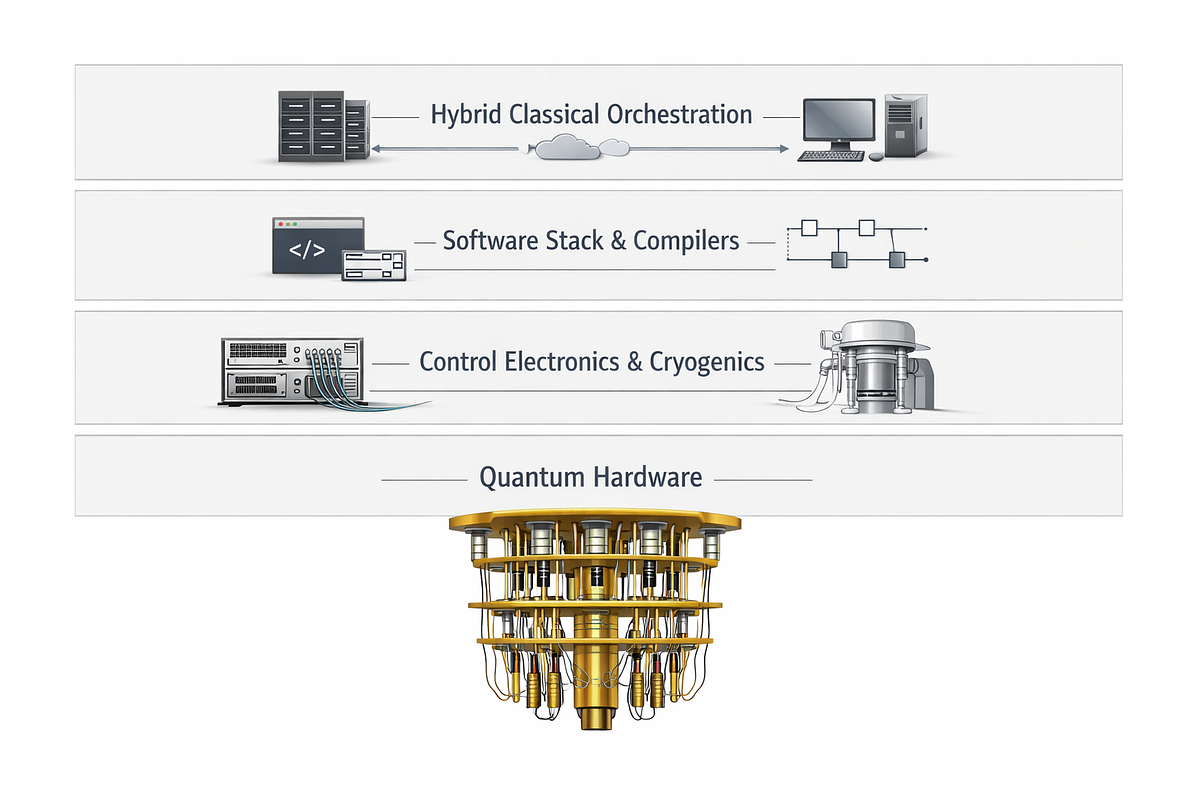
What matters is whether a system can execute end-to-end workloads reliably:
- Error rates and gate fidelity determine whether quantum circuits can run long enough to be useful.
- Coherence time and qubit connectivity constrain which algorithms are even feasible.
- Control electronics and cryogenics dictate stability and reproducibility.
- Software stacks, compilers, and schedulers translate theoretical algorithms into executable circuits.
- Hybrid classical–quantum orchestration determines whether experimental results can be integrated into real workflows.
A quantum computer that cannot reliably interface with classical systems, manage noise, and reproduce results is not a computational platform — it is a laboratory instrument.
Why Hybrid Architectures Will Define Success
My most controversial — and strongly held — view is that quantum computing will not succeed as a standalone industry. Its real value will emerge only as part of hybrid classical–quantum systems.
Quantum computers excel at very specific tasks: simulating quantum systems, exploring high-dimensional optimization spaces, or sampling complex probability distributions. Classical computers remain vastly superior for general-purpose computation, data movement, control logic, and large-scale numerical processing.
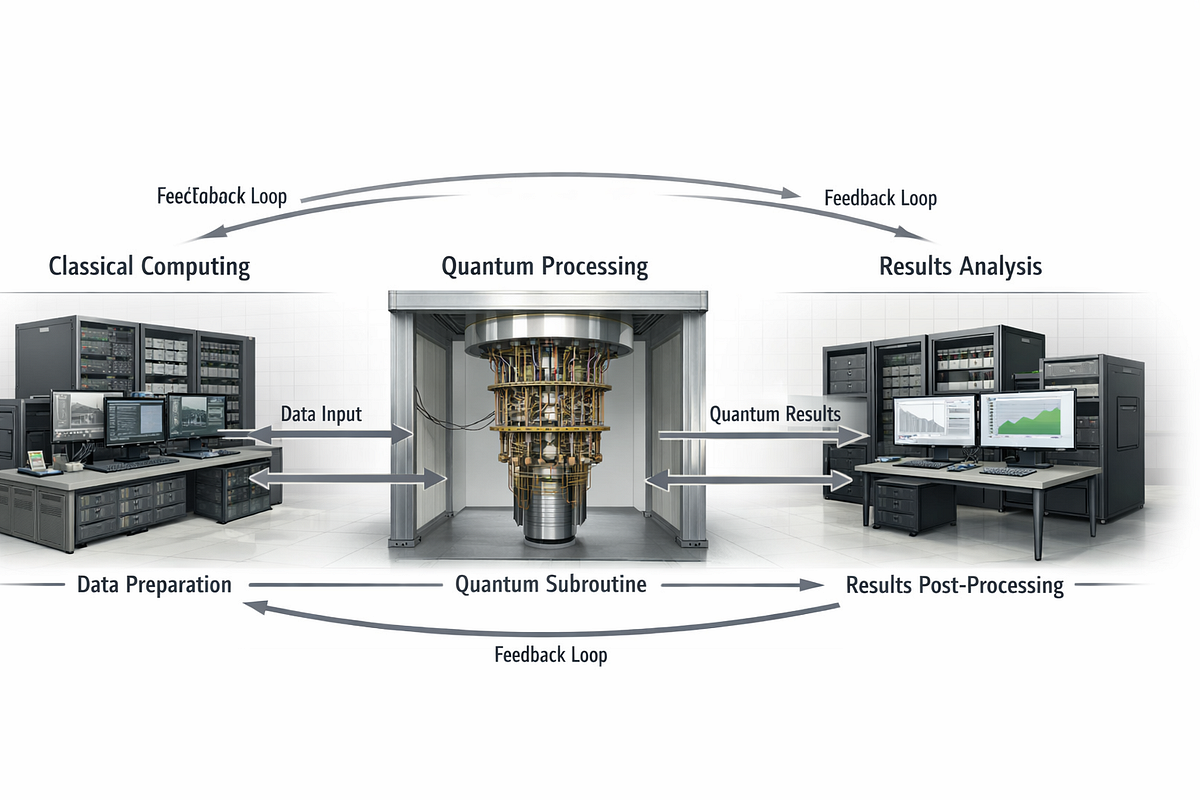
In practice, meaningful quantum advantage will come from workflows where:
- Classical systems prepare, decompose, and post-process problems.
- Quantum accelerators execute narrowly scoped, computation-heavy subroutines.
- Results are reintegrated into classical pipelines for validation and decision-making.
This mirrors the evolution of GPUs. Early GPUs were niche, difficult to program, and widely dismissed. Their impact became transformational only once software ecosystems, compilers, and orchestration frameworks matured.
Quantum computing is on the same path — just with steeper physics and engineering challenges.
Hardware Matters — but Integration Matters More
Among current hardware approaches, superconducting qubits appear to have the strongest near- to mid-term potential. Their relative maturity, manufacturability, and growing ecosystem have enabled steady progress in gate fidelity and system scale. Trapped ions, photonic systems, and topological approaches each offer compelling advantages — longer coherence times, room-temperature operation, or intrinsic error resilience — but no single modality has yet solved the full system challenge.
History suggests the ultimate winners will not be defined solely by qubit technology, but by:
- Tight integration between hardware and control systems
- Scalable error mitigation and correction strategies
- Robust software abstractions that hide hardware idiosyncrasies
- Operational reliability across repeated runs
In other words, quantum computing will be won by systems engineers as much as by physicists.
Lessons from Real-World Pilots
Across multiple quantum pilots and proofs of concept I have analyzed — ranging from logistics optimization to portfolio risk modeling — a consistent theme emerges: classical methods still outperform quantum approaches today.
In one optimization pilot, a quantum-assisted approach was integrated into a classical scheduling workflow. While the quantum component did not outperform classical solvers, the project delivered valuable insight into noise sensitivity, orchestration overhead, and algorithm–hardware mismatch. In another case involving financial optimization, limited qubit connectivity and error rates erased any theoretical advantage.
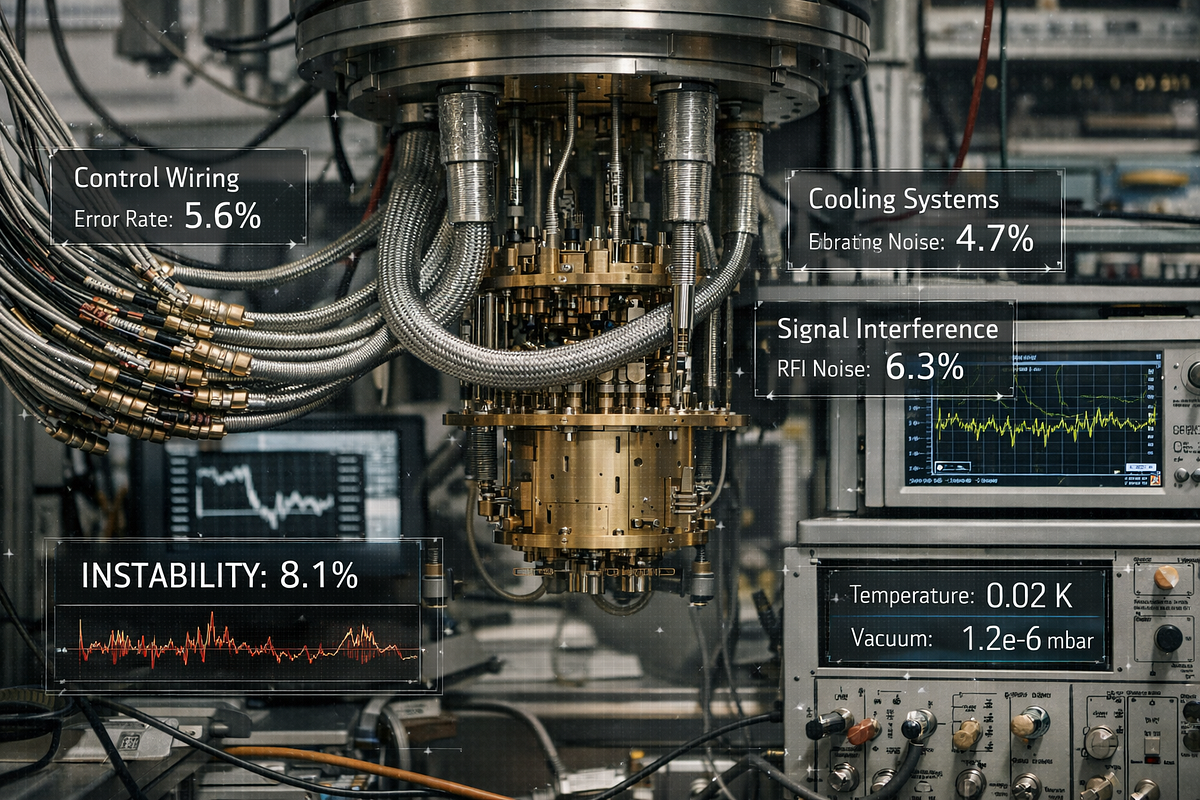
These outcomes were not failures — they were reality checks.
They demonstrated that quantum computing is not plug-and-play, and that premature expectations can derail otherwise valuable experimentation. The real return on these pilots was not speedup, but understanding what future systems must deliver to make quantum advantage real.
Where Quantum Computing Will Matter First
Early value will emerge in domains where classical systems struggle with complexity rather than scale:
- Materials science and pharmaceuticals, where quantum systems can model molecular interactions natively
- Logistics and supply chains, using hybrid optimization for routing and scheduling
- Finance, particularly in constrained, high-dimensional optimization problems
In each case, success depends on error-aware algorithms, hybrid orchestration, and careful problem selection — not raw qubit counts.
Cryptography, Risk, and Responsibility
The threat quantum computing poses to modern cryptography is real — but not imminent. Current systems are nowhere near capable of breaking RSA or elliptic-curve cryptography at scale. Most credible timelines place that risk a decade or more away.
However, cryptographic transitions take years. Governments and enterprises should be planning now, adopting quantum-resistant algorithms and testing hybrid security models. The goal is preparedness, not panic.

There are also broader ethical and geopolitical considerations. A global race for quantum advantage could exacerbate inequality, destabilize security assumptions, and concentrate power among a small number of actors. Responsible progress will require transparent research, international collaboration, and thoughtful policy.
The Real Bottleneck: Fault Tolerance
The gating factor for scalable quantum computing is not qubit count — it is fault tolerance. Without robust error correction, scaling simply compounds noise.
Progress here will be incremental rather than revolutionary. Improvements in qubit fidelity, control electronics, error-correction codes, and system orchestration will collectively enable fault-tolerant architectures over time. This is an engineering marathon, not a scientific sprint.
Looking Ahead
In the next five years, quantum systems will remain experimental and hybrid-focused. Expect tens to low hundreds of qubits solving narrow, problem-specific tasks, with progress measured in reliability rather than supremacy.
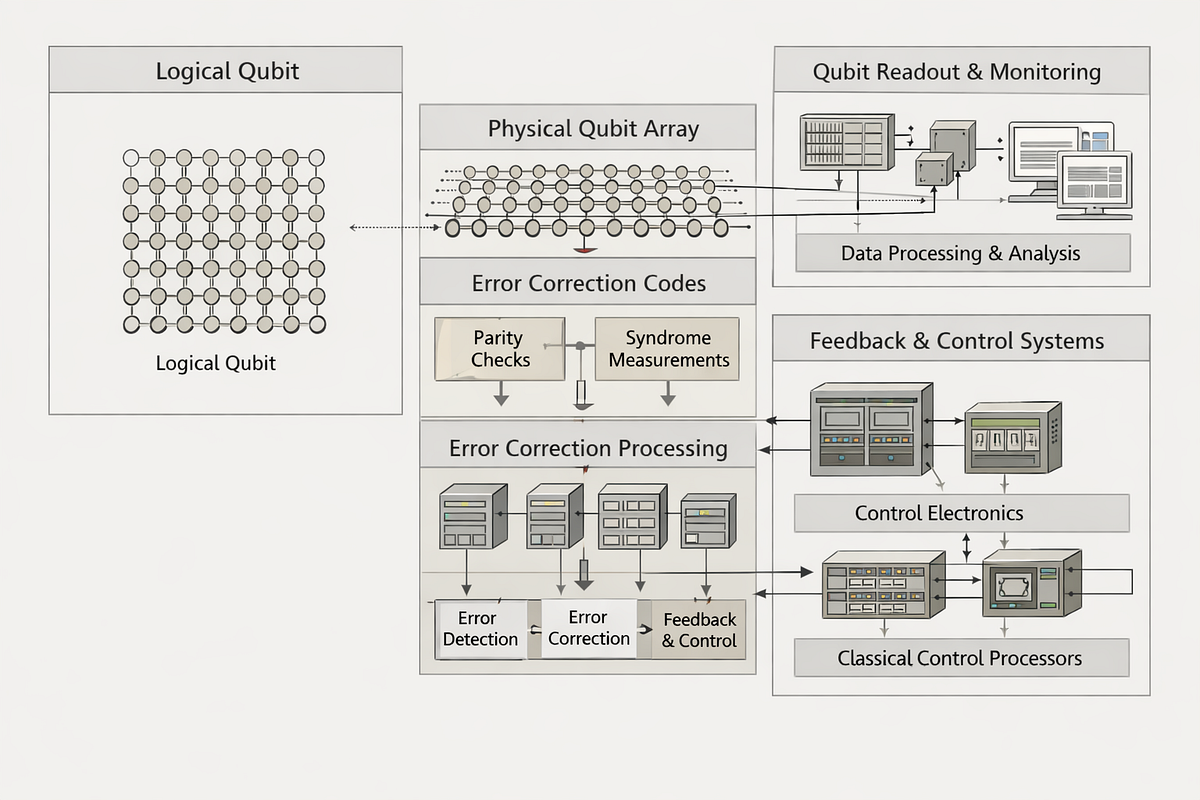
In fifteen to twenty years, fault-tolerant quantum accelerators will likely be integrated into classical infrastructure, enabling breakthroughs in materials, drug discovery, logistics, and cryptographic analysis. Their impact will be narrow but profound.
Final Thought
If there is one idea worth remembering, it is this: quantum computing is not about qubits — it is about systems.
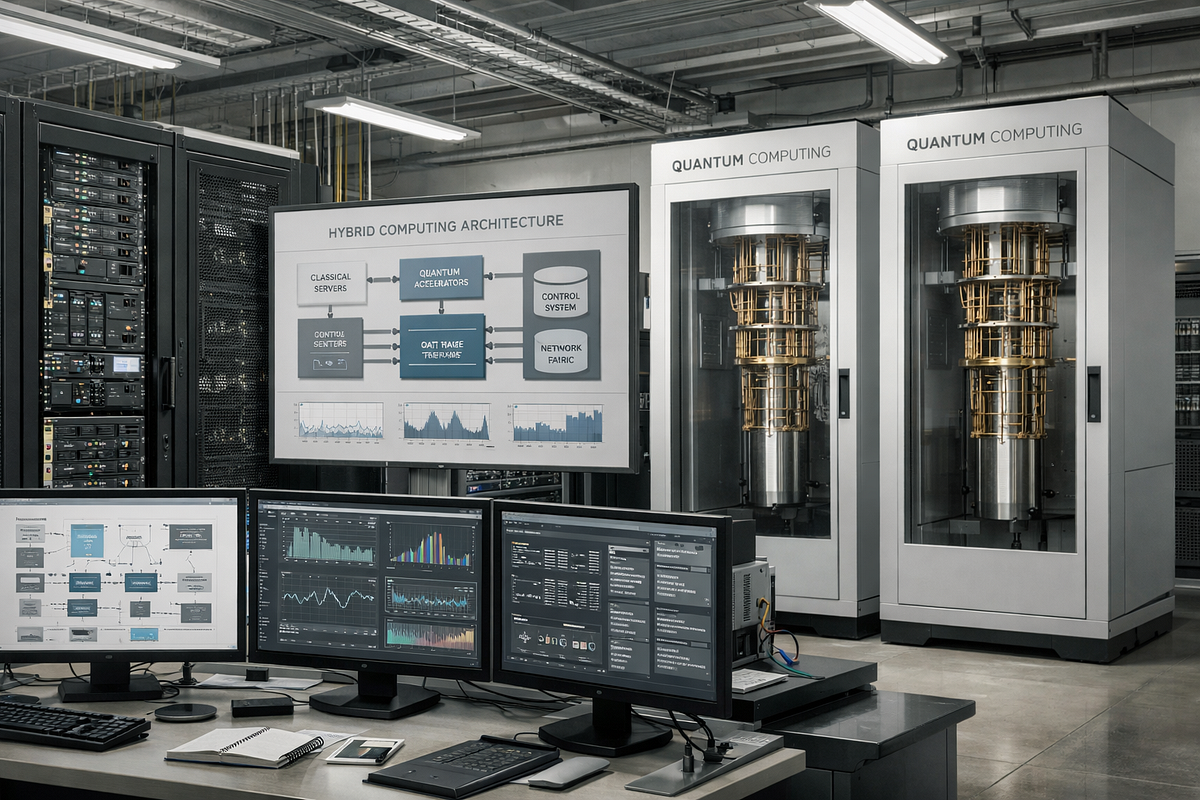
Its future will be defined not by isolated milestones or marketing claims, but by the quiet, difficult work of integrating hardware, software, and orchestration into reliable computational platforms. When that happens, quantum computing will not replace classical systems — it will redefine what those systems are capable of doing.


Comments
Post a Comment