Quantum Computing Systems: Design, Components, and Capabilities
Quantum computing is often portrayed as a mysterious black box powered by exotic physics. In reality, a quantum computer is a complex engineered system — one that integrates fragile quantum hardware with sophisticated classical electronics and software. Understanding this full stack is essential if we want to separate real progress from hype.
As a quantum computing systems educator and industry analyst with over eight years of experience working in quantum technologies and adjacent advanced computing fields, my focus has been on quantum systems architecture — how hardware, control electronics, and software layers come together to form usable machines. From that perspective, quantum computing looks less like a futuristic miracle and more like one of the most demanding systems-engineering challenges ever attempted.
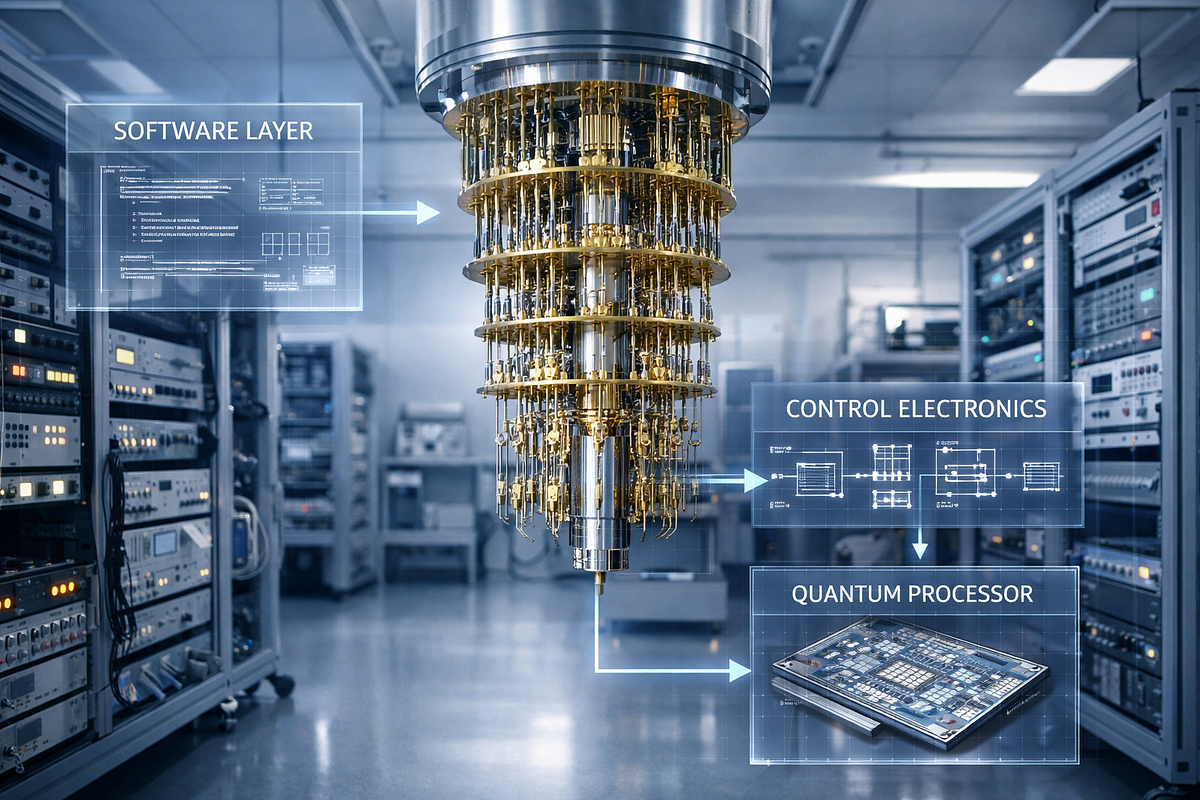
This article breaks down how quantum computing systems are designed, what components actually make them work, and what they can realistically do today.
A Quantum Computer Is Not Just a QPU
One of the most common misconceptions is that a quantum computer is simply a chip full of qubits. That chip — the Quantum Processing Unit (QPU) — is only one part of a much larger system.
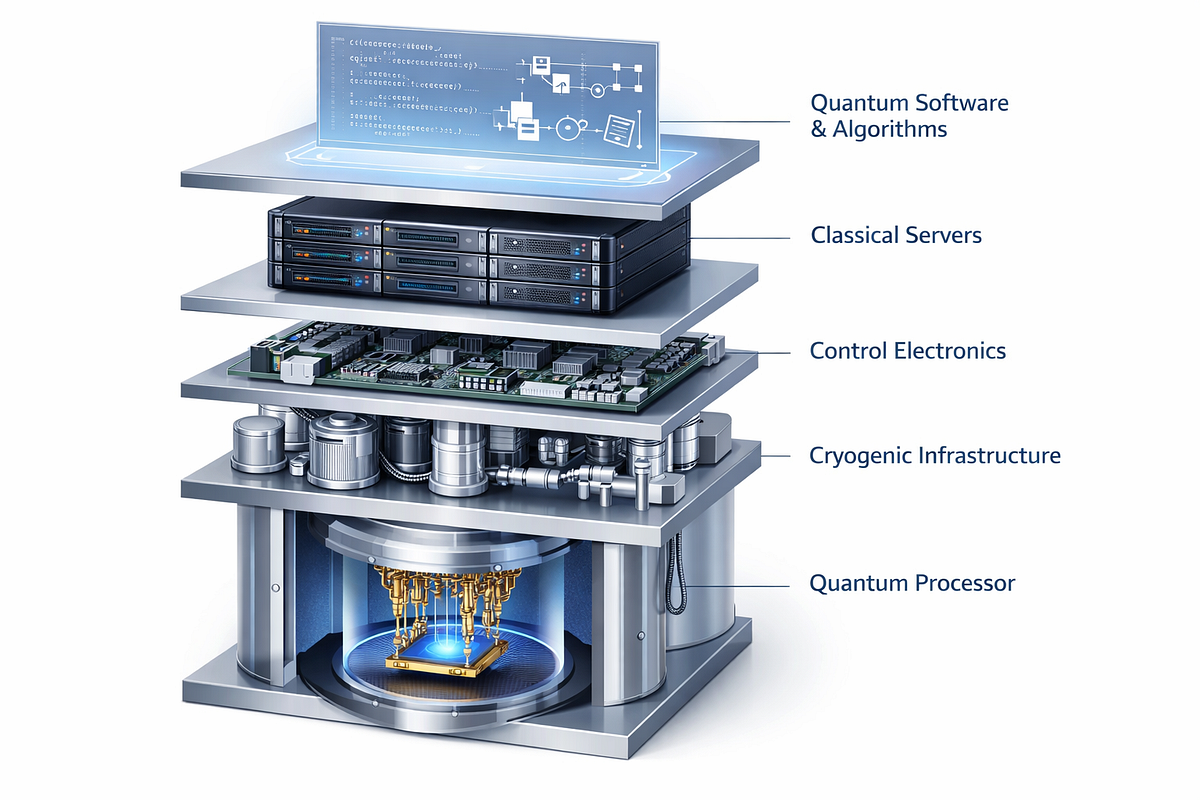
A true quantum computing system is an integrated stack that includes:
- Quantum Processing Unit (QPU)
Physical qubits, couplers, and readout structures where quantum states live, and operations occur. - Cryogenic Infrastructure
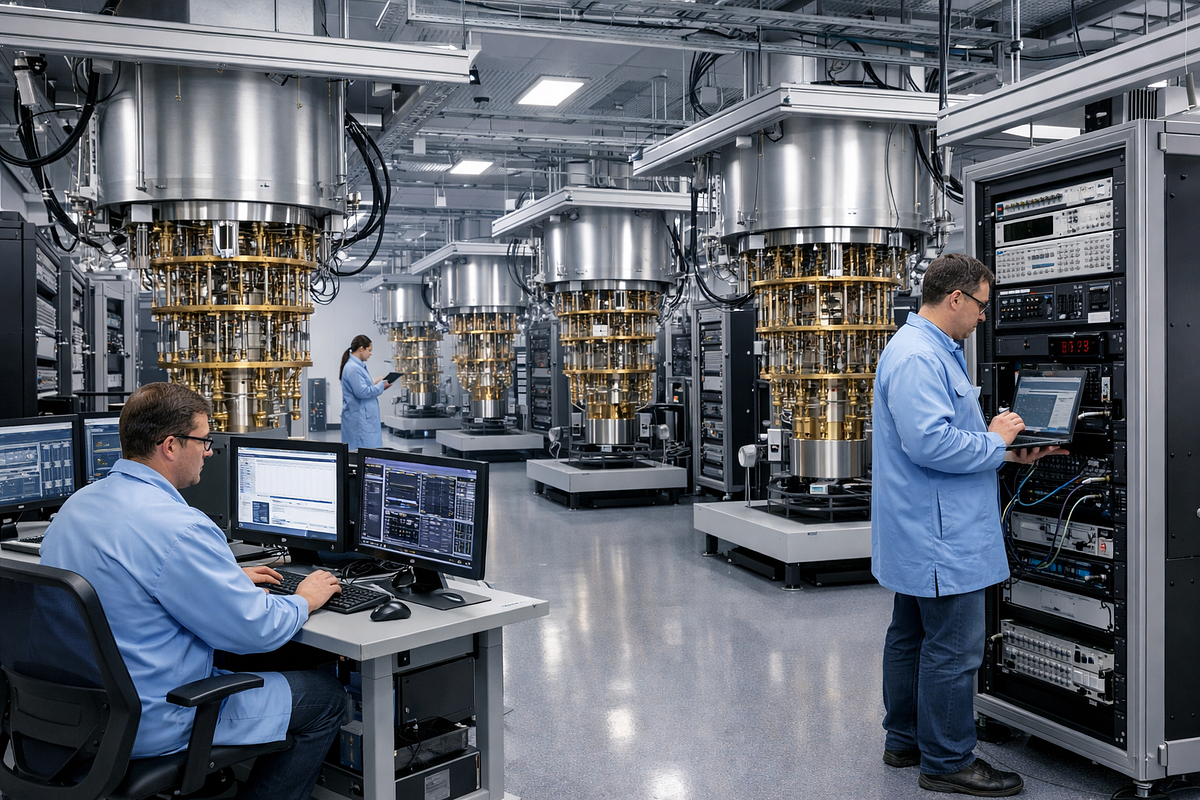
Dilution refrigerators, thermal shielding, and specialized wiring that keep many qubit platforms operating near absolute zero. - Control & Readout Electronics
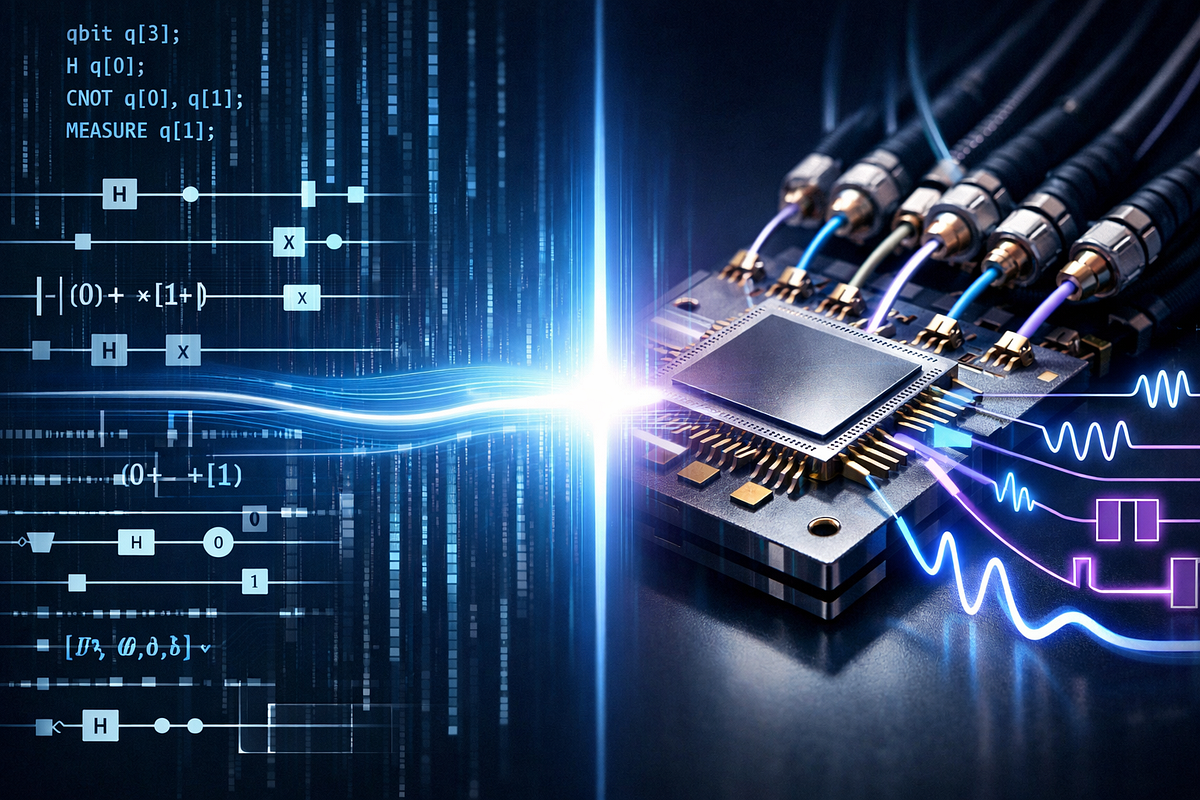
Microwave generators, DACs/ADCs, FPGAs, and timing systems that translate software instructions into precise physical signals. - Classical Computing Layer
Real-time feedback, calibration loops, orchestration, and post-processing of measurement results. - Software Stack
Compilers, middleware, pulse-level control, APIs, and application frameworks that bridge algorithms to hardware.
Without this full stack, a QPU is just a physics experiment. With it, you have something that starts to resemble a computing system.
The Biggest Misunderstanding: “Quantum = Faster”
Many people assume quantum computers are simply faster classical computers that will replace today’s machines. That’s not how this works.

Quantum computers are specialized accelerators. They only provide advantages for certain problem classes, such as:
- Quantum simulation of molecules and materials
- Specific optimization problems
- Some narrow machine learning and linear algebra tasks
Most everyday workloads — databases, web services, graphics, general AI training — will remain classical for the foreseeable future.
Even more importantly, hardware constraints dominate performance. Qubit noise, connectivity limits, and error rates matter far more than raw qubit count, which leads to the real bottleneck.
The True Bottleneck: Error Correction Overhead
The central challenge in quantum computing today is not just building more qubits — it’s dealing with the fact that they make errors constantly.
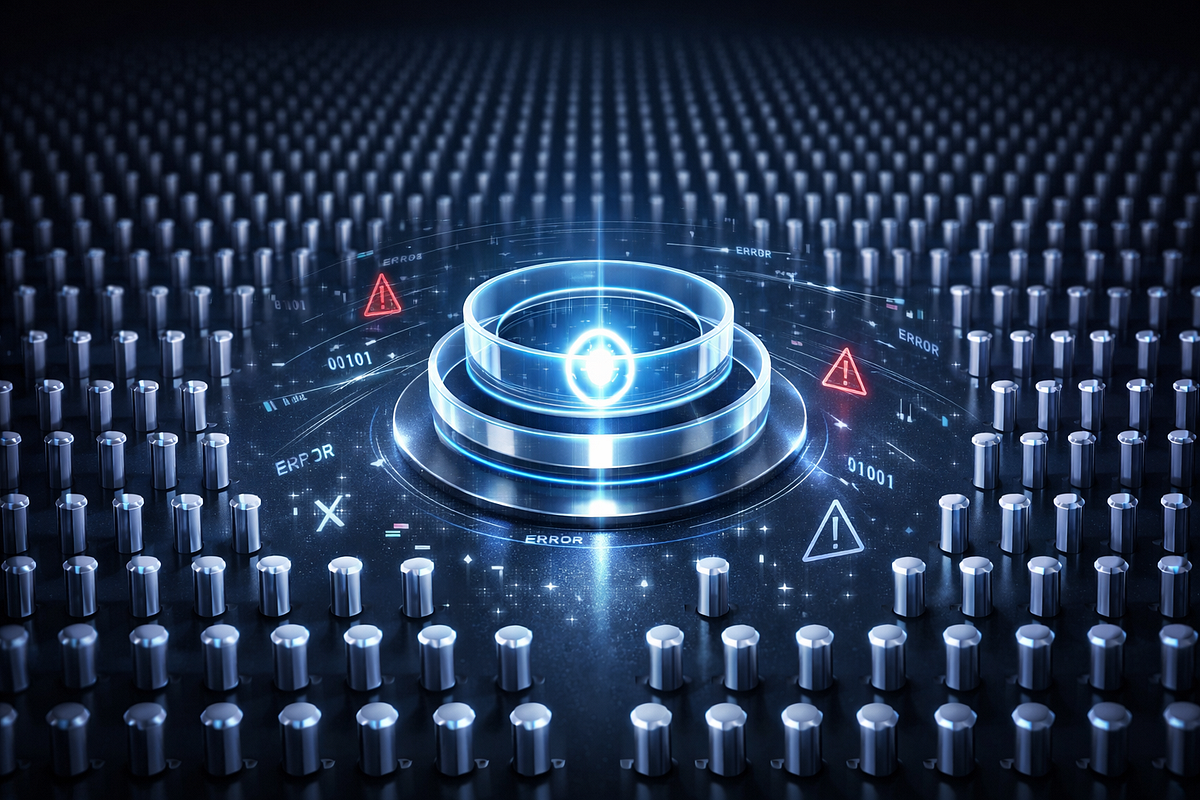
Quantum error correction (QEC) is theoretically sound but practically brutal:
- Thousands of physical qubits may be required for one logical, error-corrected qubit
- Control electronics must support massive real-time feedback
- Software must orchestrate complex error detection and correction routines
This overhead ripples through every system layer: cryogenics, wiring, electronics, firmware, and compilers. Until physical error rates drop significantly, fault-tolerant quantum computing remains out of reach at a large scale.
Hardware Platforms: No Single Winner Yet
From a systems perspective, the “best” qubit isn’t the one with the prettiest physics — it’s the one that minimizes total system complexity.

Two leading approaches today illustrate different tradeoffs:
Superconducting Qubits
Strengths
- Fast gate speeds (nanoseconds)
- Mature fabrication techniques
- Strong integration with microwave control electronics
Tradeoff
- Shorter coherence times → heavier error-correction burden
These systems are excellent for learning how to scale control and integration, even if long-term error rates remain a concern.
Trapped Ions
Strengths
- Very high coherence and gate fidelity
- All-to-all connectivity simplifies logical design
Tradeoff
- Slower gate speeds
- Complex optical control systems that are harder to scale physically
Other platforms — photonic, neutral-atom, spin, and topological approaches — are promising but still maturing from a full-system standpoint.
The Most Underrated Layer: Control Electronics
The part of the stack I find most fascinating — and most underrated — is control electronics and signal integration.
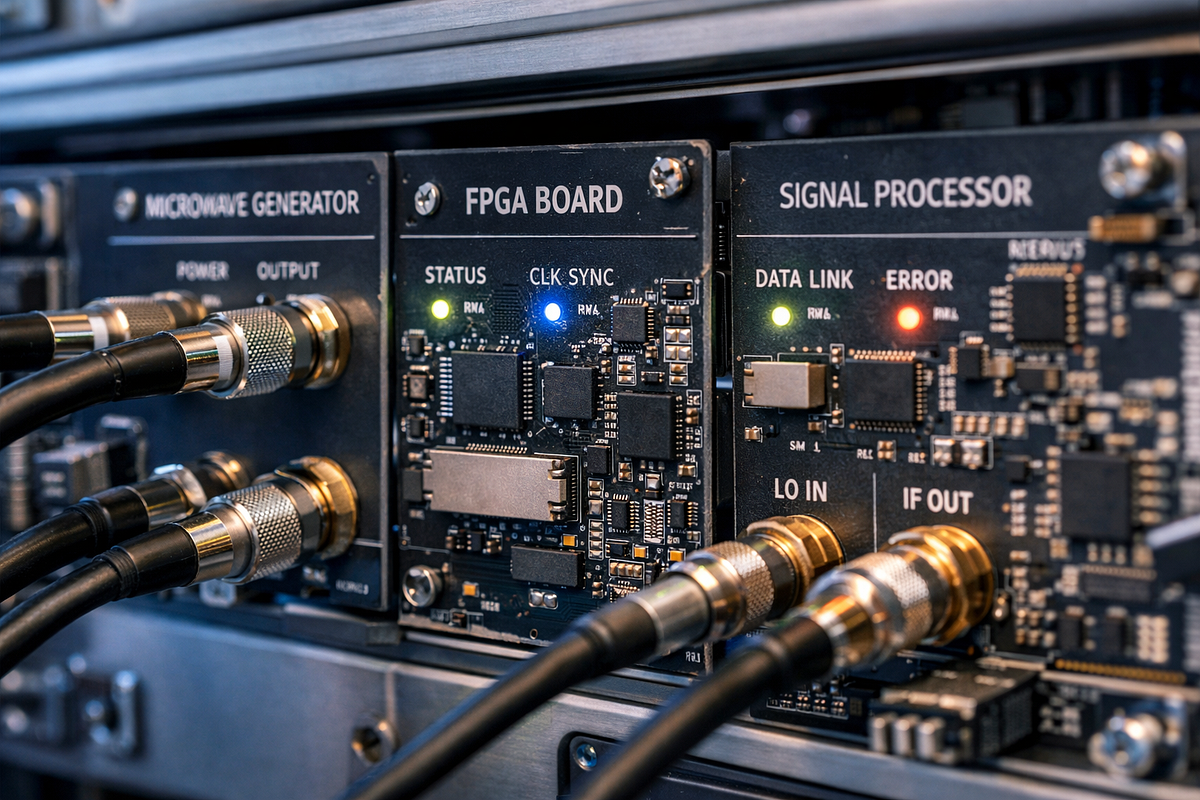
These systems:
- Generate nanosecond-scale pulses
- Synchronize operations across many qubits
- Directly influence gate fidelity and error rates
As qubit counts grow, wiring density, heat load, signal integrity, and synchronization become massive engineering challenges. This is one reason cryogenic control electronics are likely to become standard in large-scale systems: placing electronics closer to qubits reduces wiring complexity and latency, though it introduces new power and reliability challenges.
Where the Software Stack Still Falls Short
Today’s quantum SDKs and compilers are powerful for experimentation, but there is still a major gap between:
High-level algorithms
and
Hardware-aware execution
Compilers don’t yet fully optimize for:
- Qubit connectivity
- Calibration drift
- Noise characteristics
- Pulse-level hardware behavior
Bridging this gap — tight hardware–software co-design — is one of the most important frontiers in quantum systems engineering.
Lessons from Real-World Projects
In quantum proof-of-concept work I’ve been involved with via cloud platforms and system-level analysis, one lesson consistently stands out:
Hardware constraints dominate outcomes more than the algorithm itself.
In one superconducting pilot system example, increasing qubit connectivity made more algorithms possible — but also increased wiring complexity, cross-talk, and control overhead, which reduced fidelity. Simplifying the layout improved reliability but restricted what could be run efficiently.
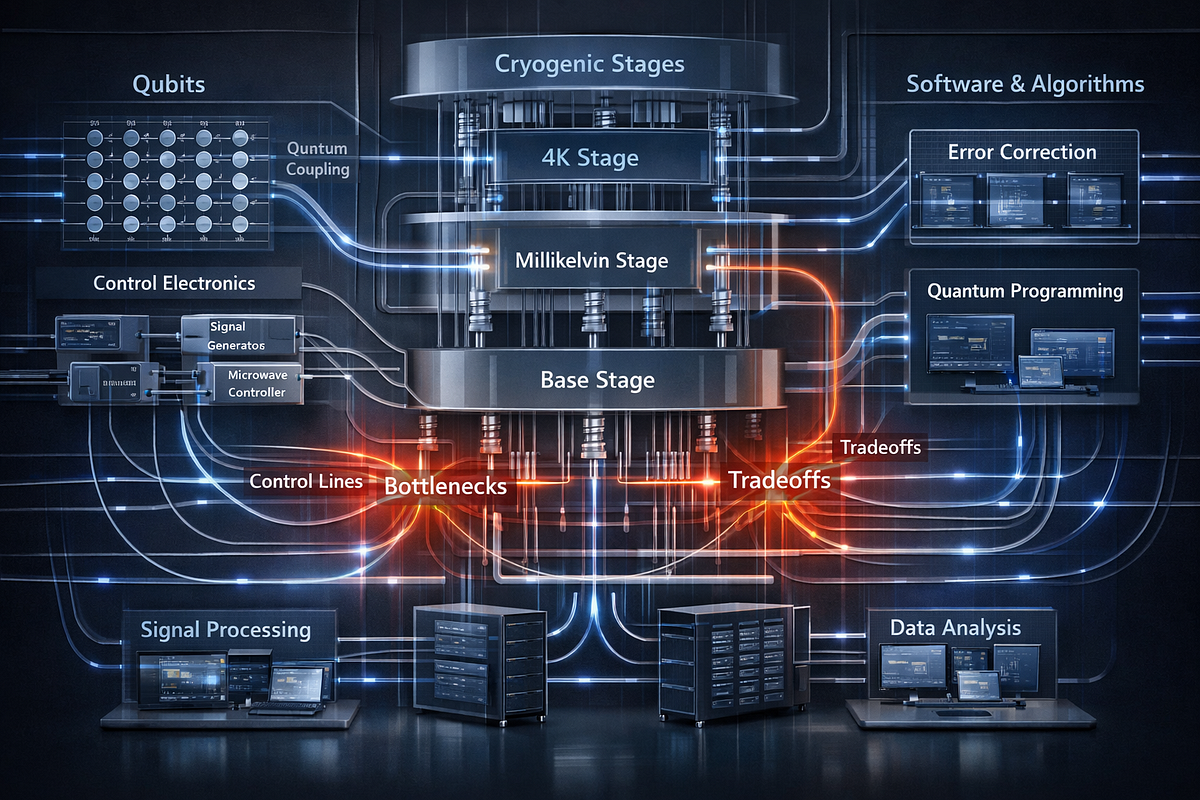
Every design choice became a tradeoff between:
- Connectivity
- Coherence
- Control complexity
- Software scheduling
That’s the reality of quantum system design: everything is coupled.
I’ve also seen promising prototypes struggle as qubit counts grew, not because the qubits were bad, but because calibration drift, thermal load, and control scaling weren’t solved at the system level.
What Quantum Computers Can (and Can’t) Do Today
Here’s the hard truth:
Most current quantum computers cannot solve practical problems better than classical systems.
We are still in the NISQ (Noisy Intermediate-Scale Quantum) era. Today’s machines are outstanding research tools, but rarely deliver commercial advantage.
Genuinely Promising Areas
- Quantum chemistry and materials simulation
- Certain structured optimization problems
- Long-term potential for specialized ML acceleration
Overhyped Claims
- Breaking global encryption anytime soon
- Replacing classical supercomputers
- Universal quantum AI acceleration
Quantum computing is not a magic bullet — it’s a specialized tool still under construction.
Cloud Today, Maybe On-Prem Tomorrow
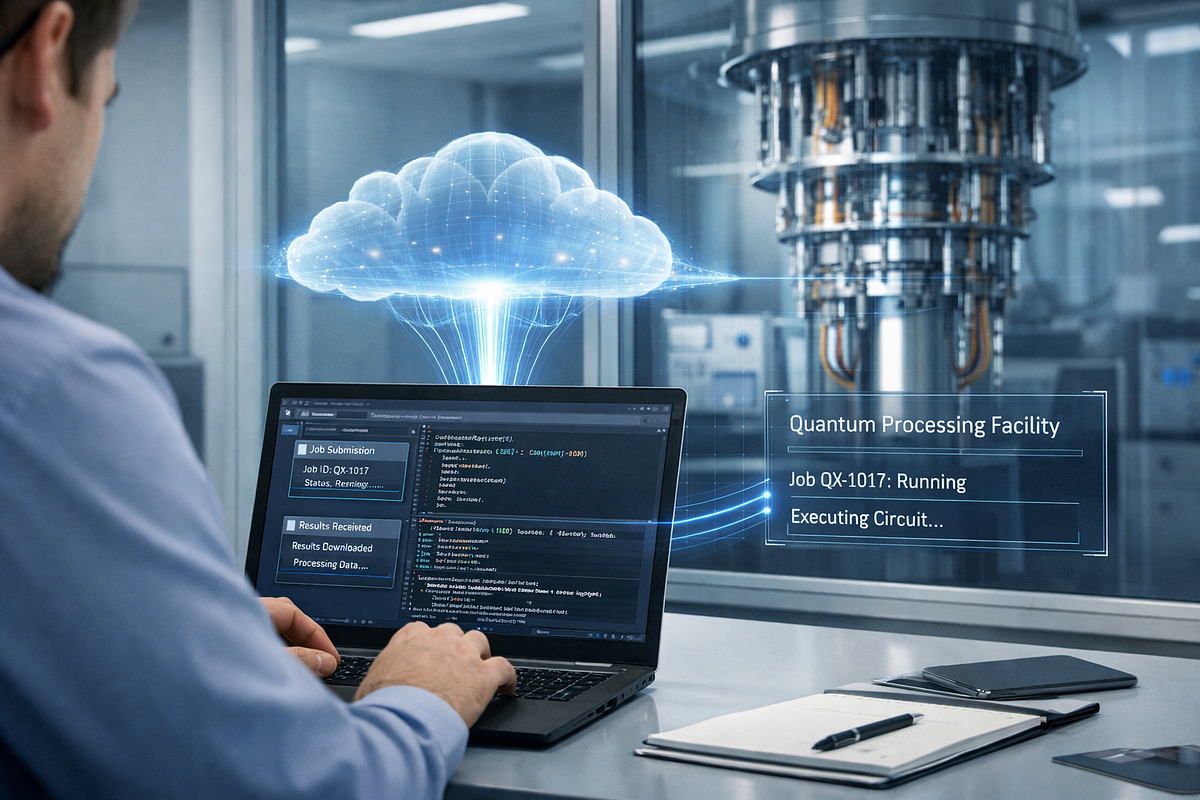
For now, cloud access dominates because it avoids the enormous cost and complexity of cryogenics and control infrastructure. But as systems mature toward fault tolerance, hybrid or on-prem deployments may emerge for:
- Low-latency integration with HPC systems
- Sensitive workloads requiring data control
- Specialized, application-specific quantum accelerators
Who’s Making Real Progress?
The most meaningful advances are coming from groups focused on full-stack integration, not just qubit counts. Organizations like IBM, IonQ, Google Quantum AI, PsiQuantum, and leading academic/national labs are pushing system-level engineering across hardware, electronics, software, and error correction.
The industry’s most underrated trend right now is hardware–software co-design. The race isn’t just to add qubits — it’s to build machines where the entire stack works together reliably.
My Take: The Road Ahead
If I had unlimited funding, I wouldn’t spend it only on qubit fabrication. I’d invest heavily in:
- Scalable control electronics
- Cryogenic integration
- Error-corrected system architectures
- Software-hardware orchestration
Because qubits alone don’t make a computer — systems do.
As for timelines, useful fault-tolerant quantum computers capable of solving meaningful industry problems are likely 10–20 years away. That may sound long, but considering the engineering challenge — integrating physics at millikelvin temperatures with classical computation at scale — the progress so far is remarkable.
Final Thought
Quantum computing is not just a physics experiment, and it’s not just a software problem. It’s one of the most ambitious systems engineering efforts in modern technology.
The sooner we talk about quantum computers as integrated, error-prone, hardware–software systems rather than magical qubit chips, the faster we’ll make real progress — and the better decisions engineers, researchers, and leaders can make about where this technology truly fits.


Comments
Post a Comment