Quantum Computing Systems Explained for Beginners
Quantum computing is often described as mysterious, futuristic, or impossibly complex. In reality, the fundamentals can be understood without advanced physics or mathematics. As a quantum computing educator and technology analyst, my goal is to make these systems approachable while staying grounded in how they actually work today — not just how they might work decades from now.
This guide is designed for true beginners: students, software developers, business leaders, and curious technology readers who want clarity without equations.
What Makes a Quantum Computer Different?
At a high level, classical computers and quantum computers both process information. The difference lies in how they represent and manipulate that information.
Classical Bits vs. Qubits
Classical computers use bits, which can be either 0 or 1.
Quantum computers use qubits (quantum bits). A qubit can represent 0, 1, or a combination of both at the same time. This is called superposition.

A helpful analogy is a spinning coin:
- A coin on a table is either heads or tails (like a classical bit).
- A spinning coin is in a blend of heads and tails until you stop it (like a qubit in superposition).
However, superposition is not magic or “being in two places at once.” In my experience, the most useful way to think about it is as a probability distribution that can be shaped and manipulated by quantum operations.
Why Superposition Alone Isn’t Enough
A common misunderstanding is that superposition automatically makes quantum computers massively powerful. It does not. The real power comes from how quantum states interfere with each other.
Interference: The Hidden Engine
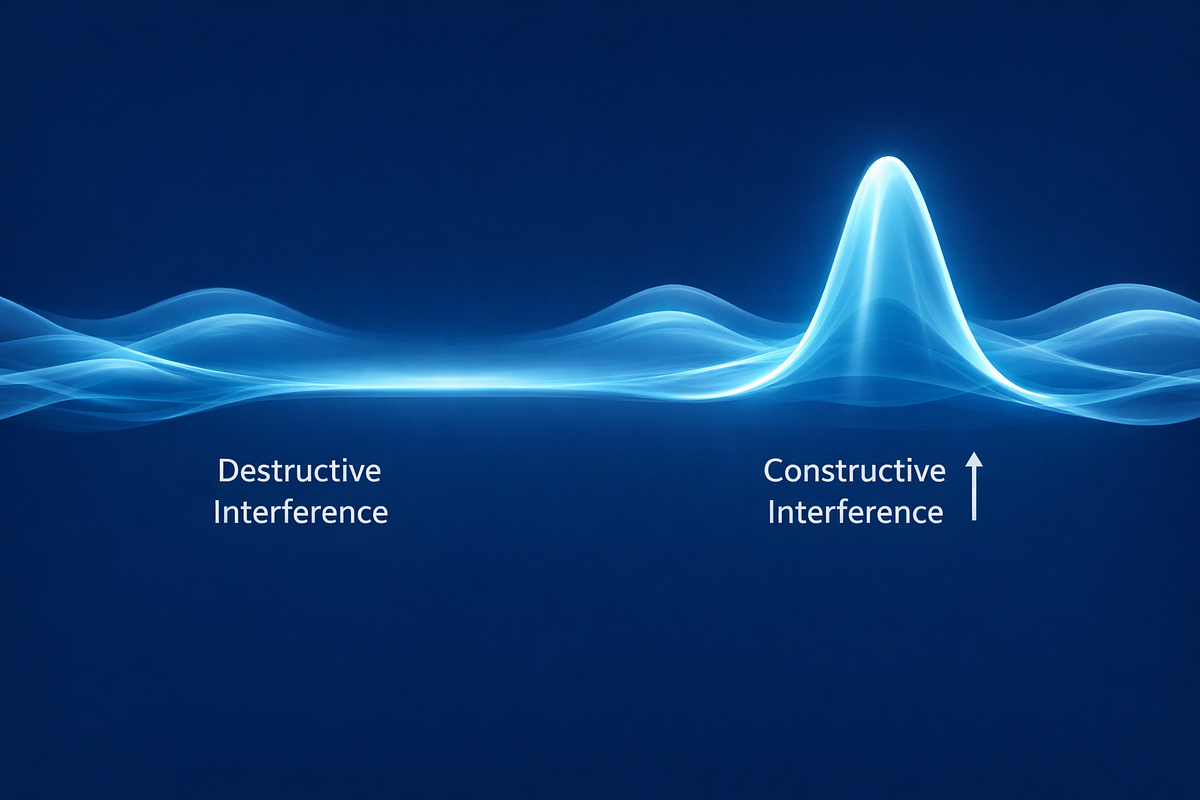
Quantum systems behave like waves. When waves overlap:
- They can reinforce each other (constructive interference)
- Or cancel each other out (destructive interference)
Quantum algorithms are carefully designed so that:
- Wrong answers cancel out
- Right answers become more likely when measured
This idea becomes clear when experimenting with simple algorithms like Grover’s search. Seeing probability amplitudes shift during a simulation was an “aha” moment for me — it transformed abstract theory into something tangible and logical.
The Core Quantum Phenomena (Without the Heavy Physics)
Superposition
A qubit can exist in a mixture of 0 and 1. When measured, it collapses to one of those values, but before measurement, it holds a structured blend of possibilities.
Entanglement
Entanglement is a strong correlation between qubits. When qubits are entangled, measuring one instantly gives you information about the other, no matter how far apart they are.

For beginners, it’s best understood not as “spooky action,” but as a deep connection in how their probabilities are linked. Entanglement allows quantum computers to represent complex relationships that would require many classical bits.
Visualizing with the Bloch Sphere
One intuitive way to picture a qubit is the Bloch sphere, where each point on a sphere represents a possible qubit state. You do not need the math — just imagine a globe where different orientations correspond to different blends of 0 and 1. Quantum operations rotate the qubit’s position on this sphere.
What a Quantum Computing System Actually Includes
Quantum computing is not just about qubits. It is an entire system stack, and this is where many beginner explanations fall short.
The Quantum Processor (Where Qubits Live)
Different companies build qubits in different ways:
- Superconducting qubits (used by IBM and Rigetti) rely on tiny electrical circuits cooled close to absolute zero.
- Trapped ion qubits (used by IonQ) store information in charged atoms suspended by electromagnetic fields.
- Photonic systems use particles of light.
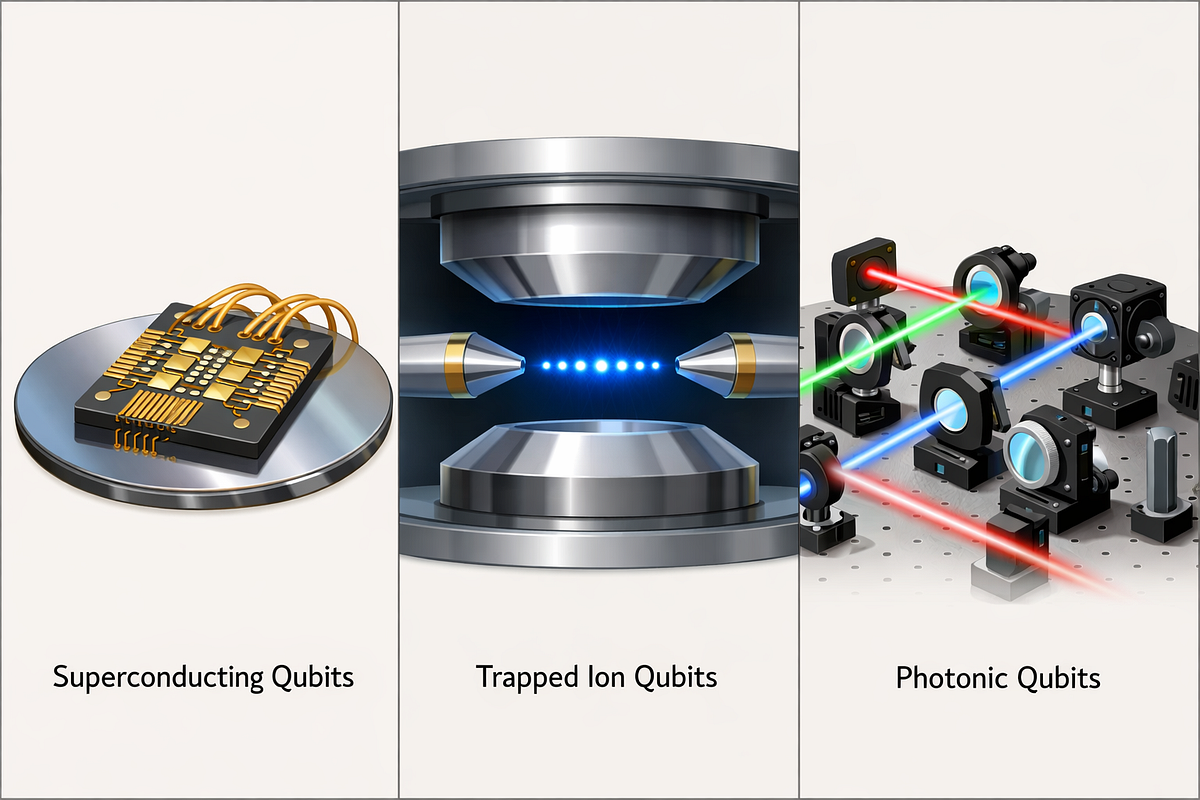
Each approach has trade-offs in stability, scalability, and control.
Extreme Engineering Requirements
One of the most underrated aspects of quantum computing is how difficult these systems are to keep stable.
Qubits are extremely fragile. They are easily disturbed by:
- Heat
- Electromagnetic noise
- Vibrations
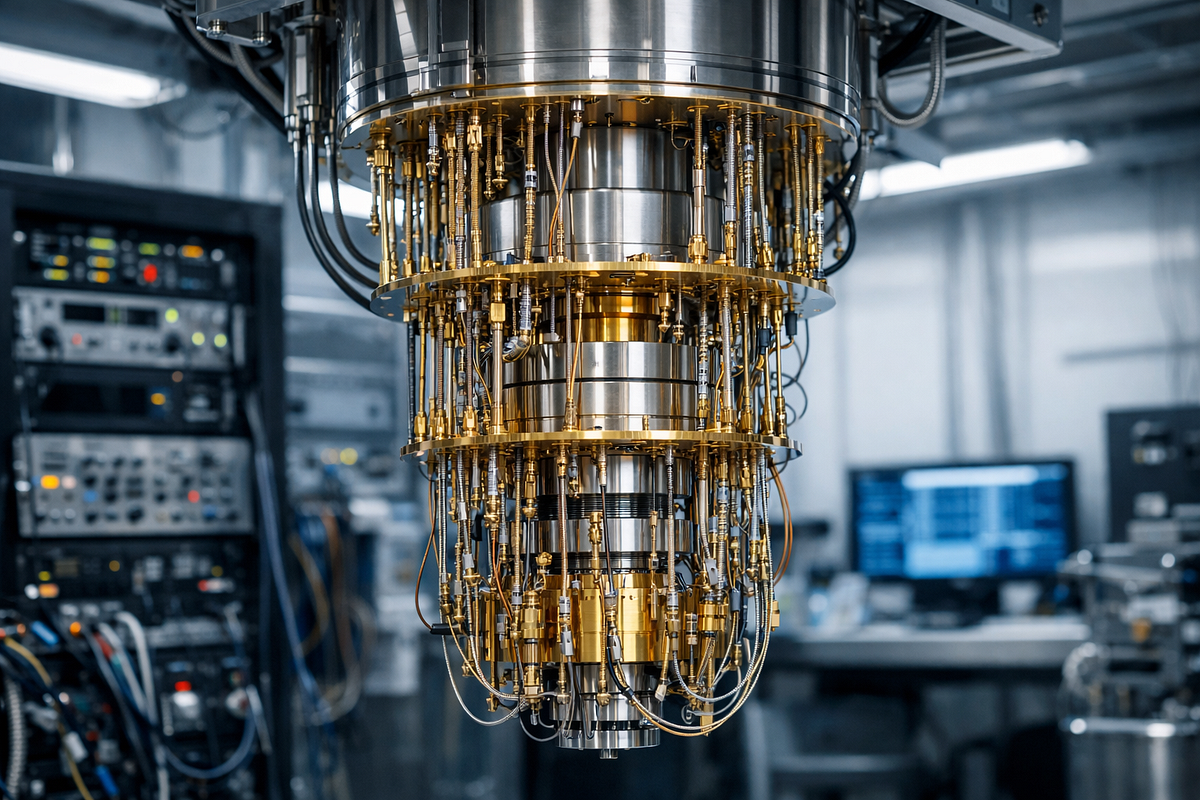
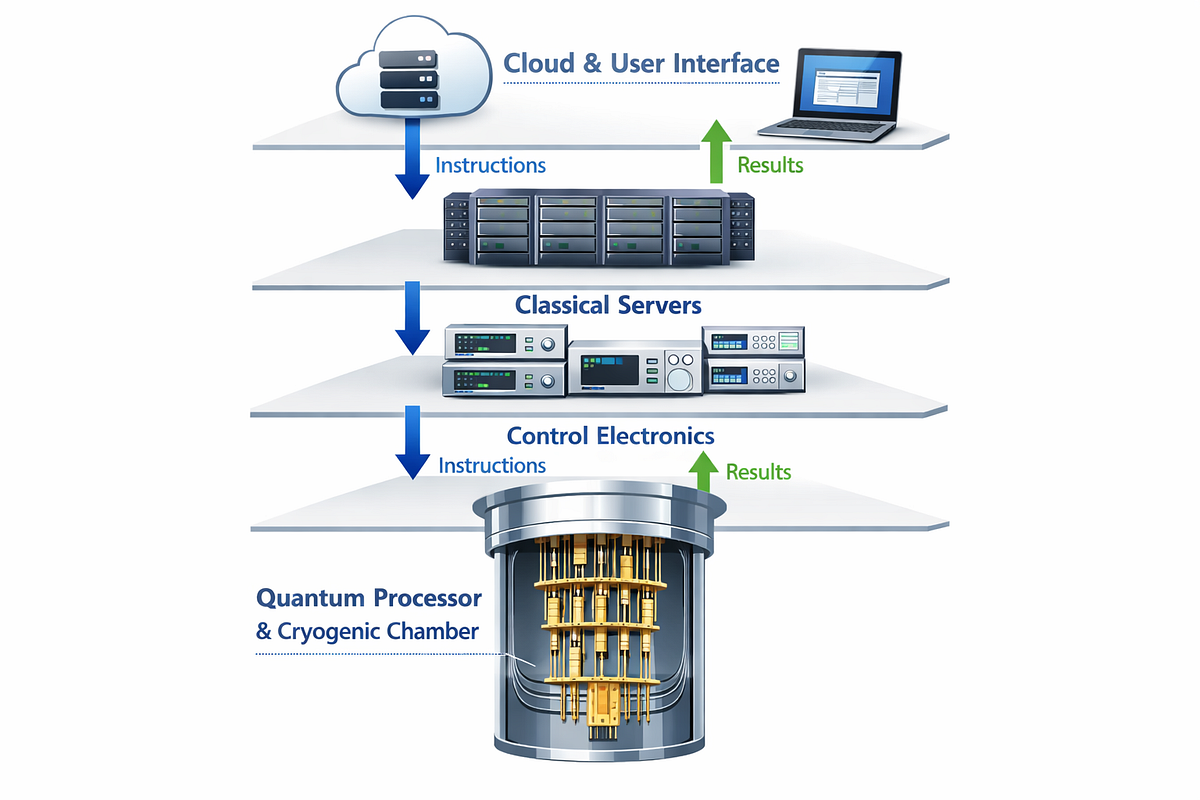
Superconducting systems, for example, operate in refrigerators colder than outer space. Precise control electronics send microwave pulses to manipulate qubits with extreme accuracy.
Progress in quantum computing today often comes from engineering improvements, not just new algorithms.
Classical Computers Still Do Most of the Work
Every quantum computer is tightly connected to classical systems that:
- Send instructions
- Read results
- Correct errors
- Manage workflows
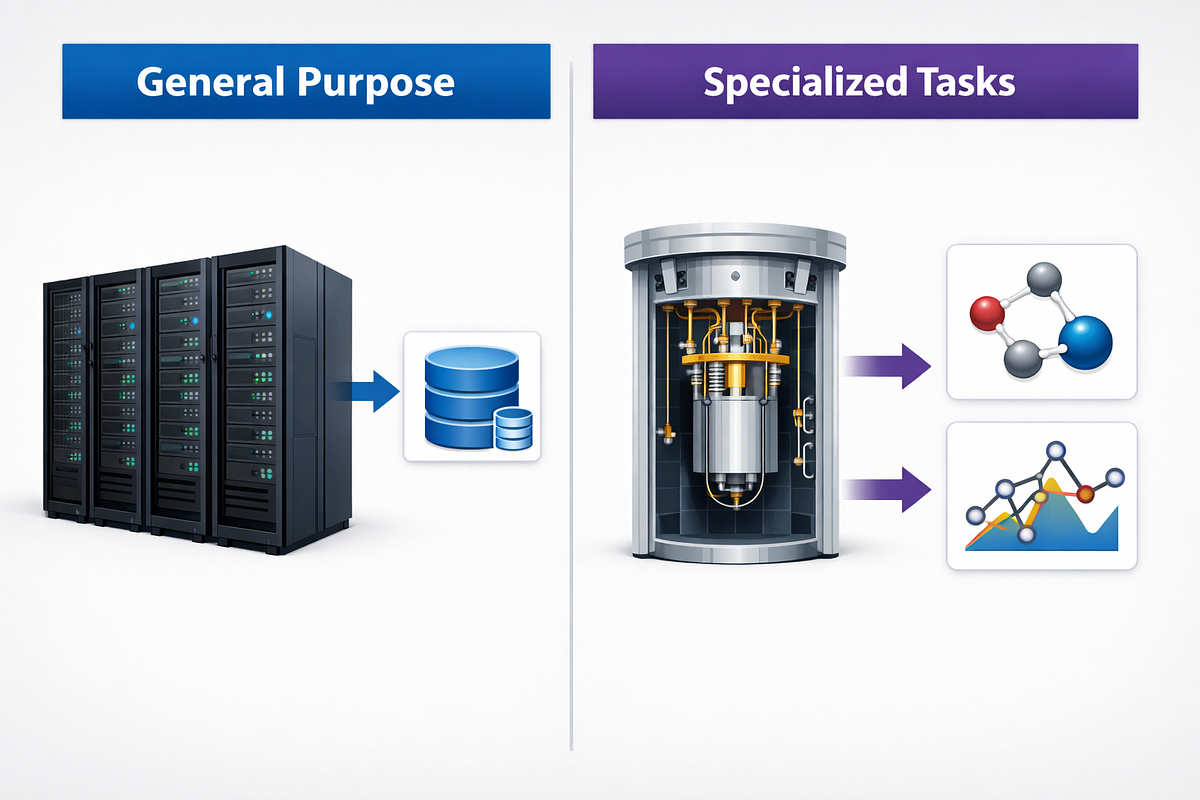
Quantum computers are not replacements for classical machines — they are specialized accelerators for certain types of problems.
Accessing Quantum Computers Through the Cloud
You do not need a physics lab to try quantum computing.
In my own work, I’ve used cloud-based platforms like IBM Quantum to run small circuits on real hardware and simulators. Other providers, such as IonQ and Rigetti, also offer cloud access.

This model is similar to early cloud computing:
- You write code locally
- Submit jobs over the internet
- Get results from remote quantum hardware
The Software Stack: How We Program Quantum Systems
Quantum computers are programmed using specialized frameworks that sit between human logic and hardware physics.
Quantum Programming Frameworks
Popular tools include:
These tools allow users to:
- Design quantum circuits
- Simulate them on classical computers
- Run them on real quantum devices
You do not directly control qubits with voltages or lasers. Instead, you define logical operations, and compilers translate them into hardware-level instructions.
What Quantum Computers Can — and Cannot — Do
The Biggest Myth: “Quantum Is Just Faster”
Quantum computers are not general-purpose supercomputers. They do not speed up everything.
They are suited for specific problem types, including:
- Quantum chemistry simulation
- Certain optimization problems
- Some cryptographic and number-theory tasks
Overhyped: Breaking All Encryption Soon
You may have seen headlines suggesting that quantum computers will soon break all modern encryption. While this is theoretically possible, it would require large-scale, fault-tolerant quantum computers that do not yet exist. We are still in an experimental era.
Underrated: The Hard Part Is Stability
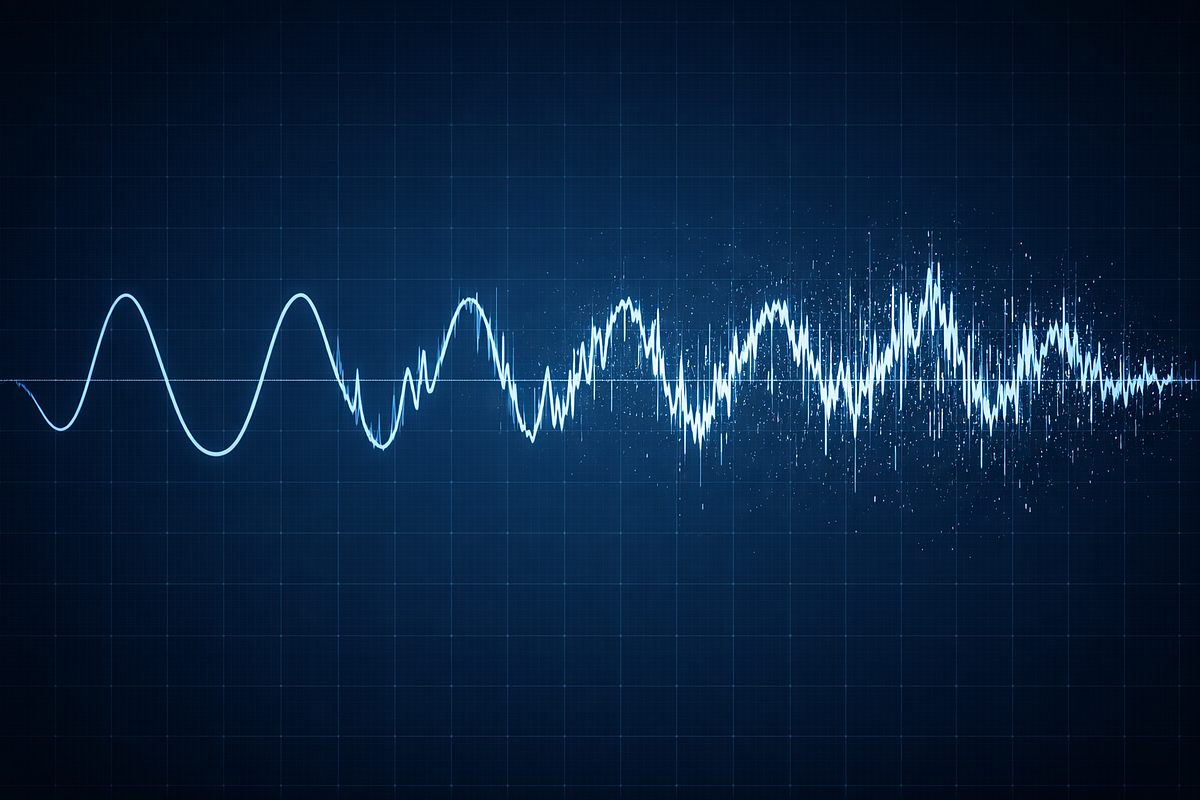
In practice, one of the most frustrating limitations I’ve seen is how quickly results degrade on real hardware. Algorithms that work perfectly in simulation can produce noisy, unreliable outputs on real devices due to decoherence and operational errors.
This is why error correction and system engineering are central challenges today.
What Is “Quantum Advantage,” Really?
“Quantum advantage” refers to a situation where a quantum computer solves a problem faster or more efficiently than any known classical method.
It is a real scientific milestone, but it is often misunderstood. Most demonstrations so far involve narrow, highly specialized problems with limited immediate practical value.
So it is both:
- A legitimate technical achievement
- A term that can be exaggerated in media coverage
Understanding this balance helps beginners interpret news with a critical eye.
A Promising Real-World Direction: Chemistry and Materials
One area that feels genuinely promising is quantum simulation for chemistry and materials science.
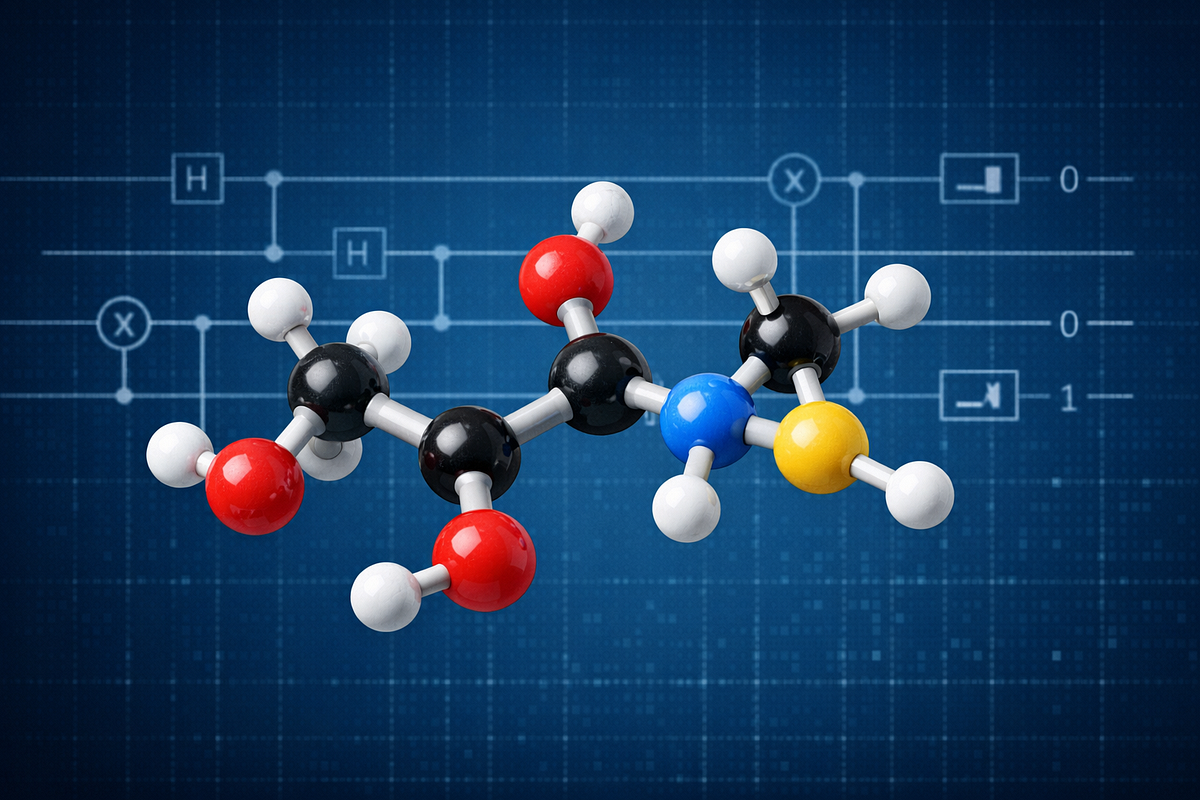
Molecules follow quantum rules. Simulating their behavior on classical computers is extremely difficult. Even small quantum systems can model certain molecular interactions more naturally.
Potential long-term applications include:
These are still early-stage efforts, but they represent one of the clearest paths to meaningful impact.
How to Start Learning Quantum Computing
If this field interests you, you can begin without advanced math or physics.
Try a Cloud Platform
Create an account on a cloud quantum service and run small example circuits. Start with simulators before moving to real hardware.
Learn Basic Quantum Circuits
Focus on understanding:
- Qubits and measurement
- Simple gates (like NOT and Hadamard)
- Small algorithms such as Grover’s search
Use Beginner-Friendly Tools
Python-based frameworks like Qiskit provide tutorials, visualizations, and prebuilt examples designed for newcomers.
Keep Expectations Realistic
Remember:
- Results from real hardware will be noisy
- Today’s systems are small and experimental
- Learning the concepts is more important than chasing performance
Key Takeaways for Beginners
After understanding the basics of quantum computing systems, you should be able to:
- Explain qubits, superposition, and entanglement in simple terms
- Understand why quantum computers are powerful but specialized
- Interpret quantum computing news without falling for hype
- Recognize the importance of hardware engineering and error correction
- Take your first steps experimenting with cloud-based tools
Quantum computing is not magic, and it is not ready to replace classical systems. It is a developing technology built on fragile physics and remarkable engineering. With the right mental model, beginners can follow its progress with clarity and curiosity rather than confusion.
Glossary of Essential Terms
Qubit — The basic unit of quantum information, capable of existing in a blend of 0 and 1.
Superposition — A state where a qubit represents multiple possibilities at once.
Entanglement — A strong correlation between qubits where their outcomes are linked.
Interference — The wave-like effect that amplifies correct answers and suppresses wrong ones in quantum algorithms.
Decoherence — Loss of quantum information due to interaction with the environment.
Quantum Advantage — When a quantum computer outperforms classical methods on a specific task.
Quantum computing systems are best understood not as futuristic replacements for today’s machines, but as highly specialized tools emerging from the intersection of physics, computer science, and advanced engineering. With that perspective, the field becomes less mysterious — and far more interesting.


Comments
Post a Comment