The Rise of Quantum Computing Systems for Enterprise
Quantum computing systems are no longer confined to academic laboratories or speculative research papers. Over the past decade, the field has entered a new phase — one defined less by theoretical possibility and more by system-level engineering, early commercial experimentation, and realistic assessments of where quantum advantage can emerge.
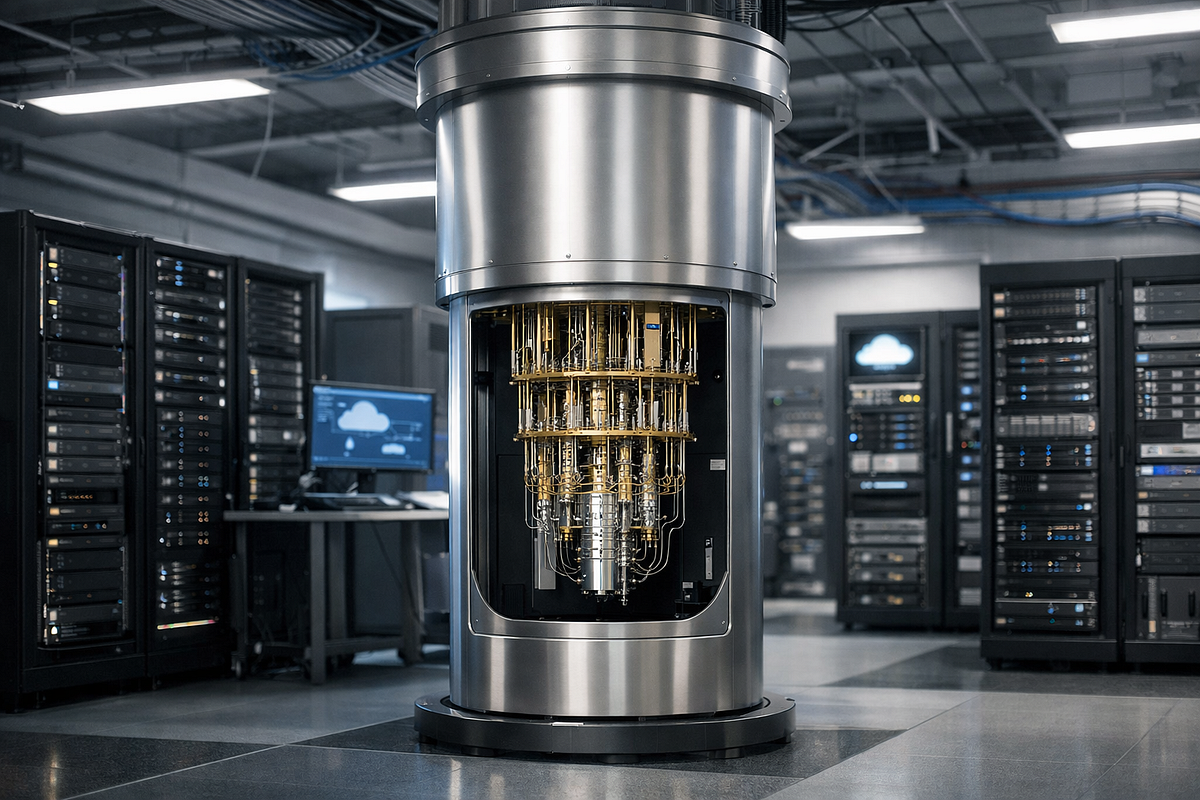
The rise of quantum computing systems is not being driven by a single breakthrough moment. Instead, it reflects steady progress across hardware, software, and ecosystem integration, with meaningful impact first appearing in narrow, high-value domains through hybrid classical–quantum workflows.
From Experimental Machines to Emerging Systems
Beyond the Research Prototype Era
For much of its history, quantum computing existed primarily as a research endeavor. Early milestones focused on demonstrating fundamental quantum behavior — entanglement, coherence, and small-scale algorithms — often under highly controlled laboratory conditions.
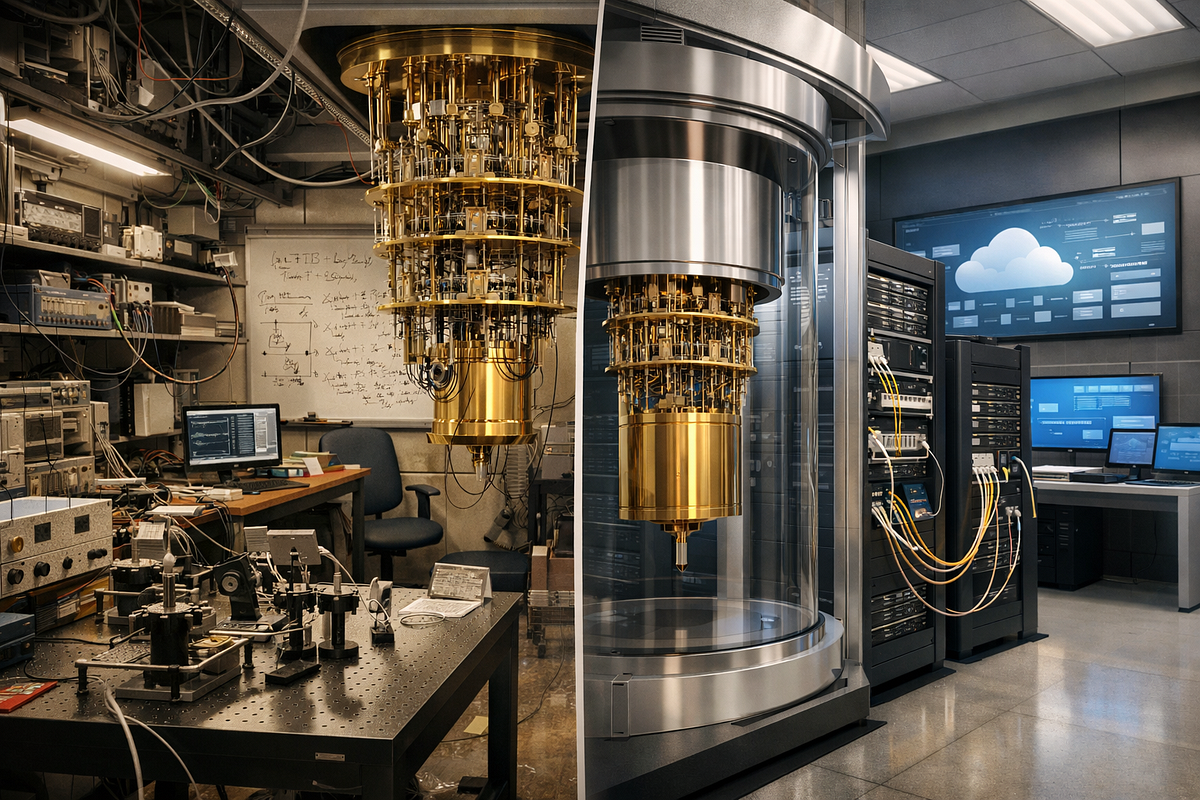
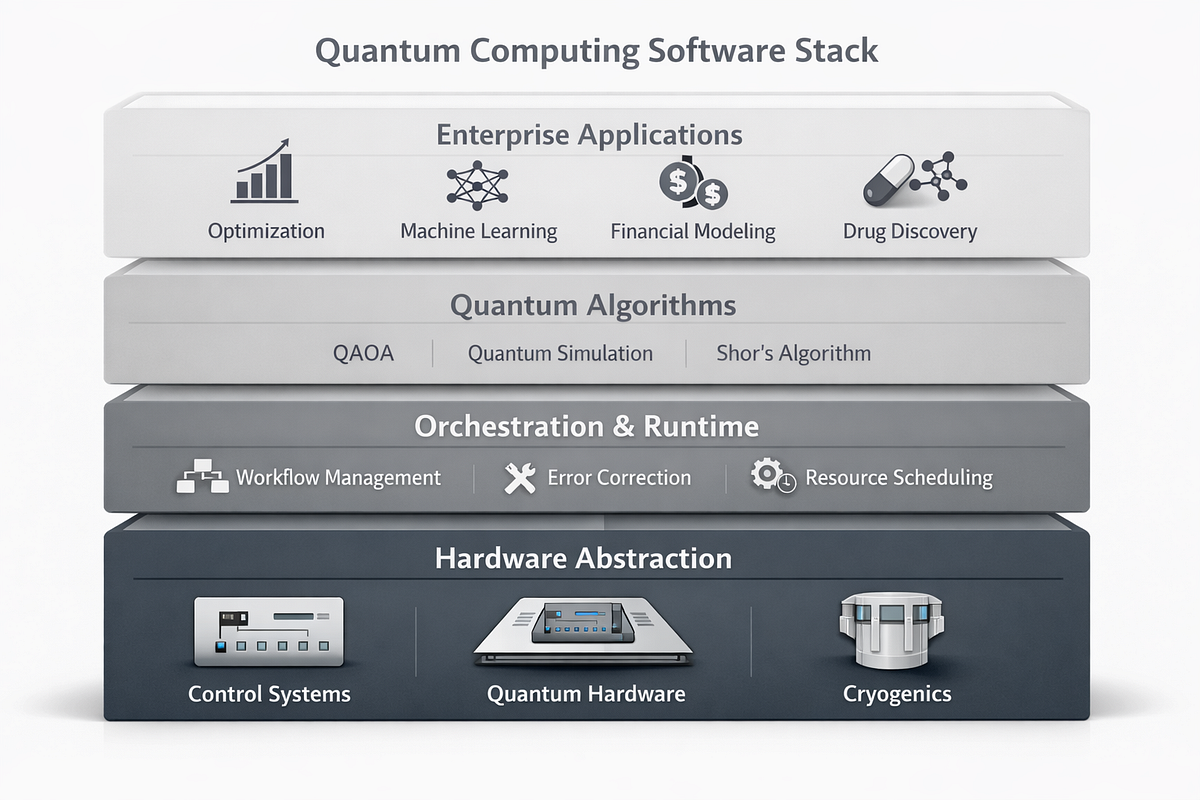
Today, leading platforms have moved beyond pure experimentation. Major vendors and research labs are now focused on building quantum computing systems: integrated stacks that combine hardware, control electronics, software frameworks, and cloud-based access. This shift marks a critical transition from isolated experiments to platforms capable of limited but real-world utility.
The Hybrid Classical–Quantum Reality
The current era is best described as transitional. Quantum computers are not standalone replacements for classical systems, nor are they general-purpose accelerators. Instead, they operate as specialized co-processors, tightly integrated with classical high-performance computing (HPC) and cloud infrastructure.
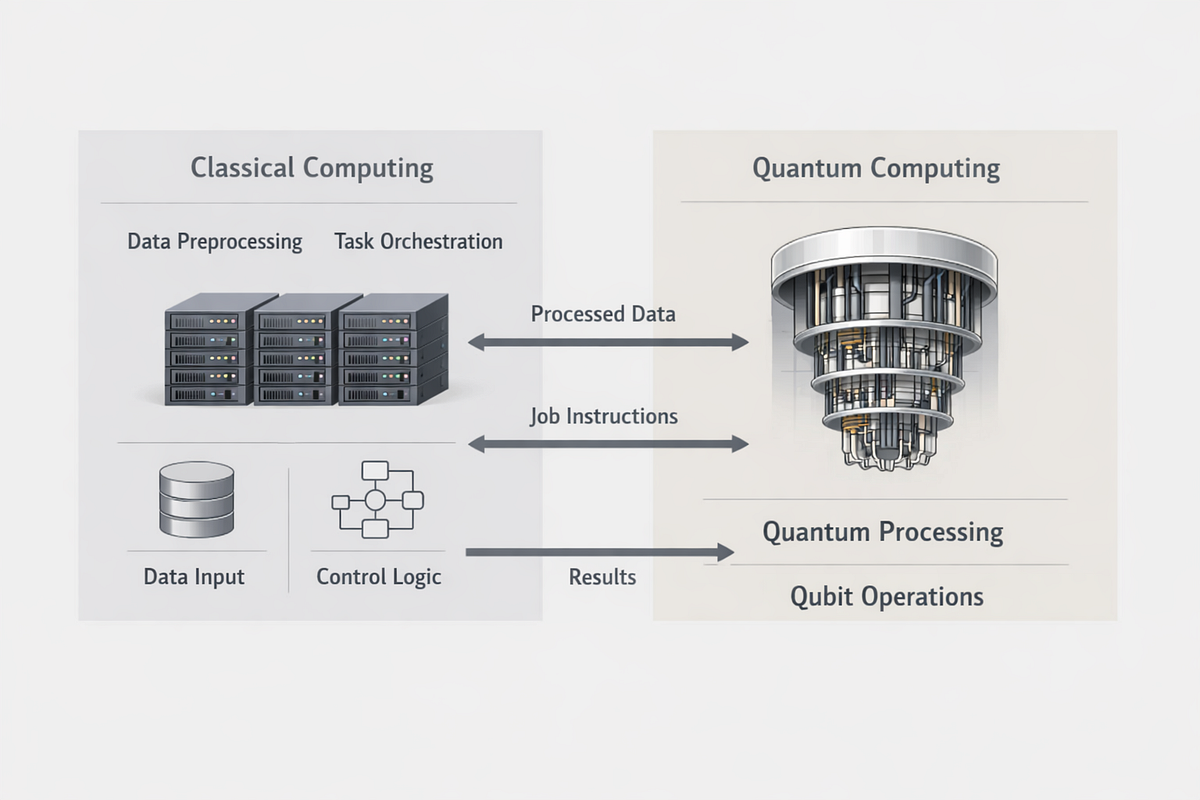
Hybrid workflows — where classical systems handle orchestration, preprocessing, and optimization while quantum processors tackle specific subproblems — define how value is emerging today. This hybrid model is central to understanding both the promise and the limits of near-term quantum computing systems.
What Most People Still Get Wrong About Quantum Computing
Quantum Is Not “Faster Classical Computing”
A persistent misconception is that quantum computers are simply faster versions of classical machines. In reality, quantum computing systems provide fundamentally different computational approaches that offer advantages only for certain classes of problems, such as combinatorial optimization, quantum chemistry, and specific sampling tasks.
For most workloads, classical computing remains superior — and will continue to do so for the foreseeable future.
Qubit Count Is Not the Same as Capability
Another common error is equating progress with qubit count alone. While scaling qubit numbers is important, it is far from sufficient. Error rates, coherence times, gate fidelity, control systems, software tooling, and system integration all determine whether a quantum system is usable in practice.
A smaller, well-controlled quantum system with strong software integration can outperform a larger but noisier device for real applications.
There Will Be No Single “Quantum Breakthrough Moment”
The rise of quantum computing systems is incremental, not explosive. Expectations of a sudden leap to general-purpose quantum advantage overlook the reality of system-level engineering. Progress is occurring through gradual improvements in error mitigation, hybrid algorithms, and full-stack integration — not through a single dramatic discovery.
The Architectures Driving the Rise of Quantum Computing Systems
Gate-Based Quantum Computers: The Core Focus
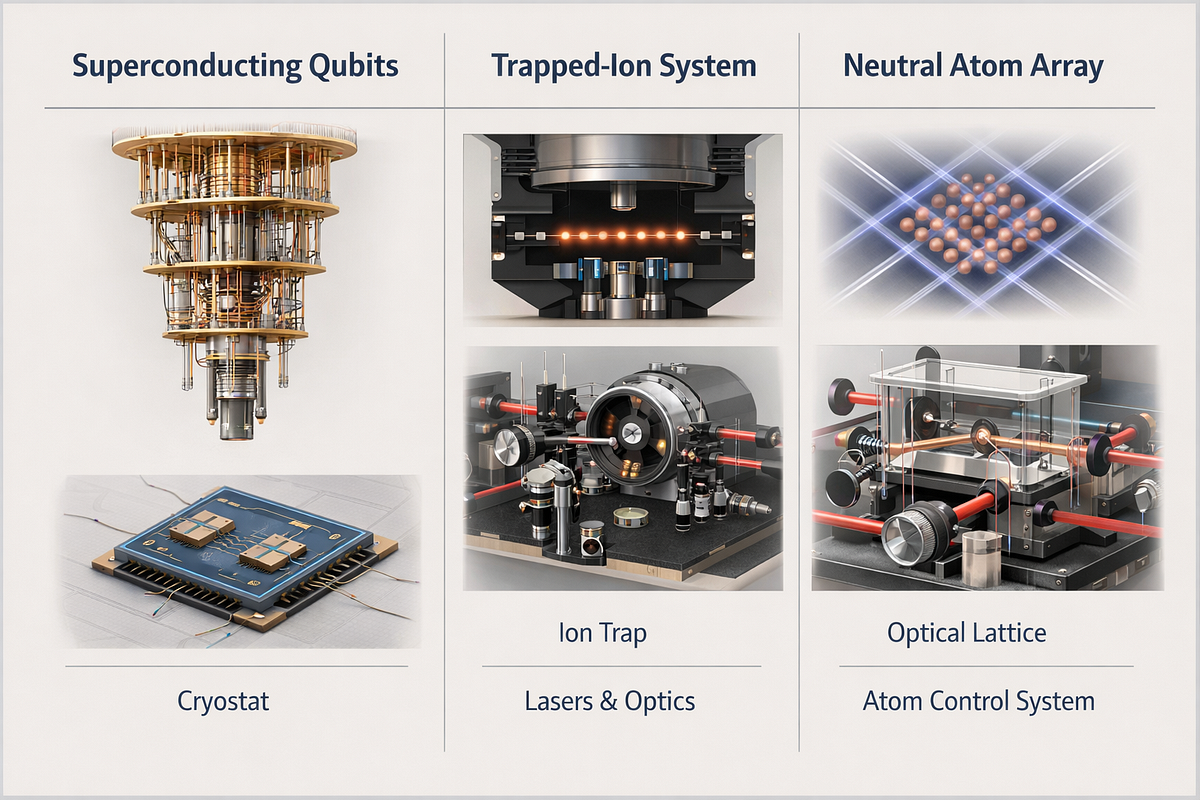
Gate-based quantum computing systems — using superconducting qubits or trapped ions — represent the dominant long-term pathway toward fault-tolerant, general-purpose quantum computing.
These systems underpin most advances in:
- Quantum error correction research
- Hybrid quantum–classical algorithms
- Enterprise software stacks and cloud platforms
Major players such as IBM, Google, IonQ, and Rigetti are investing heavily in full-stack development, making gate-based systems the centerpiece of both research and early enterprise engagement.
Neutral Atoms and Trapped Ions: Scalable Contenders
Neutral atom and trapped-ion platforms are increasingly important competitors. Their strengths — high qubit fidelity, flexible connectivity, and promising scalability — position them as credible alternatives to superconducting architectures.
Companies such as IonQ, Pasqal, and QuEra demonstrate that architectural diversity remains a defining feature of the field, with no single approach guaranteed to dominate.
Specialized and Contextual Systems
- Quantum annealing systems, notably from D-Wave, have achieved the most real-world deployment to date, though in narrow optimization domains rather than general-purpose computing.
- Photonic quantum systems show promise for networking, sensing, and long-distance entanglement, but remain less mature for large-scale computation.
- Quantum simulators already demonstrate advantage in highly constrained scientific applications, reinforcing that quantum value exists — but only within specific boundaries.
Case Studies: Where Quantum Systems Are Showing Early Value
Finance: Portfolio Optimization
In banking and asset management, hybrid quantum–classical workflows have been tested for portfolio optimization problems. Using quantum annealers alongside classical solvers, organizations observed faster convergence for specific constrained portfolios and gained insight into complex risk trade-offs.

While classical systems still dominate at scale, these experiments validated quantum-assisted optimization as a viable enterprise workflow.
Pharmaceuticals: Molecular Simulation
In pharmaceutical research, gate-based quantum systems have been used to simulate small molecular systems relevant to drug discovery. Hybrid variational algorithms executed on cloud-accessible quantum hardware generated early-stage molecular insights that are difficult to obtain classically.

Although limited to small molecules, these results demonstrate how quantum computing systems can accelerate early R&D rather than replace classical simulation pipelines outright.
Logistics: Supply Chain Optimization
Logistics and transportation companies have explored quantum-assisted routing and scheduling. Quantum annealers and hybrid solvers identified novel solutions more quickly in tightly constrained scenarios, even though classical solvers remain superior for large-scale optimization.

The key takeaway is not replacement, but augmentation — quantum systems contributing value in specific niches.
The Ecosystem Enabling Quantum’s Rise
Cloud-Based Quantum Access
Cloud platforms have become essential to quantum adoption. By abstracting hardware complexity and enabling hybrid workflows, cloud access allows enterprises to experiment without massive capital investment, accelerating learning and reducing risk.
Open-Source Software Frameworks
Frameworks such as Qiskit, Cirq, PennyLane, and Ocean form the backbone of the quantum software ecosystem. They standardize development, support cross-platform experimentation, and help translate research algorithms into practical workflows.
Government Funding and National Strategy
Large-scale public investment through national quantum initiatives de-risks long-term research, builds talent pipelines, and signals strategic importance. While government enthusiasm sometimes overstates near-term impact, it remains critical for sustaining progress across decades-long timelines.
The Challenges That Still Define the Field
Error Correction and Fault Tolerance
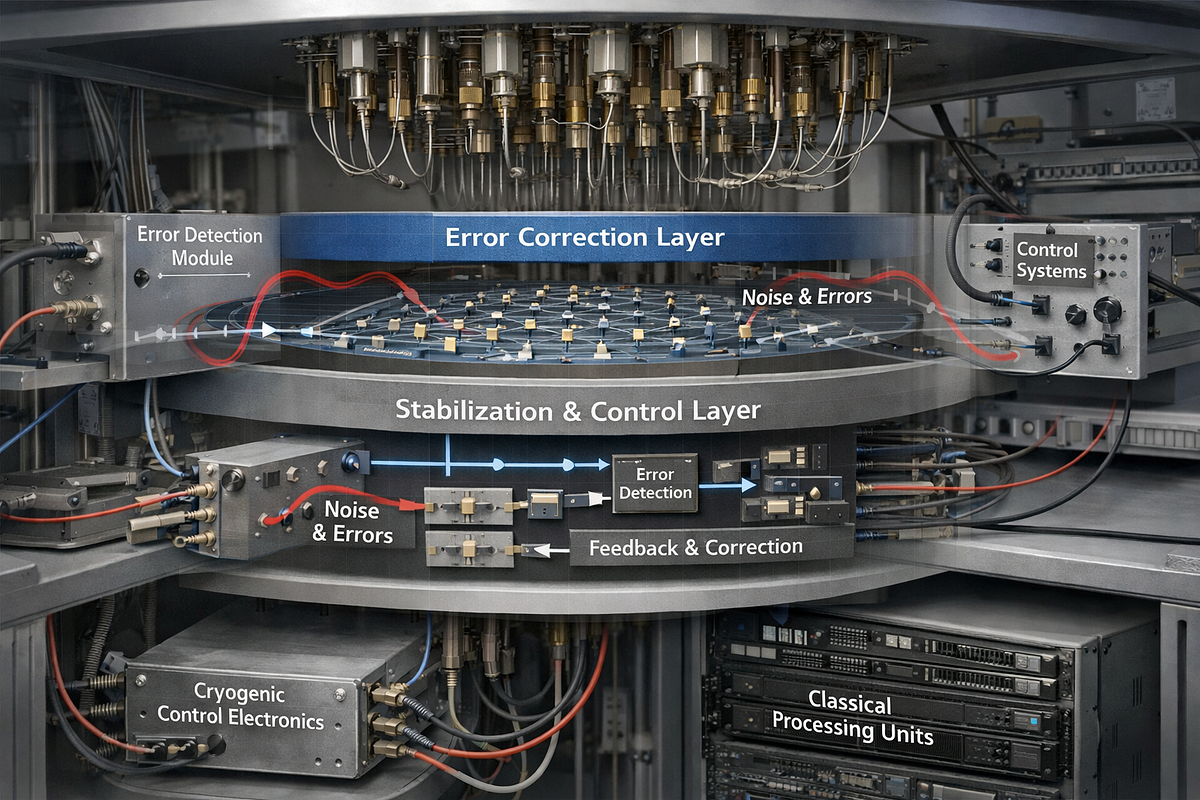
Error correction remains the most significant bottleneck. Without reliable logical qubits, scaling quantum systems to enterprise-relevant workloads is not feasible, regardless of hardware advances.
System-Level Scalability
Beyond qubits, scaling requires advances in control electronics, cryogenics, software orchestration, and operational reliability. These challenges are often underemphasized but ultimately determine whether quantum systems can move beyond demonstrations.
Economic Viability
Quantum computing systems are expensive to build and operate. Adoption will depend not on technical novelty, but on whether measurable ROI or strategic advantage can be demonstrated in real-world contexts.
When Will Quantum Computing Systems Matter?
Narrow Commercial Value: 3–5 Years
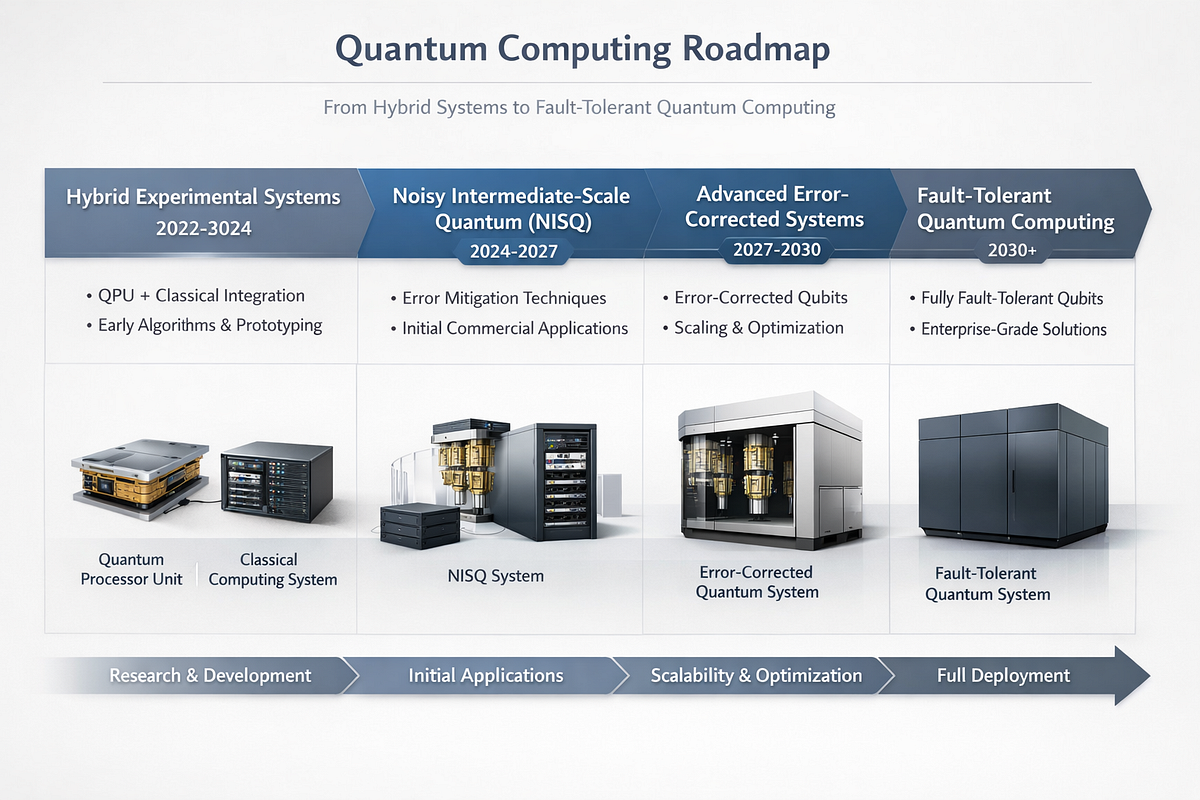
In the near term, quantum computing systems will continue to deliver value in constrained, high-impact applications through hybrid workflows. Enterprises that experiment now gain insight, build expertise, and position themselves ahead of competitors.
Broad Enterprise Adoption: 10–15+ Years
Widespread adoption will require fault-tolerant systems, mature ecosystems, and clear economic justification across multiple industries. Until then, quantum computing will remain a strategic investment rather than a core operational platform.
The Inflection Point to Watch
The most important signal of progress is not qubit count or isolated benchmarks, but the emergence of repeatable, hybrid commercial workflows with demonstrable business value. When multiple vendors offer reliable, integrated platforms that consistently outperform classical approaches in specific domains, quantum computing systems will move from experimentation to strategic deployment.
Strategic Guidance: A Quantum Readiness Ladder
1. Awareness and Education
Build foundational understanding of quantum systems, capabilities, and limits.
2. Pilot and Experimentation
Run proof-of-concept projects in optimization, simulation, or analytics where quantum advantage is plausible.
3. Capability and Ecosystem Development
Develop internal expertise, vendor evaluation frameworks, and software integration strategies.
4. Strategic Integration
Prepare for longer-term adoption as fault-tolerant systems and broader commercial value emerge.
Conclusion
The rise of quantum computing systems is real — but it is neither sudden nor universal. Progress is driven by system-level engineering, hybrid integration, and realistic alignment with business needs. Organizations that approach quantum computing with informed skepticism, structured experimentation, and a long-term perspective will be best positioned to benefit as the technology matures.
Quantum computing will not replace classical computing. Instead, it will augment it — quietly, incrementally, and first where the value is highest.


Comments
Post a Comment